


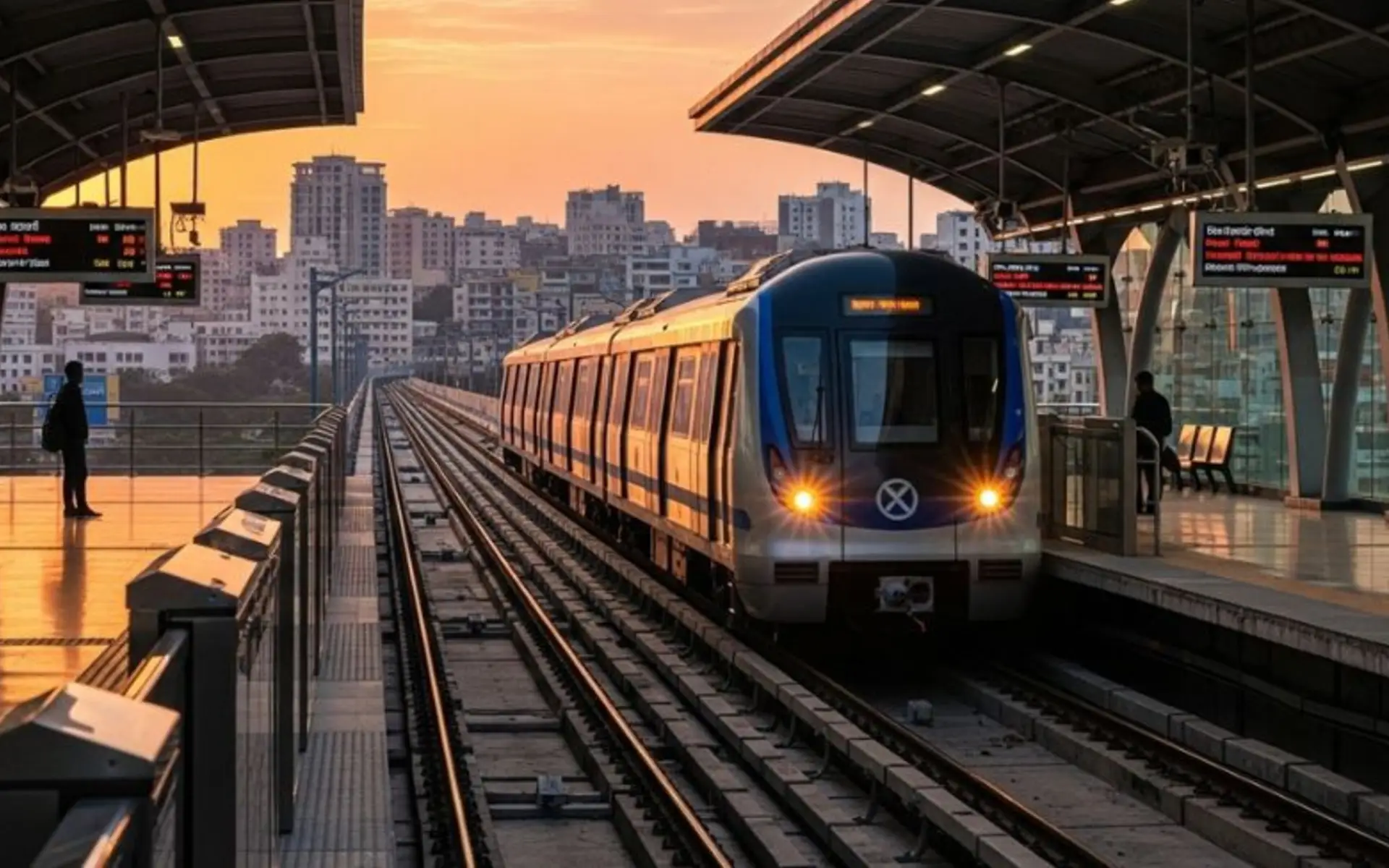
The Telangana government has intensified efforts to secure central approval for Hyderabad Metro Rail Phase II, positioning the proposed expansion as a critical intervention for the city’s mounting congestion, growing commuter demand and long-term urban mobility needs. Chief Minister A Revanth Reddy recently met Union Housing and Urban Affairs Minister Manohar Lal Khattar in New Delhi to seek faster clearance for the next phase of the metro network, which is projected to significantly extend public transport access across the metropolitan region.
According to officials, the proposed Hyderabad Metro Phase II plan covers nearly 123 kilometres across seven corridors at an estimated cost of Rs 38,595 crore. The Telangana government has requested that the project be executed as a joint venture with support from the Centre, arguing that Hyderabad’s rapid population growth and expanding urban footprint require large-scale investments in mass transit infrastructure. The expansion proposal arrives at a crucial moment for Hyderabad, where vehicle ownership, road congestion and commuter travel times have risen sharply alongside rapid real estate and commercial growth. Urban planners say the city’s western, northern and airport-linked corridors are experiencing particularly intense development pressure, increasing the urgency for integrated and high-capacity transport systems. The Hyderabad Metro expansion is expected to include new corridors connecting emerging residential zones, employment clusters and transit hubs, while future proposals also seek to improve connectivity towards the international airport and planned growth regions such as Bharat Future City. Transport analysts note that airport-linked metro infrastructure has become increasingly important for metropolitan regions aiming to support economic decentralisation and reduce road dependency. Officials involved in the discussions stated that detailed project reports for both Phase II and proposed future corridors have already been submitted to the Centre. The state government has argued that expanding the metro network is essential not only for reducing traffic congestion, but also for improving productivity, reducing emissions and supporting more balanced urban growth patterns. The proposal also follows the state’s move to take greater operational control over Hyderabad Metro’s existing network after prolonged negotiations linked to the original concession structure. Urban infrastructure experts say resolving governance and ownership issues could become central to ensuring smoother implementation of future metro phases. Hyderabad’s mobility challenges extend beyond Metro Rail alone. While the city has multiple transport systems including MMTS suburban rail and public buses, integration between services remains limited, resulting in fragmented commuter experiences and continued dependence on private vehicles. Transport researchers argue that metro expansion must be accompanied by stronger feeder networks, pedestrian access and integrated ticketing systems to achieve meaningful modal shift. Environmental planners additionally emphasise that mass transit projects are increasingly tied to climate resilience goals in rapidly urbanising cities. Expanding reliable public transport infrastructure can help reduce transport-related emissions, lower fuel consumption and improve air quality in high-density urban regions.
However, experts caution that metro infrastructure alone cannot resolve Hyderabad’s wider mobility pressures unless land use planning, affordable housing and public transport-oriented development evolve simultaneously. Without coordinated planning, they warn, infrastructure expansion risks being overtaken by unchecked urban sprawl. As Hyderabad positions itself among India’s fastest-growing metropolitan economies, the outcome of the Hyderabad Metro Phase II proposal is likely to shape not only commuter mobility, but also the long-term direction of the city’s urban development and sustainability agenda.
ALSO READ – Delhi NCR Rainfall Brings Early Summer Relief
Hyderabad Metro Expansion Push Targets Urban Mobility
