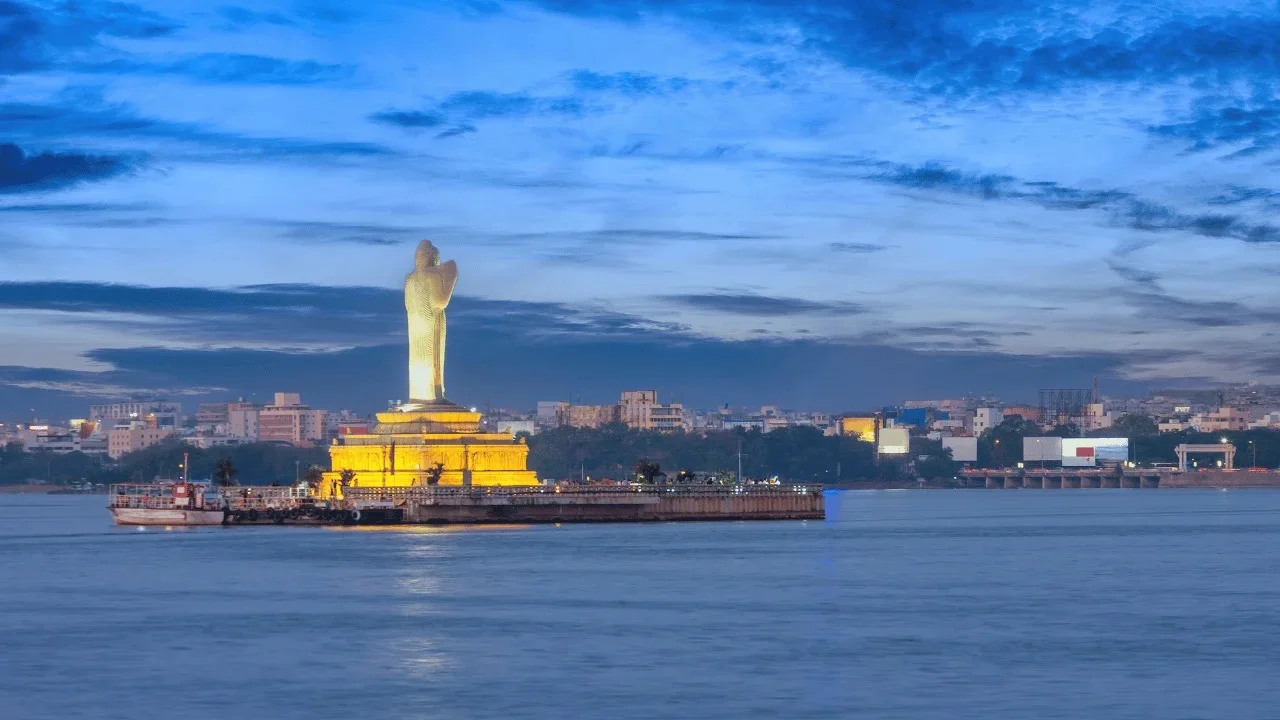
Hyderabad Lakes Need Long Term Restoration Strategy
Hyderabad’s efforts to revive deteriorating urban lakes are increasingly highlighting a larger challenge: restoring a water body is only the beginning. Projects such as the revival of Bathukamma Kunta in Amberpet have renewed attention on the city’s wetlands, but lasting recovery will depend on controlling pollution, protecting catchments and preventing encroachment as Hyderabad continues to expand.
Urban lakes perform functions that extend well beyond storing water. They can moderate local temperatures, support biodiversity, absorb excess rainfall and provide important ecological buffers during extreme weather. Their loss can therefore increase pressure on drainage networks and make densely built neighbourhoods more vulnerable to flooding and heat. Yet rapid urbanisation has placed many of Hyderabad’s water bodies under sustained pressure. Construction, altered drainage channels, sewage inflows and the conversion of surrounding open land can gradually reduce a lake’s ability to function as an ecosystem. Restoration that focuses only on cleaning a lake or improving its appearance may offer visible short-term results without addressing these underlying causes. If untreated wastewater continues entering the water body, or feeder channels remain blocked, ecological degradation can return even after substantial public spending.
The more difficult task is protecting the entire lake system. Catchment areas, inlet and outlet channels, flood pathways and surrounding land use all influence the health of a water body. A lake cannot be managed effectively as an isolated parcel of land when the drainage network feeding it has already been altered. Urban planners and environmental specialists have increasingly emphasised the need for nature-based approaches alongside conventional infrastructure. Protecting natural drainage channels, retaining vegetation around water bodies and restoring wetlands can complement engineered stormwater systems while improving ecological resilience. There is also a civic dimension to lake restoration. Accessible public spaces around healthy water bodies can improve neighbourhood liveability, but recreational development needs to remain secondary to ecological function. Excessive paving, lighting or construction along lake edges can reduce the very environmental benefits restoration is intended to create. For Hyderabad, the economic implications are significant as well. Preventing flooding and reducing pressure on drainage infrastructure can avoid future public costs, while healthier lakes can enhance the quality of surrounding neighbourhoods. However, these benefits depend on maintaining the ecological integrity of the water system over decades rather than measuring success immediately after a restoration project.
Bathukamma Kunta and other revived lakes can therefore serve as more than isolated improvement projects. They can become tests of whether Hyderabad is shifting towards a model in which wetlands are treated as essential urban infrastructure rather than leftover land. The next phase of lake management will require continuous monitoring, stronger protection of catchments and reliable control of sewage and solid waste. Without these measures, restoration risks becoming a recurring cycle of repair. With them, Hyderabad’s lakes could play a lasting role in building a cooler, safer and more climate-resilient city.