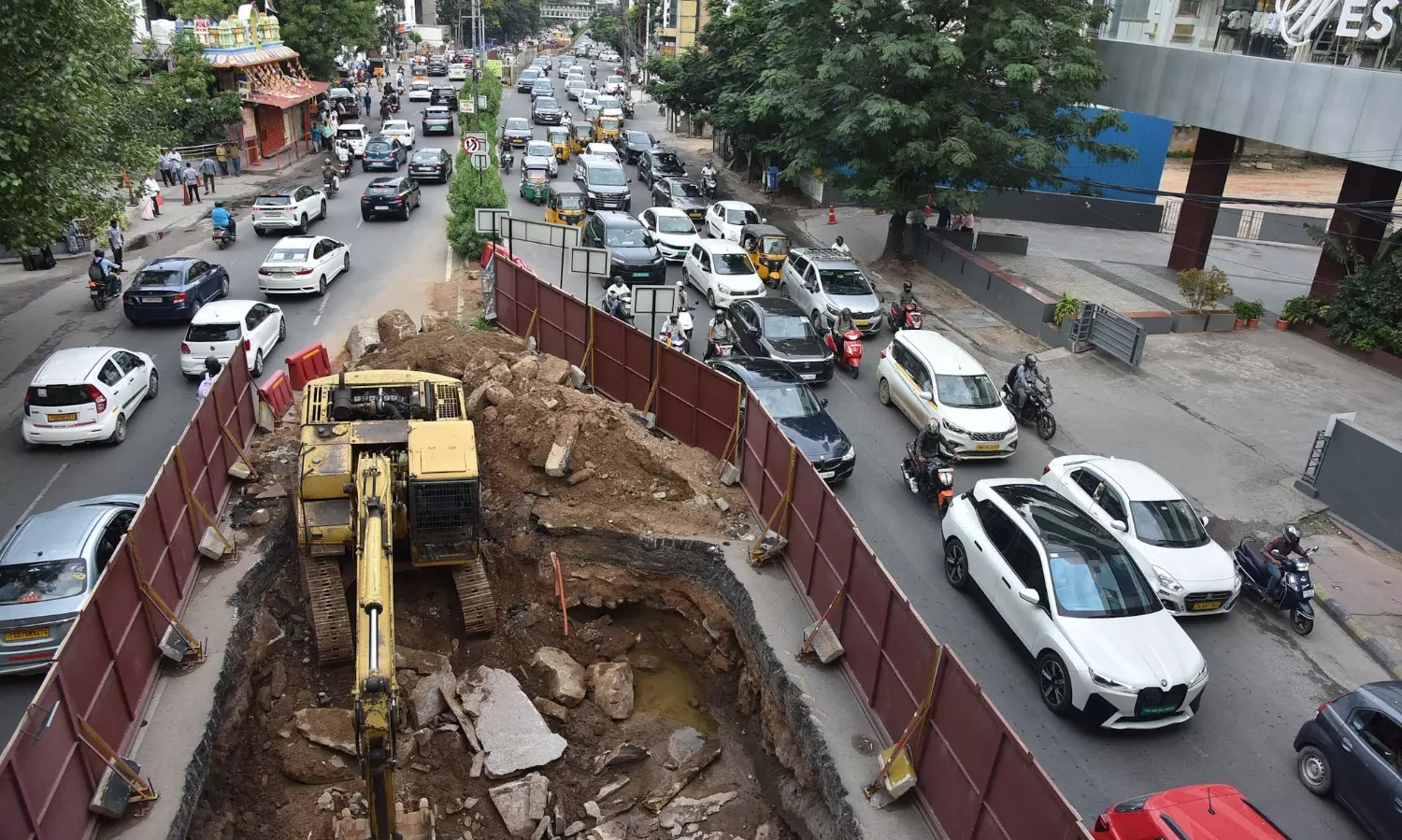
HYDERABAD: The KBR Park one way system has completed its first 15 days, prompting authorities to begin road widening, repairs and utility shifting at traffic bottlenecks around the park. The measures are aimed at improving vehicle movement while construction continues under the wider H-CITI project.
The one-way arrangement was introduced on August 18 to manage traffic around KBR Park as infrastructure work progresses. A recent field inspection reviewed traffic conditions at Film Nagar, Journalist Colony, Road No. 45, Jubilee Hills Check Post and the KBR Park main gate. Areas where vehicles were slowing down have been identified for corrective action. The Film Nagar Junction–Road No. 45 Junction stretch has received priority. Road expansion here is currently affected by electricity poles as well as water and drainage networks. Shifting these utilities is expected to clear the way for widening work and reduce physical constraints on the road. Road repairs are also planned along stretches facing heavier traffic pressure. Drainage issues will be addressed alongside these works, which could help prevent water-related damage and maintain smoother movement during the construction period. The KBR Park one way arrangement has also highlighted how changes at one location can influence surrounding roads. When traffic is redirected, nearby junctions can experience additional pressure. Improving road width at identified bottlenecks could help distribute vehicles more effectively instead of simply moving congestion from one point to another.
The works are linked to the H-CITI project, which includes flyovers and other infrastructure improvements around KBR Park. While the larger project is intended to improve connectivity, construction itself requires temporary traffic changes and careful coordination between road and utility agencies. For daily commuters, the immediate concern is predictable travel through the Jubilee Hills and Film Nagar areas. Clear traffic management, timely repairs and better junction coordination will be important while construction continues.
The road interventions also have implications beyond vehicle movement. Drainage improvements can reduce waterlogging risks, while coordinated utility shifting can limit repeated road digging in the future. Maintaining pedestrian access during widening work will also be important as the corridor changes. The next phase will show whether these supporting measures can make the one-way system more effective. Completing bottleneck repairs and utility relocation quickly could help Hyderabad manage current traffic pressures while preparing the surrounding network for the infrastructure changes planned under H-CITI.