


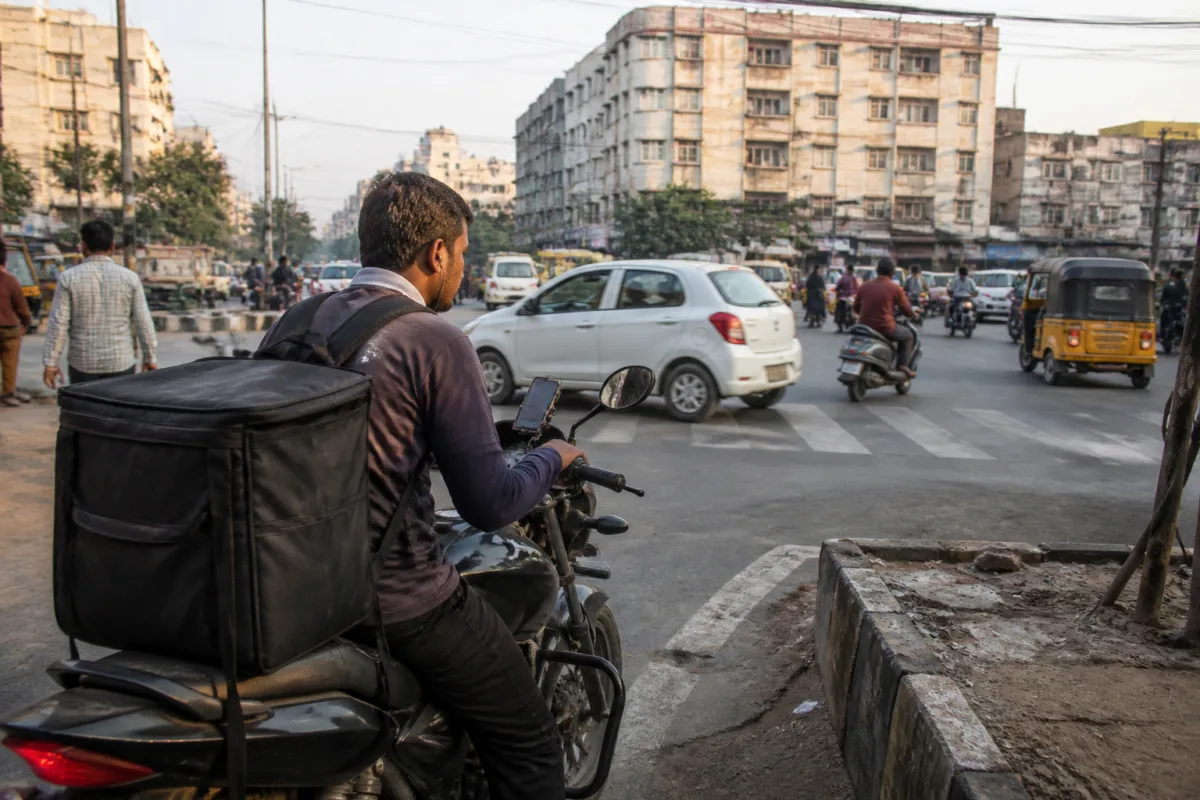
Delivery workers in Hyderabad are being given seven- or eight-minute deadlines for trips that navigation applications estimate will take 10 minutes or more, according to findings cited from an International Labour Organisation (ILO) study published on October 18.
The study, titled “Building an Understanding of Access to Grievance-Handling and Labour Dispute Resolution Mechanisms for Platform Workers in India”, examines ride-hailing, delivery and home-service workers in six cities: Ahmedabad, Bengaluru, Delhi, Hyderabad, Mumbai and Thiruvananthapuram. Its findings have emerged as Telangana prepares to implement the Platform Based Gig Workers Act, 2026, which provides for grievance redressal and welfare measures.
The Hyderabad accounts point to a gap between automated platform management and the practical conditions of city work. Workers said delivery delays caused by customers who did not answer calls or were unavailable could still affect their performance scores. They also described situations in which there was no human platform representative to hear their explanation or review the circumstances behind a penalty.
The ILO study said workers often relied on colleagues and WhatsApp groups to understand deductions, penalties and earnings because platforms did not explain them clearly. It also found that automated grievance systems could be too rigid for complaints requiring individual assessment.
Workers described the allocation of orders and incentives as opaque. Some said only a small proportion of riders received incentives, while others reported waiting for more than an hour without an assignment as other workers received repeated trips. One delivery worker said riders sometimes worked for up to 48 hours during festivals in the hope of earning incentives, without knowing how assignments were distributed.
The concerns extend beyond delivery work. Home-service workers reported being assigned jobs far from their homes. One worker said the relevant hub had moved to Manikonda, 12 kilometres from home, while assignments were often located even farther away. Another said the platform restricted the cancellation of bookings, including in emergencies.
The ILO has recommended human oversight for account deactivation decisions, effective appeal mechanisms and advance communication of changes to payment structures. It has also called for algorithms to account for traffic, severe weather and worker safety.
These recommendations are significant for the implementation of Telangana’s gig-worker legislation because the reported problems involve more than individual payment disputes. They concern how digital platforms allocate work, measure performance and respond to conditions on the city’s roads and neighbourhoods. A delivery target that does not account for traffic, customer availability or weather can transfer the operational risk of urban movement almost entirely to the worker.
The ILO’s Hyderabad findings are based on five focus-group discussions with ride-hailing workers, two discussions with delivery workers and one individual interview with a home-service worker. The organisation cautioned that the findings reflect the experiences of participants and are not representative of all platform workers.
The study nevertheless identifies specific issues that the state’s grievance and welfare framework will need to address: who can review an automated penalty, how workers can challenge account decisions, how payment changes are communicated, and whether traffic and safety conditions are considered when platforms assess performance. The effectiveness of the new framework will depend on whether workers can access a responsive mechanism outside the complaint channels operated by the platforms themselves.

