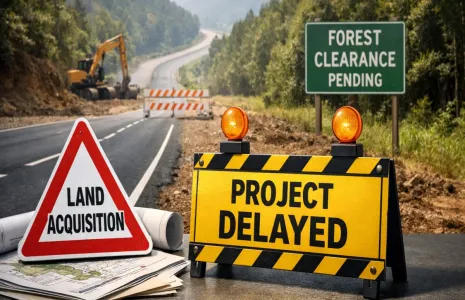
Gurugram Transit Project Faces Land Acquisition Delays
The expansion of regional rapid transit infrastructure in Gurugram has encountered fresh delays as land acquisition challenges and utility relocations slow progress on a key high-speed corridor. The National Capital Region Transport Corporation (NCRTC) has sought over 55,000 square metres of land along the Delhi–Jaipur highway, but unresolved issues on the ground are emerging as critical bottlenecks.
The requested land parcels are intended for multiple components of the Delhi–SNB (Shahjahanpur–Neemrana–Behror) Namo Bharat corridor, including stations, viaducts, entry points, and construction facilities. A major interchange hub at IFFCO Chowk alone is expected to span around 19,000 square metres, underscoring the scale of infrastructure required to integrate regional transit systems. However, the alignment cuts through existing urban utilities, including two petrol pumps and a compressed natural gas (CNG) station between IFFCO Chowk and Rajiv Chowk. Their relocation has become a significant procedural and logistical hurdle, delaying approvals and complicating execution timelines. The project also requires a mix of permanent and temporary land—ranging from casting yards near the Delhi-Gurugram border to parcels for underground and elevated stations across key junctions such as Rajiv Chowk and Hero Honda Chowk. The complexity of these requirements reflects the evolving nature of urban transit infrastructure, where land use must accommodate both construction-phase needs and long-term operational demands.
For a rapidly expanding city like Gurugram, such delays highlight deeper structural issues in urban planning. Land acquisition continues to be one of the most significant barriers to infrastructure delivery in India’s metropolitan regions, particularly in areas where private, commercial, and public land uses intersect densely. Urban mobility experts point out that while projects like the Namo Bharat corridor are designed to reduce road congestion and support low-emission transit, their success depends heavily on timely coordination between agencies. In this case, approvals from state authorities remain pending, leaving the project in a preparatory phase despite its strategic importance. The implications extend beyond timelines. Delays in high-capacity transit systems risk reinforcing car-dependent growth patterns in Gurugram, a city already grappling with congestion and uneven public transport coverage. Without timely implementation, the shift toward sustainable, mass transit-led urban development could lose momentum.
At the same time, the situation underscores the importance of integrated planning. The presence of fuel stations and other utilities along the alignment raises questions about how infrastructure corridors are mapped in dense urban environments, and whether future planning frameworks can better anticipate such conflicts. Officials indicate that the proposal is under review, with discussions ongoing to expedite land transfers and resolve relocation issues. As Gurugram positions itself as a key node in the NCR’s regional transit network, the ability to navigate these land and infrastructure challenges will be crucial. The outcome will not only determine project timelines but also shape how effectively the city transitions toward a more connected, low-carbon mobility system.