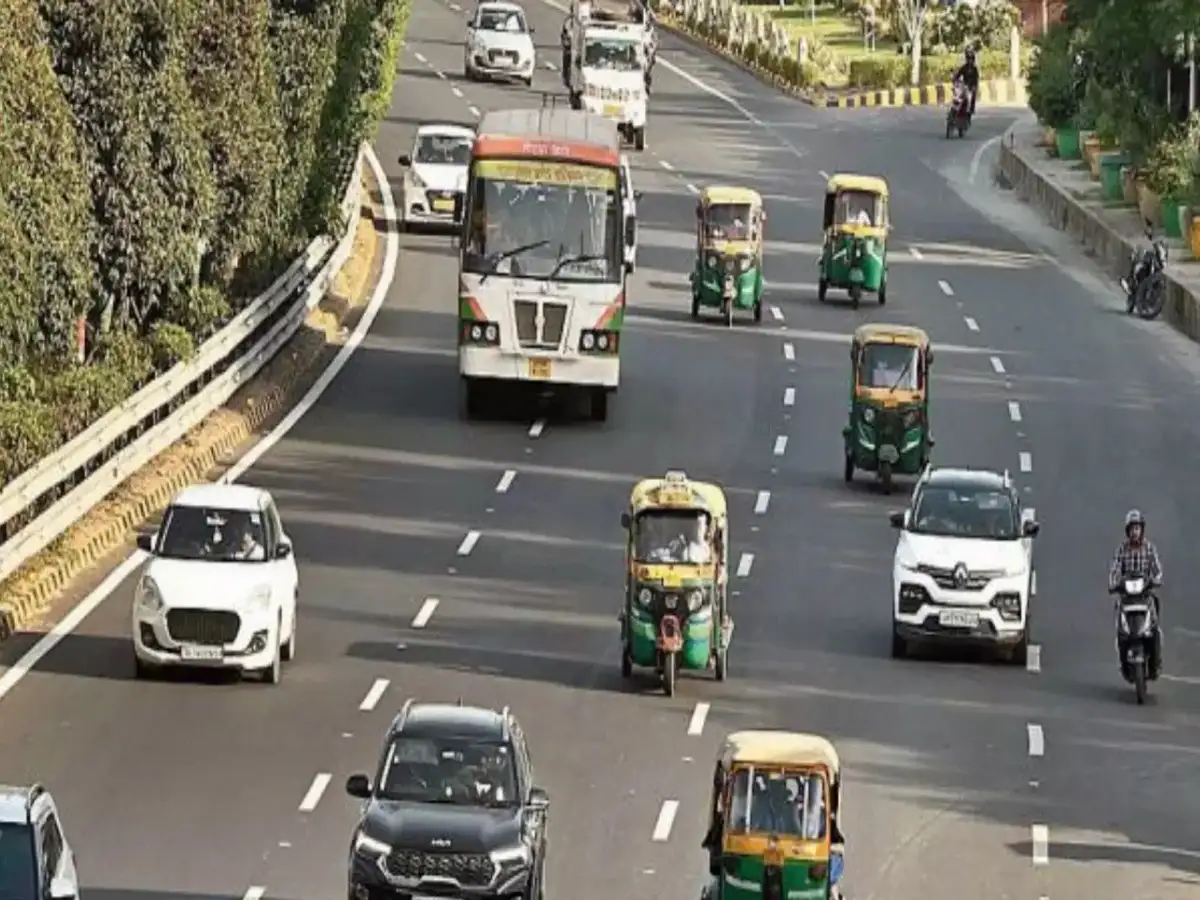
A partial surface collapse along the Sohna Elevated Road triggered severe traffic congestion in Gurugram on Friday, disrupting peak-hour movement and exposing growing concerns around the region’s infrastructure resilience during extreme weather events. The incident led to vehicle queues stretching nearly 1.5 kilometres, slowing traffic movement across one of the city’s busiest commuter corridors linking residential and commercial zones.
According to traffic management officials, a section of the carriageway experienced subsidence following heavy rainfall and hailstorms that swept across parts of the National Capital Region earlier this week. Authorities diverted vehicles and initiated temporary repair work to prevent further structural damage and restore traffic flow. The disruption comes at a time when Gurugram is witnessing rapid real estate growth and rising vehicle dependence, placing increasing pressure on ageing and climate-sensitive infrastructure. Urban planners say repeated cases of road cave-ins, waterlogging, and traffic paralysis indicate that city infrastructure is struggling to keep pace with changing weather patterns and accelerated urban expansion. The Sohna Elevated Road serves as a critical mobility link for office commuters, logistics movement, and residents travelling between Gurugram’s southern sectors and Delhi-bound routes. Friday’s congestion not only delayed daily movement but also highlighted the economic cost of infrastructure disruptions in fast-growing urban regions. Industry observers note that prolonged traffic delays contribute to fuel wastage, reduced productivity, and higher transport emissions in already polluted city environments.
The weather shift across NCR over recent days brought temporary relief from rising temperatures. Several areas recorded rainfall accompanied by hail, leading to cooler conditions and a noticeable dip in daytime heat. Meteorological data indicates that intermittent rain during early April helped keep temperatures below seasonal averages for several days before heat levels gradually intensified later in the month. Climate specialists believe such sudden transitions between heatwaves and intense rainfall events are becoming increasingly common across northern Indian cities. They argue that urban infrastructure planning must now account for unpredictable precipitation patterns, drainage stress, and soil instability to avoid recurring disruptions on major transport corridors.
Residents affected by the Gurugram traffic jam reported extended commute times and inadequate on-ground traffic communication during diversion operations. Mobility experts say the incident underlines the need for stronger preventive maintenance systems, real-time infrastructure monitoring, and better integration between civic agencies handling roads, drainage, and urban transport. Officials overseeing the repair work stated that technical inspections are being conducted to assess the extent of damage beneath the affected stretch. Transport analysts believe the incident could accelerate calls for more climate-resilient road engineering standards in rapidly urbanising NCR districts, where infrastructure failures increasingly carry both economic and environmental consequences.