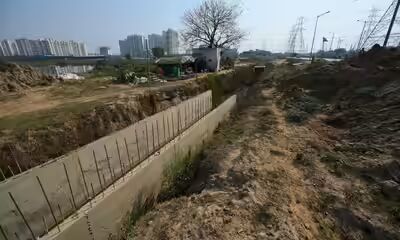
Gurgaon Builder Notice Over Drainage Obstruction Issue
Urban authorities in Gurugram have initiated enforcement action against a residential developer after an alleged road construction obstructed a key stormwater drain, raising concerns over flooding risks ahead of the monsoon season. The notice, issued by the city’s metropolitan development authority, underscores growing scrutiny of how private developments interact with critical urban infrastructure.
The issue centres around an access road reportedly built within a large residential township in Sector 37D, which has been found to impede the natural flow of the Badshapur stormwater drain. Officials have flagged the obstruction as a potential hazard, particularly as seasonal rainfall approaches, when drainage networks are expected to operate at full capacity. Stormwater drains form the backbone of urban flood management in cities like Gurugram, where rapid expansion has outpaced the capacity of traditional drainage systems. Any disruption to these channels can lead to localised waterlogging, road inundation, and damage to both public and private assets. In this context, the current case highlights the fragile balance between real estate development and environmental infrastructure. The Gurgaon drainage obstruction also reflects a recurring governance challenge in fast-growing urban regions. As large-scale housing projects come up across peripheral sectors, coordination between developers and civic agencies often remains inconsistent. Urban planners point out that drainage alignments, natural water flows, and floodplains are frequently altered or encroached upon during construction, sometimes without adequate long-term assessment.
Authorities have responded by issuing a show-cause notice, seeking clarification and corrective action from the developer. Such measures are part of a broader push to enforce compliance with urban planning norms, especially in areas where infrastructure lapses can have cascading effects on surrounding neighbourhoods. The timing of the intervention is significant. Gurugram has faced repeated flooding incidents in recent years, with even moderate rainfall leading to severe traffic disruptions and waterlogging in multiple sectors. In response, agencies have stepped up pre-monsoon preparedness, including drain desilting and identification of vulnerable points across the city. From a sustainability perspective, the Gurgaon drainage obstruction case underscores the importance of preserving natural and engineered water systems within urban design. Experts emphasise that climate change is intensifying rainfall variability, making cities more susceptible to sudden, high-intensity downpours. In such scenarios, even minor blockages in drainage networks can trigger disproportionate impacts.
There are also implications for real estate governance. As homebuyers increasingly prioritise resilience and infrastructure reliability, lapses in basic systems such as drainage can affect both property values and livability. Ensuring that private developments adhere to environmental clearances and civic guidelines is becoming critical to maintaining urban functionality. Looking ahead, officials are expected to assess whether corrective measures—such as removal or modification of the obstructing structure—are required to restore the drain’s flow. The outcome will likely set a precedent for similar cases across the NCR, where construction-led disruptions to natural systems remain a persistent concern. As Gurugram continues to expand, the incident reinforces a key lesson for urban growth: infrastructure integrity must remain central to development. Without integrating drainage planning into the built environment, cities risk amplifying climate vulnerabilities rather than mitigating them.