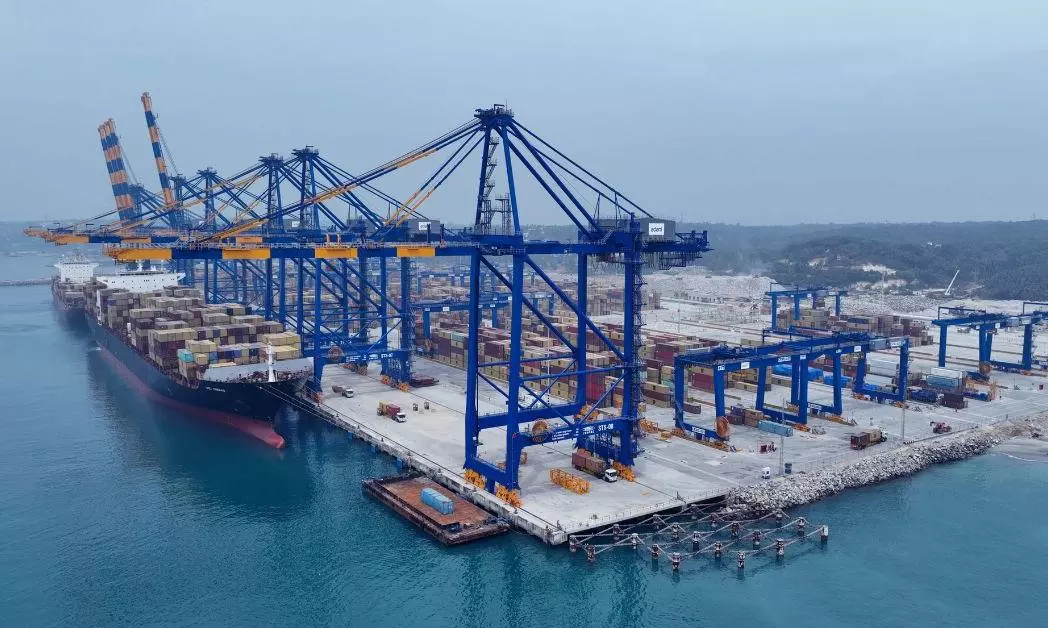
Gujarat’s port infrastructure is gaining a new piece of specialised capacity at Pipavav, where a 36,000-metric-tonne ammonia storage terminal has been transferred to Aegis Terminal (Pipavav) Limited for ₹525 crore. The transaction, completed on August 24, comes shortly after the facility was commissioned and adds dedicated ammonia-handling infrastructure to one of the state’s important western-coast logistics hubs.
The asset transfer was executed through a Business Transfer Agreement between Aegis Logistics and its step-down subsidiary, with the terminal moving on a slump-sale basis as a going concern. The arrangement is an internal transfer rather than an acquisition from an unrelated operator, but it places the specialised facility directly within the entity responsible for terminal operations.For Gujarat infrastructure, the significance extends beyond the ownership structure. Pipavav connects maritime cargo with road and industrial supply chains serving western India. Adding dedicated ammonia storage can reduce dependence on fragmented handling arrangements and provide industrial users with closer access to import-linked storage capacity.Ammonia is already critical to fertiliser production, making storage infrastructure relevant to agricultural supply chains as well as chemical manufacturing. It is also being examined as a hydrogen carrier and as part of emerging low-carbon energy systems. However, the environmental value of such infrastructure will depend on how ammonia is sourced, transported and ultimately used. Storage capacity alone does not make an energy system cleaner.
The development also illustrates how Gujarat’s coastal infrastructure is evolving from conventional cargo handling towards more specialised logistics. Pipavav already hosts liquid and cryogenic storage facilities, while its connectivity to maritime trade gives industrial operators access to international supply networks. Such concentration can improve logistics efficiency, although it also increases the importance of emergency planning, monitoring, worker safety and environmental safeguards around hazardous-material facilities.The terminal was commissioned on August 10, 2026, meaning it became operational only weeks before the ownership transfer. The facility had originally been planned as India’s first independent ammonia storage terminal, with development announced in 2025 and an intended capacity of about 36,000 tonnes.
The next test for Gujarat infrastructure will therefore be operational rather than simply financial: how effectively the new capacity integrates with port access, industrial demand and safe distribution networks. For citizens and nearby communities, the quality of monitoring, emergency preparedness and environmental management will matter as much as the additional storage capacity itself.