


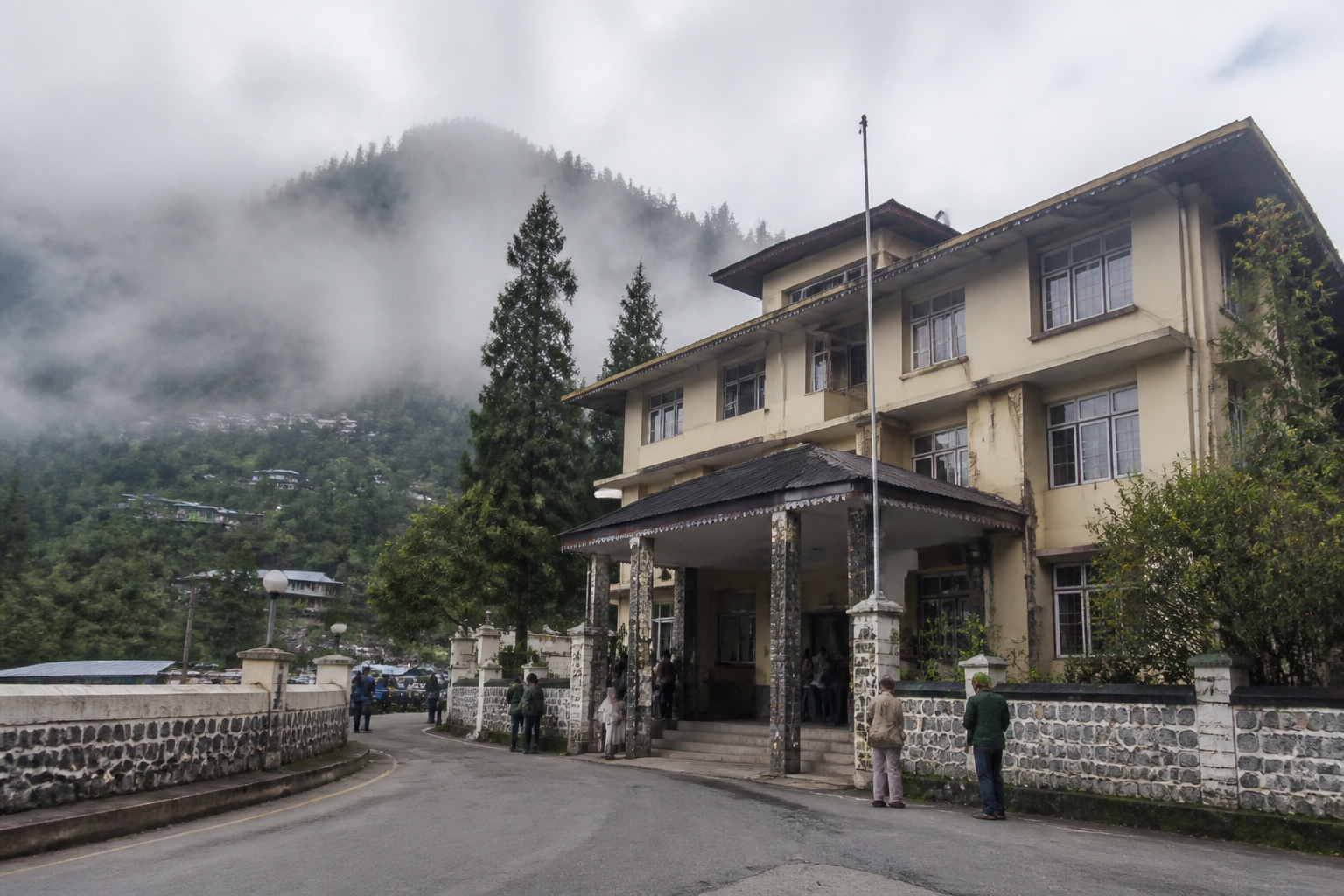
The appointment of an administrator to the Gorkhaland Territorial Administration has opened a larger question than who currently runs the hill body: what happens to elected local government when the state executive assumes operational control without clearly explaining the legal status of the elected Sabha? The uncertainty in the Darjeeling hills follows the resignation of GTA chief executive Anit Thapa, followed by the resignations of deputy chief executive Sanchabir Subba, Sabha chairman Anjul Chowhan and deputy chairman Rajesh Chowhan, among others.
The Bengal government appointed S. Mohanty, then principal secretary of the GTA, as administrator in the first week of September. The appointment has since raised questions over whether the elected 45-member GTA Sabha continues to exercise its statutory role, and whether the state government followed the procedure laid down in the Gorkhaland Territorial Administration Act before placing the hill body under administrative control.
That distinction matters because the GTA was created as an institution of devolved governance for the Darjeeling hills. Its elected Sabha is not simply an advisory forum in the structure described by the Act. It is the body whose powers, duties and functions are set out in law. If an administrator is exercising those functions while elected members remain in office, the arrangement creates an institutional overlap that needs to be resolved through a formal order or a clear legal explanation.
The relevant provisions of the GTA Act appear to provide a defined route for the state government to take over the Sabha. Section 64(1) allows the government to supersede the GTA if, in its opinion, the institution has shown incompetence, defaulted in performing its statutory duties, or exceeded or abused its powers. However, the provision requires the government to issue an order published in the Official Gazette and to state the reasons for the decision.
The same provision also requires the Sabha to be reconstituted within a period not exceeding six months. This time limit indicates that supersession is not framed as an open-ended replacement of elected local government by state-appointed administration. It is a temporary statutory mechanism linked to the restoration or reconstitution of the elected body.
The Act contains a further procedural safeguard. Section 64(2) states that before making an order under Section 64(1), the government must give the GTA an opportunity to make a representation. A GTA Sabha member told The Telegraph that he did not recall receiving such an opportunity. The report does not cite an official state response confirming whether a representation process took place or whether an order under Section 64 was issued and published.
That missing clarity is at the centre of the present dispute. The issue is not only whether the government had reasons to intervene. It is also whether the intervention followed the sequence prescribed by the law: an opportunity for representation, a reasoned order in the Official Gazette, vacation of elected offices after supersession, and reconstitution within the statutory period.
Section 65, as cited in the report, states that when an order of supersession is passed, all GTA Sabha members shall vacate their offices. The powers, duties and functions of the GTA Sabha and the Executive Sabha may then be exercised by authorities or persons appointed by the government. This provision appears to create a clear legal consequence for supersession. It does not describe a parallel arrangement in which an administrator controls the institution while elected members continue to hold office in an uncertain capacity.
That is why the participation of elected members in a recent meeting with the administrator has generated further questions. A senior GTA official described their participation as being in an advisory role. But one Sabha member said the members had not received a written order informing them that their role was limited to advice. In the absence of such written clarification, the practical boundary between elected representation and state administration remains unclear.
This ambiguity has consequences beyond the immediate political transition in the hills. Local institutions function through defined authority: elected representatives must know whether they can deliberate and decide, officials must know whose directions have legal force, and residents must know which institution is accountable for public decisions. When those lines are blurred, responsibility can become difficult to trace even if day-to-day administration continues.
The GTA’s present uncertainty also shows why the procedural parts of autonomy legislation matter. Public debate often focuses on the creation of a regional body or the powers listed in its founding law. Less attention is paid to the clauses governing suspension, dissolution, representation and reconstitution. Yet these provisions determine whether elected institutions remain protected during periods of political change or can be displaced without a transparent transition.
The report places the current dispute in a longer history of contested hill governance. It says the Left Front government had earlier bypassed provisions of the Darjeeling Gorkha Hill Council Act and that the Trinamool Congress government also did not honour provisions of the GTA Act. An observer quoted in the report said the current BJP government was acting no differently. These claims are political assessments and are not accompanied in the supplied material by specific earlier orders or court findings. They nevertheless point to a recurring institutional question: whether successive state governments treat hill self-government laws as binding administrative frameworks or as arrangements that can be adjusted during political transitions.
The sequence of events has made the question particularly sensitive. Thapa, the BGPM president and an ally of the Trinamool Congress, resigned as GTA chief executive after the change of government in Bengal. Other senior office-bearers subsequently resigned. The state then appointed an administrator. The available report does not establish whether the resignations themselves legally triggered the appointment, whether the government relied on a formal supersession order, or whether another statutory provision was used.
That distinction cannot be treated as a technicality. If the state acted under Section 64, the requirements concerning reasons, representation, Gazette publication, vacation of office and reconstitution become directly relevant. If it acted under a different provision or administrative arrangement, the legal basis and limits of that arrangement still need to be stated. Without that information, neither the elected members nor residents can clearly determine the institutional status of the GTA Sabha.
The six-month reconstitution requirement, if Section 64 has been invoked, is also an important administrative milestone. It would place a time-bound obligation on the government rather than permit an indefinite interim structure. The supplied report does not state when any such period began, whether a Gazette order exists, or whether a reconstitution schedule has been announced.
The larger urban-governance lesson is that regional institutions are judged not only by the services they administer but by the accountability architecture through which they administer them. In the hills, where governance is tied to questions of representation, autonomy and territorial administration, uncertainty over the elected Sabha’s status can affect the legitimacy of every decision taken during the transition.
The immediate evidence confirms that an administrator has been appointed, senior GTA office-bearers have resigned, elected members have attended a meeting in an advisory capacity and questions have been raised about compliance with the GTA Act. It does not establish whether the state issued a valid supersession order, gave the Sabha an opportunity to make a representation, or formally converted the members’ role into an advisory one. Those are the documents and explanations that will determine whether the current arrangement is a lawful interim administration or an unresolved overlap between elected authority and state control.
