


A pedestrian remains in critical condition after being struck by a private bus in Goregaon West, according to a report by The Times of India. The crash, reported to have occurred at about 11pm on September 6 near Ratna restaurant, has led Goregaon police to register a first information report against the bus driver for rash driving. The incident is now more than a single collision: it raises questions about how a serious road crash is recorded, investigated and followed through when the injured person cannot yet identify himself or give a statement.
The available account describes a pedestrian aged approximately 55 to 60 who was crossing the road when the bus hit him from the front. The bus was travelling from MTNL Junction towards Ram Mandir. The driver, identified as Vijayprakash Gupta, reportedly took the injured man to Trauma Care Hospital before leaving. Doctors later referred the victim to Sion Hospital, where he was admitted to the intensive critical care unit after losing consciousness.
Police have not established the pedestrian’s identity, according to the report. The victim suffered injuries to his head, eyes, nose, fingers and face. Investigators visited the hospital to record his statement, but doctors said he had not regained consciousness. That detail is central to the case because the injured person is both the principal victim and a potentially important witness to the circumstances of the crash.
The FIR provides the formal starting point for the investigation. At this stage, however, the reported facts do not establish the complete sequence of events. The account identifies the location, approximate time, direction of travel and the charge of rash driving, but it does not state whether police have recovered CCTV footage, identified independent witnesses, examined the bus, documented the road layout or determined the pedestrian’s precise crossing point. Those details would be necessary to move from an initial complaint to a fuller reconstruction of the collision.
That distinction matters in urban road-crash reporting. An FIR records the basis on which police begin an investigation; it is not, by itself, a final finding on liability. The reported charge indicates the legal direction of the case, while the evidence gathered during the investigation will determine how the incident is understood. The source account does not report the results of any mechanical inspection, medical assessment beyond the listed injuries, traffic-camera review or eyewitness testimony. These remain unestablished in the supplied material.
The incident also shows how vulnerable a crash investigation can become when the injured person is unidentified and unconscious. Police may need to establish the victim’s identity through hospital records, missing-person complaints, identification documents or information from relatives. Until that process is complete, routine steps such as recording a statement, confirming the intended destination or understanding the pedestrian’s movements before the crash may be delayed.
The medical pathway described in the report adds another layer. The pedestrian was first taken to Trauma Care Hospital and was later referred to Sion Hospital. The account does not specify the medical reasons for the transfer, the time taken between the two facilities or the victim’s condition at the time of referral. It does establish that the injuries were serious enough to require intensive care and that the victim had not regained consciousness when police attempted to speak with him.
For the bus operator and the investigating agency, the reported route is also relevant. The bus was travelling from MTNL Junction towards Ram Mandir, with the collision occurring near Ratna restaurant in Goregaon West. The supplied report does not identify the private company, state the bus’s speed, describe the lighting or visibility conditions, or say whether the vehicle was carrying passengers. Without those facts, it would be premature to draw conclusions about the road design, driver behaviour or operating practices of the company.
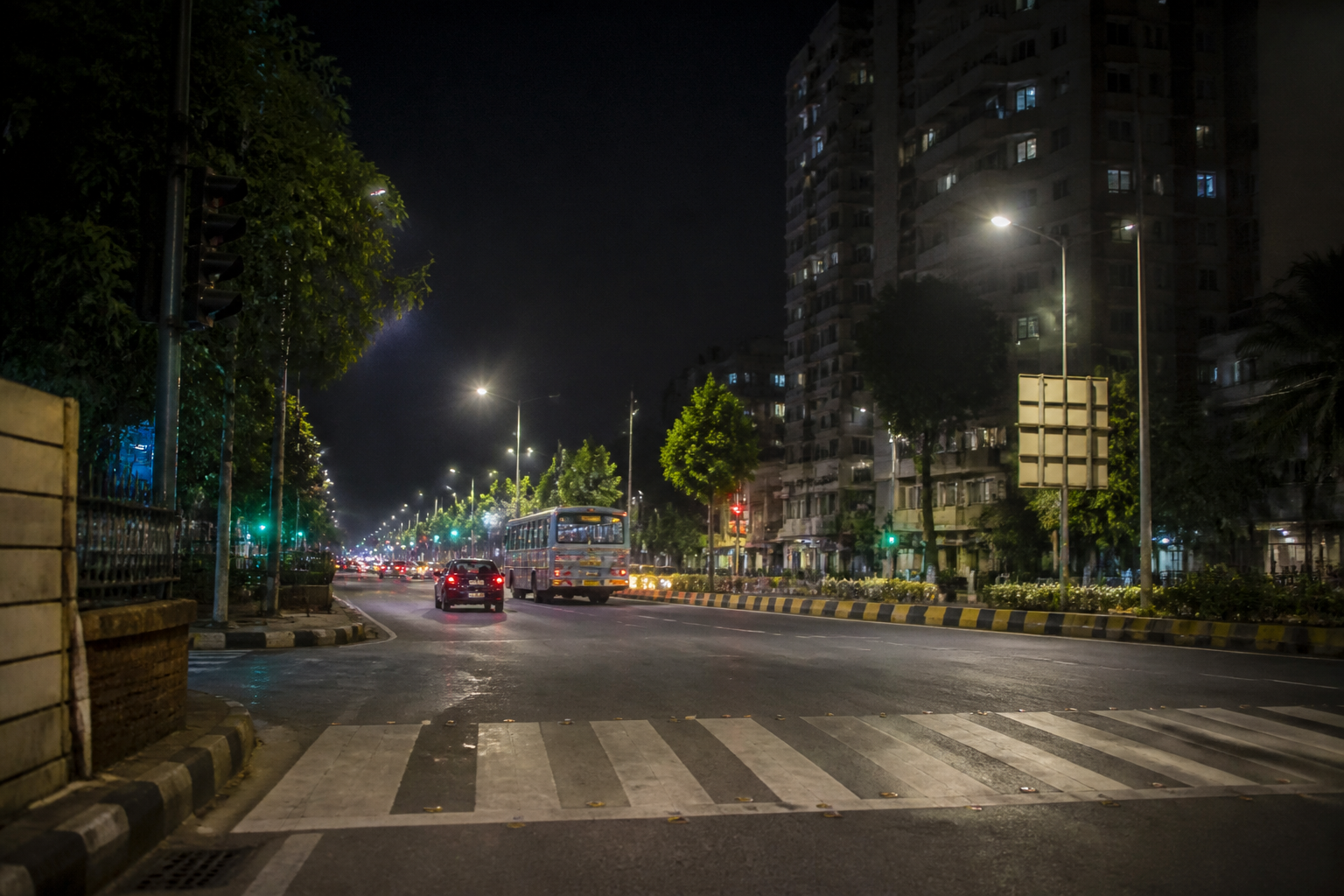
Yet the location and timing point to the importance of examining the pedestrian environment at night. A person crossing a road at 11pm may encounter different conditions from those present during the day, including lower visibility, reduced pedestrian activity and different traffic speeds. The report does not say whether the crossing took place at a marked location, at an intersection or between junctions. It also does not state whether street lighting, footpaths, medians, signals or other crossing facilities were present. These omissions are not evidence that any particular infrastructure failure occurred, but they identify the questions a complete public account would need to answer.
The case therefore sits at the intersection of enforcement and street design. The police response focuses on the driver and the alleged manner of driving. A broader road-safety review would also examine the conditions under which pedestrians and vehicles interacted at the site. These are separate lines of inquiry. Establishing whether a driver acted rashly does not automatically establish that the road environment was safe, while identifying a difficult crossing environment does not by itself determine the driver’s legal responsibility.
The report’s description of the driver’s actions after the collision is limited but significant. Gupta reportedly took the injured pedestrian to Trauma Care Hospital and left. The supplied material does not explain whether police later contacted him, whether he remained available for questioning, or whether the bus was seized or inspected. It only states that an FIR was registered against him for rash driving. Further information from investigators would be needed to clarify the status of the driver and the next procedural steps.
The absence of an identified victim also affects public accountability. A crash involving an unnamed person can quickly become difficult to track once the initial report fades from public attention. In this case, the victim’s condition, identity and ability to provide a statement remain unresolved. The investigation’s progress will depend partly on whether those gaps are closed and whether police can corroborate the initial account through documentary, physical or eyewitness evidence.
The supplied report does not provide wider statistics on pedestrian deaths or injuries in Goregaon, Mumbai or Maharashtra, nor does it compare this crash with other incidents on the same route. It therefore cannot establish whether the location is a recurring collision point or whether the event reflects a broader pattern. That evidence would be required before describing the site as a black spot or drawing conclusions about citywide road safety.
What the available facts do confirm is narrower but still consequential. A pedestrian crossing in Goregaon West was struck by a private bus late at night. The victim suffered multiple serious injuries, lost consciousness and remained unidentified at the time of the report. Police registered an FIR against the named driver, but investigators had not yet recorded the victim’s statement. The circumstances surrounding the crossing, the vehicle’s speed, visibility, road design and independent evidence remain unclear.
The next stage is therefore evidentiary. Police will need to establish the victim’s identity, document his medical condition, examine the driver’s account and determine what physical or digital evidence exists from the location and vehicle. The authorities will also need to clarify whether any additional charges or findings follow from that investigation. Until those steps are reported, the Goregaon pedestrian accident should be understood as a serious crash with a formal police case, not as a fully established account of causation or responsibility.
