


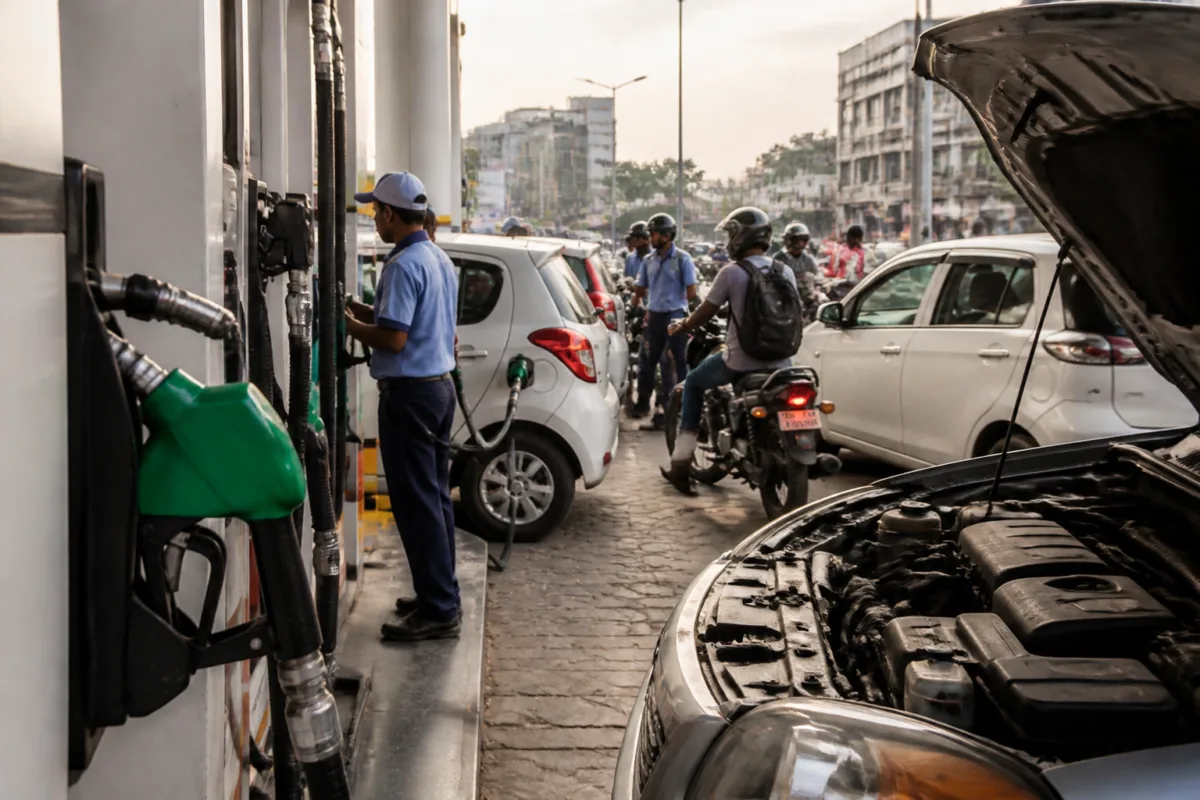
D K Shivakumar has challenged BJP leaders to explain allegations that ethanol was blended into petrol at levels above the prescribed 20%, claiming that the higher concentration has affected vehicles across Karnataka and caused financial losses to owners.
Reacting in Mysuru to a BJP protest in Bengaluru against price rises, Shivakumar said the party should first respond to the alleged fuel-blending issue before staging further demonstrations. He questioned why the BJP had not protested when the Centre increased fuel prices, according to a report by Prajavani.
Shivakumar alleged that ethanol had been mixed with petrol at 30% instead of 20%, and that the change had created problems for crores of vehicles in the state. He claimed that engines had been damaged and vehicle owners had suffered losses as a result.
The allegation has not been independently established in the material supplied for the report. Shivakumar said the state’s food minister had arranged tests at 67 locations to determine the facts related to the alleged adulteration. He also said samples and supporting evidence had been brought to the attention of the Union government.
“Who is responsible for supplying adulterated fuel and causing hardship to the people of the state?” Shivakumar asked, according to the report. He said Union ministers had denied the allegations, but maintained that the state had samples as evidence and demanded that BJP leaders respond to them.
The dispute places fuel quality and vehicle compatibility at the centre of a wider political argument over ethanol blending. For urban residents, the issue has a direct operational dimension: any confirmed deviation in fuel composition could affect vehicle performance, repair costs and confidence in petrol supplied through retail outlets. The report, however, does not provide the test results, the locations of the samples, the fuel suppliers involved or an independent response from the Union government or oil companies.
Shivakumar also said appointments to state corporations and boards would be made in three phases. He said a list of 500 directors had been prepared and signed, and would be released soon, while senior legislators would also be given suitable opportunities.
The next publicly stated step on the fuel issue is the state’s examination of samples collected from 67 locations and its engagement with the Union government over the evidence, as described by Shivakumar.

