


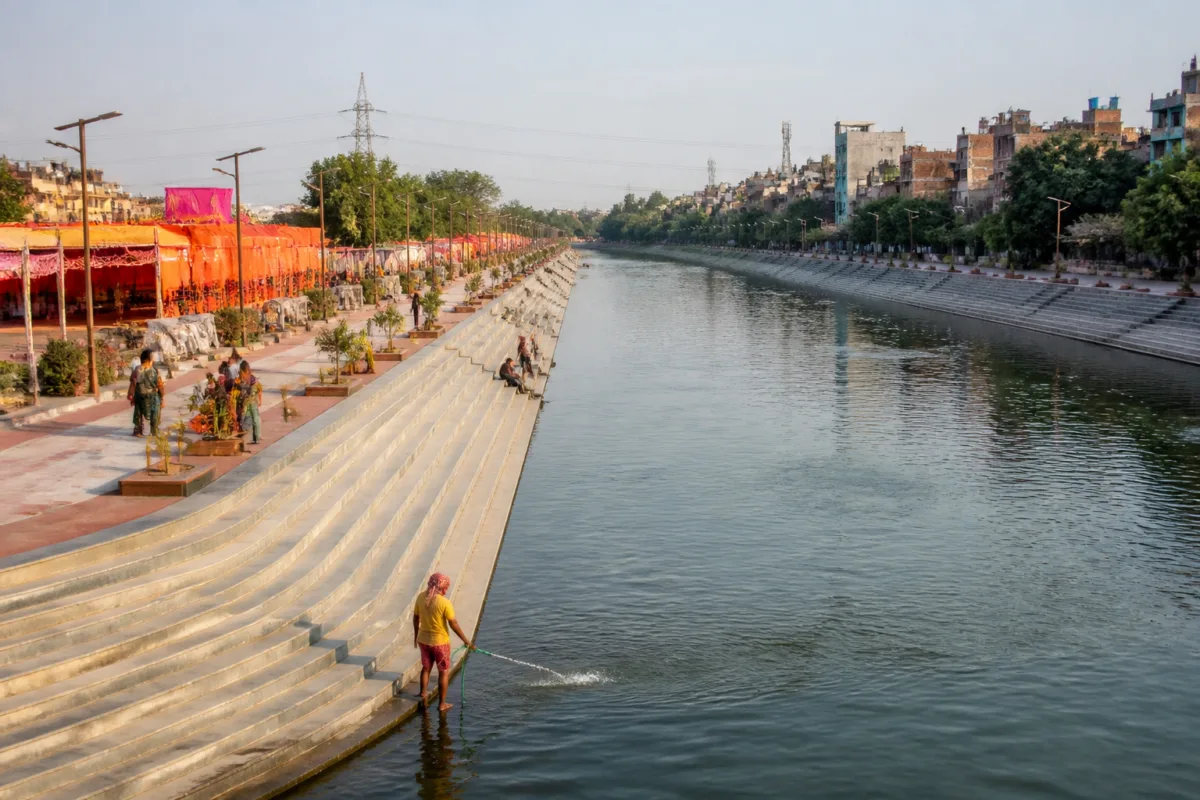
Delhi’s 11-km Munak Canal Chhath Ghat will be inaugurated on November 12, creating a new festival facility with permanent steps, toilets, changing rooms, lighting and security arrangements along a canal stretch that the Delhi government says had remained neglected for years.
The inauguration will be conducted by Bharatiya Janata Party national president Nitin Nabin, according to information reported by Live Hindustan. The facility has been developed for Chhath worshippers and is expected to serve residents across five assembly constituencies: Shalimar Bagh, Wazirpur, Model Town, Adarsh Nagar and Badli.
The Delhi government has described the 11-km site as the capital’s longest canal-side Chhath ghat. It has also said the project is the first of its kind in the country to create such a large organised festival venue along a canal. The facility is intended to provide a structured location for families, particularly those connected with eastern Uttar Pradesh and Bihar, to conduct Chhath rituals.
According to the report, around 1,400 truckloads of debris, waste and other material were removed from the Munak Canal area during the cleanup and redevelopment drive. Encroachments were removed from both sides of the canal, after which permanent steps and cemented roads were constructed along the banks.
The planned public amenities include changing rooms for worshippers, toilets, tents, lighting, benches and closed-circuit television cameras. The site is also being landscaped with greenery and other beautification features. The government has said that clean water flow in the canal will be ensured and that fountains will be installed at different locations.
Three bridges are being constructed across the canal to improve movement and connectivity between its two banks. The government has said that worship arrangements will be available across the full 11-km stretch during this year’s Chhath festival, while the bridges, landscaping and remaining development work are targeted for completion over the next two to three months.
The project illustrates how an underused or poorly maintained urban water corridor can be adapted for a large public gathering, although the immediate facility is being presented primarily as a Chhath venue. Its operation will require coordination between sanitation, crowd management, security, water-flow maintenance and access arrangements across multiple neighbourhoods.
The Delhi government expects thousands of families in the five constituencies to benefit from the facility. The inauguration on November 12 is the next scheduled milestone, while completion of the bridges, greenery and other remaining works is expected within two to three months.

