


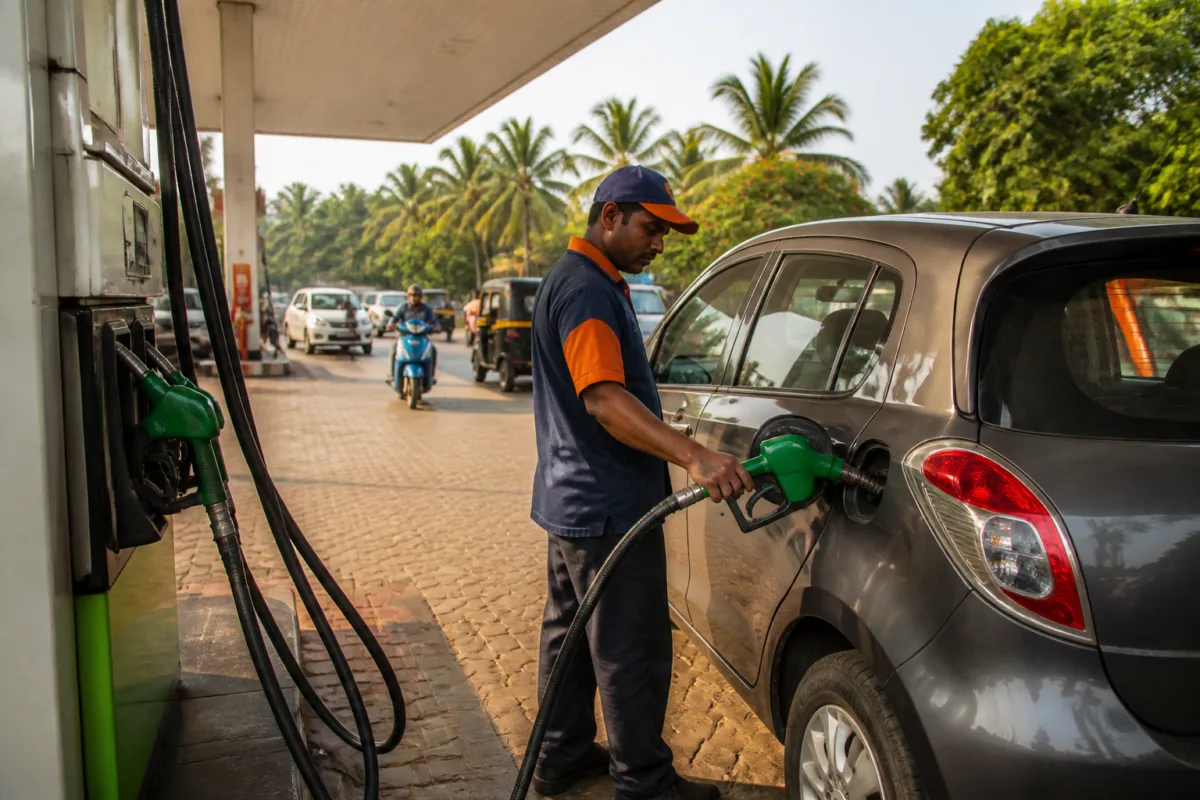
The Centre has no immediate plan to increase ethanol blending in petrol beyond 20 per cent, Petroleum and Natural Gas Minister Hardeep Singh Puri said at an energy technology event in South Goa on Tuesday, offering a near-term signal to vehicle owners, automakers and fuel retailers navigating India’s transition to blended fuels.
Puri said the 20 per cent ethanol blend, known as E20 petrol, remained the government’s target for now. He was speaking during an interaction at the inauguration of the 29th Energy Technology and Innovation Meet in Betul village, South Goa. The three-day event is being organised by the Union Ministry of Petroleum and Natural Gas.
The minister also rejected what he described as misinformation about E20 fuel, including social media claims that vehicles had stopped or suffered widespread breakdowns because blended petrol was being sold. Puri said vehicles compliant with the E20 standard were designed to use the fuel, while older vehicles manufactured before 2003 had experienced some problems.
India has promoted ethanol-blended petrol as part of its strategy to reduce dependence on imported crude oil. The government has said the shift can lower the country’s import burden and support domestic agricultural producers. According to Puri, the introduction of E20 petrol helped the Union government save Rs 1,60,000 crore, of which Rs 1,40,000 crore was returned to farmers. The minister described this as a shift for farmers from being providers of food to also becoming providers of energy.
Addressing reports of problems faced by E20 users, Puri said there had been an issue with the transportation of blended fuel because some tankers were also used to carry other materials. On claims of engine damage, he said an individual had made the allegation and that the automobile manufacturer concerned had filed a case against him.
Puri argued that the scale of vehicle use would have made widespread engine damage visible if it were occurring. He said six crore vehicles visit fuel dispensing stations every day. The statement, however, does not provide a technical assessment of vehicle-wise performance, nor does it detail how problems reported by owners of older vehicles will be addressed.
The government’s position comes as the vehicle and fuel systems are being adjusted to accommodate higher ethanol compatibility. The Road Transport Ministry on Monday notified changes to the Central Motor Vehicles Rules, 1989, allowing flex-fuel vehicles capable of running on blends of up to E100, or nearly pure ethanol.
Flex-fuel vehicles can use higher ethanol blends such as E85 and E100, unlike conventional petrol vehicles approved for lower ethanol concentrations. Toyota Motor Corporation, Tata Motors and Hyundai Motor Company are among the major automakers developing flex-fuel vehicles for the Indian market as policymakers seek to reduce the country’s fossil-fuel import bill. For now, Puri’s statement keeps the government’s petrol-blending position at E20 while the rules for higher-ethanol vehicles move forward.

