


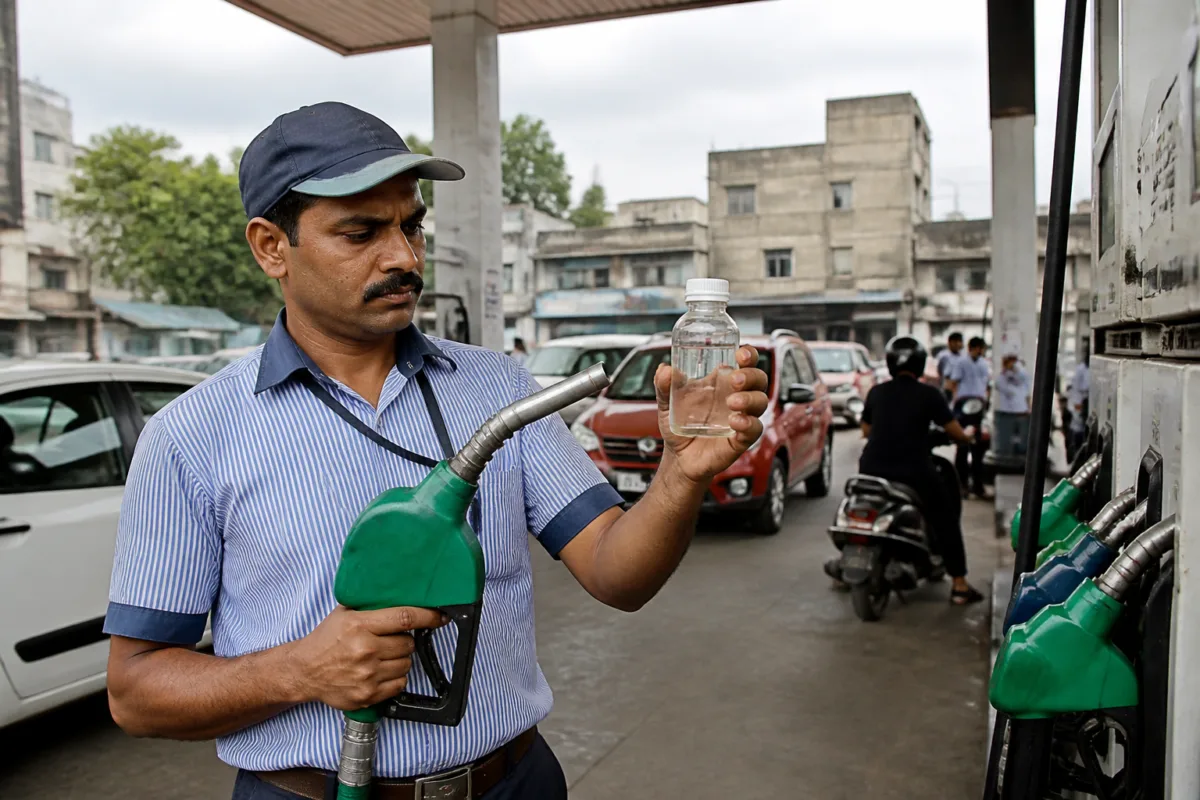
Union minister of state Suresh Gopi has defended India’s 20 per cent ethanol-blending limit in petrol, rejecting allegations that oil marketing companies may have supplied fuel containing more ethanol than prescribed as state governments in Karnataka and Kerala test samples.
Speaking in Thrissur on Tuesday, Gopi said ethanol blending was the only option to reduce pollution from petrol-powered vehicles. He said India had moved from E10 to E20 after extensive scientific research and approval from the Automotive Research Association of India (ARAI).
Gopi described those making allegations about excess ethanol as people who lacked scientific knowledge. He said the permitted blending limit was 20 per cent and maintained that consumers would not receive petrol with a higher ethanol content from retail fuel outlets.
According to the minister, blending equipment is calibrated to stop the process when the ethanol content reaches 20 per cent. He said the system was designed so that a valve would cut off at the prescribed limit, calling the process scientifically proven.
The remarks came as the issue remains under examination in Karnataka and Kerala. The Congress-ruled Karnataka government has alleged that ethanol content in petrol exceeded the prescribed 20 per cent limit and is conducting tests. Kerala is also testing fuel samples, with results awaited, according to the report.
Gopi said anyone was free to test the ethanol content in petrol and that he would not discourage such checks. He added that it would need to be established through a Central Bureau of Investigation probe whether adulteration had occurred and whether samples had been collected from outlets where irregularities were suspected.
The minister also claimed that there had been no insurance claims for vehicle damage attributed to ethanol blending. He cited Brazil’s use of E80 fuel, a high-ethanol blend containing about 80 to 85 per cent ethanol and 14 to 19 per cent petrol, while distinguishing it from India’s E20 system. E80 is designed for flex-fuel vehicles, according to the report.
The dispute places fuel testing and blending controls at the centre of a wider public debate over how India’s pollution-reduction policy is implemented at retail outlets. The immediate question remains whether the tests being conducted by Karnataka and Kerala find ethanol levels above the prescribed limit. Kerala’s results are awaited.

