


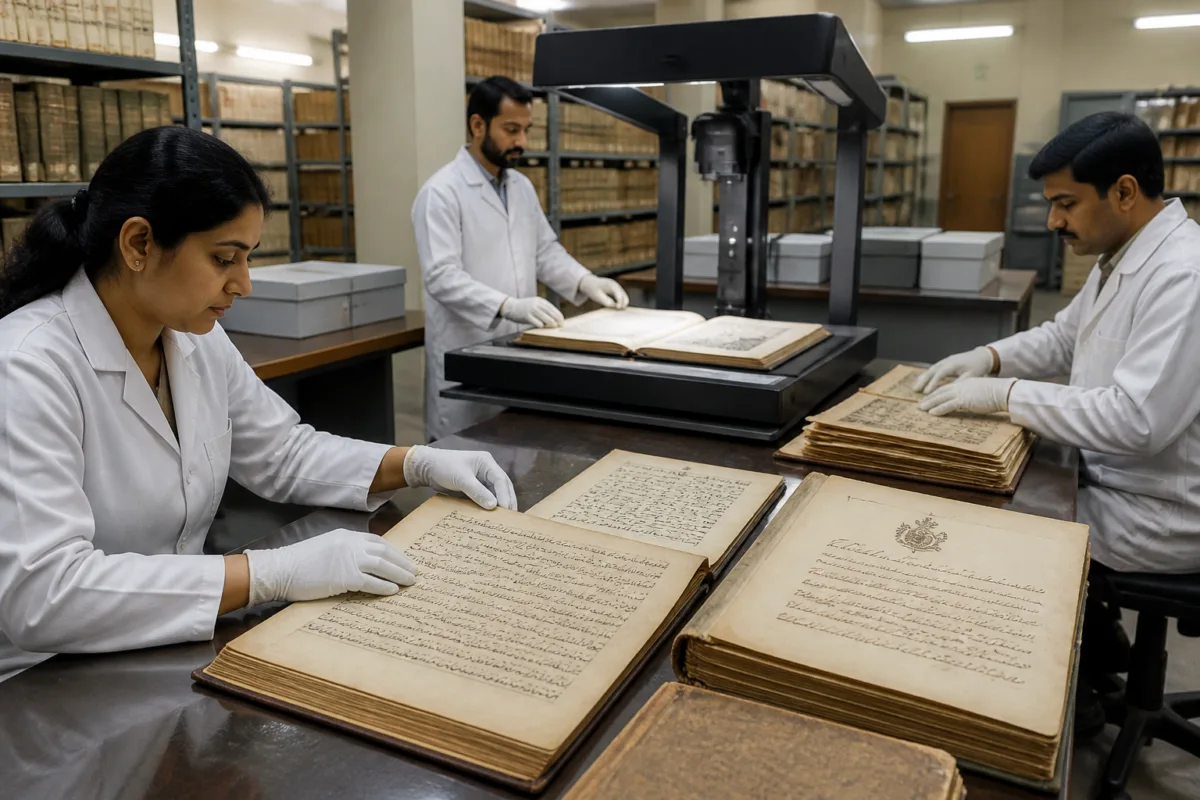
More than 3.2 lakh pages of Hyderabad State gazettes issued between 1869 and 1956 have been digitised and handed over to the Telangana State Archives and Research Institute, making a large body of administrative and infrastructure records available in digital format.
Noor Microfilm International Centre (NMIC), New Delhi, handed over digital data comprising 3,20,598 pages of Persian, Urdu and English gazettes during the third phase of the preservation project. The material was issued by the erstwhile Hyderabad Government and covers the period before and around the reorganisation of the region into the modern administrative framework.
The collection includes records on administration, education and infrastructure projects, according to Telangana State Archives and Research Institute director Dr Zareena Parveen. She said the digital handover also covered 40 segments of historically significant archival records.
Among the records are Daftar Diwani, documents relating to the Revolt of the Asif Jahi government, Makharej Sarkar Daulatmand Mahalat, Tafseel-e-Jageer, Diplomatic Correspondence and the Report on the State and Progress of Education in the Central Provinces.
The digitised material also includes records connected with major water and infrastructure works. These include documents on the construction of the Osman Sagar project, the effects of deforestation and denudation on irrigation projects, Himayat Sagar, the construction of a new reservoir on the Esa River, lotus growth in Hussain Sagar Tank and the moderation of the Musa River.
The records are relevant to Hyderabad’s long infrastructure history, particularly the development and management of reservoirs, rivers and irrigation systems. The material provides documentary evidence from a period when water management and public works were central to the city and the surrounding Hyderabad State.
NMIC regional director Ali Akber Niromand said the digital images had been prepared to international quality standards. He added that specialised conservation techniques used in the project would help protect the archival documents for up to 100 years.
The digitisation is being carried out alongside physical preservation. Digitising fragile records creates digital copies that can be used for research and reference while reducing the need to handle the original documents, although the source report did not specify the public access process or whether the full collection would be available through an online portal.
State Archives assistant director MA Raqeeb said approximately 11 lakh digital images had so far been handed over to the institute. The remaining digital data, comprising approximately 6 lakh images, is expected to be handed over in the first week of December, according to the official.
The next handover will complete another stage of the archive preservation exercise, while the institute’s subsequent public access arrangements will determine how researchers and citizens can consult the digitised records.

