


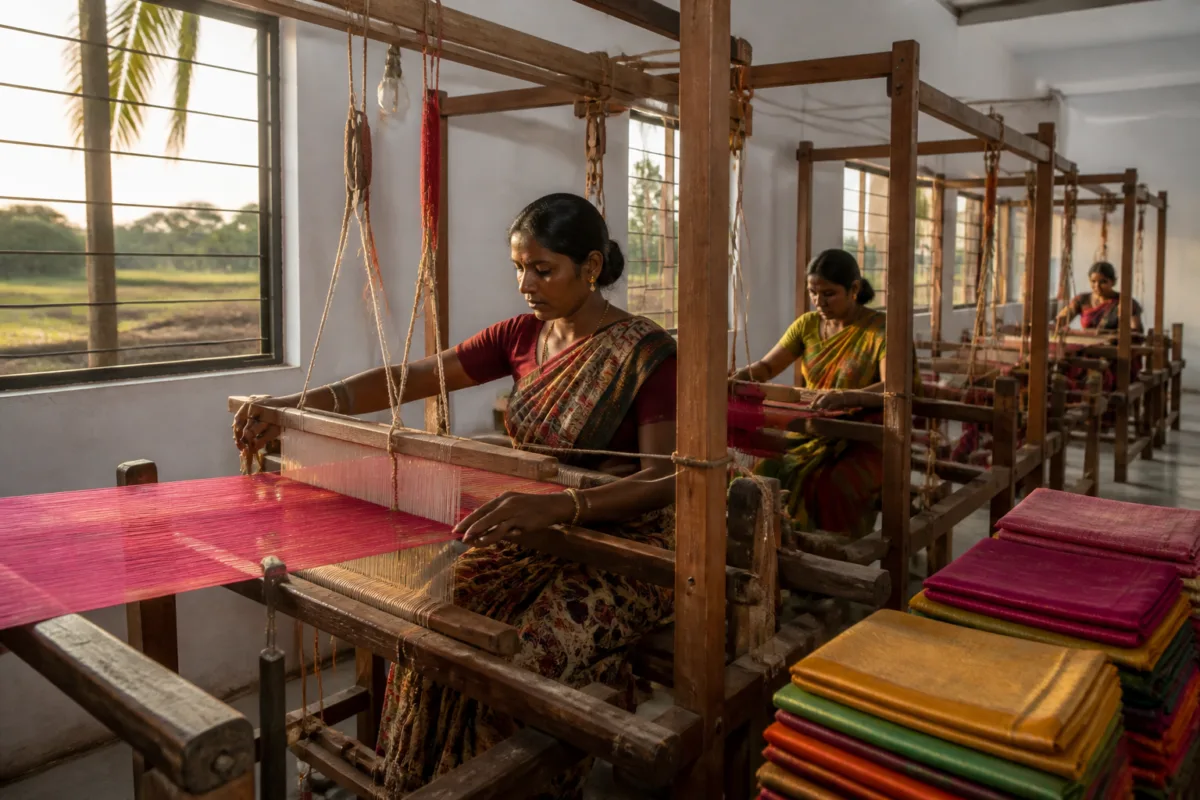
The Dhapewada textile project near Nagpur is targeting employment for 5,000 women from the local Halba Adivasi community as it seeks to revive traditional handloom weaving and build a larger market for locally produced sarees.
Union Minister Nitin Gadkari said the initiative in Dhapewada, his native village, is intended to preserve the area’s handloom heritage while creating sustainable livelihood opportunities for traditional weaving families. The project produces tussar silk, silk-cotton and cotton sarees, and is also exploring exports and the use of artificial intelligence to expand its reach.
The building of Dhapewada Textile Udyog Producer Company Limited, a private entity, was inaugurated in the village on Saturday by actor and BJP MP Hema Malini. Union Textiles Minister Giriraj Singh was also present at the event.
According to Gadkari, the initiative began in 2021 with training programmes for women. In its early stages, the project faced uncertainty over market demand. He said interest in the products increased as the quality of the textiles improved, creating a basis for expanding production and employment.
The project is focused on products made by local women and is designed around the area’s existing handloom skills. Its stated employment target would make the initiative a significant local livelihood programme if achieved, particularly for families that have traditionally depended on weaving.
Singh said the project could help weaving families earn nearly Rs 30,000 per month throughout the year. The income estimate was presented in the context of making handloom work a more regular livelihood rather than a seasonal or irregular source of earnings.
The project’s expansion plans include taking Dhapewada’s sarees to international markets through exports. It is also looking at artificial intelligence as part of its effort to improve market access and support the growth of the textile initiative, although specific applications and implementation timelines were not detailed in the announcement.
The development places local production, skills training and market access at the centre of a village-based textile model. Its next stage will depend on the expansion of women’s participation, continued demand for the products and the project’s ability to translate improved textile quality into sustained sales and employment.

