


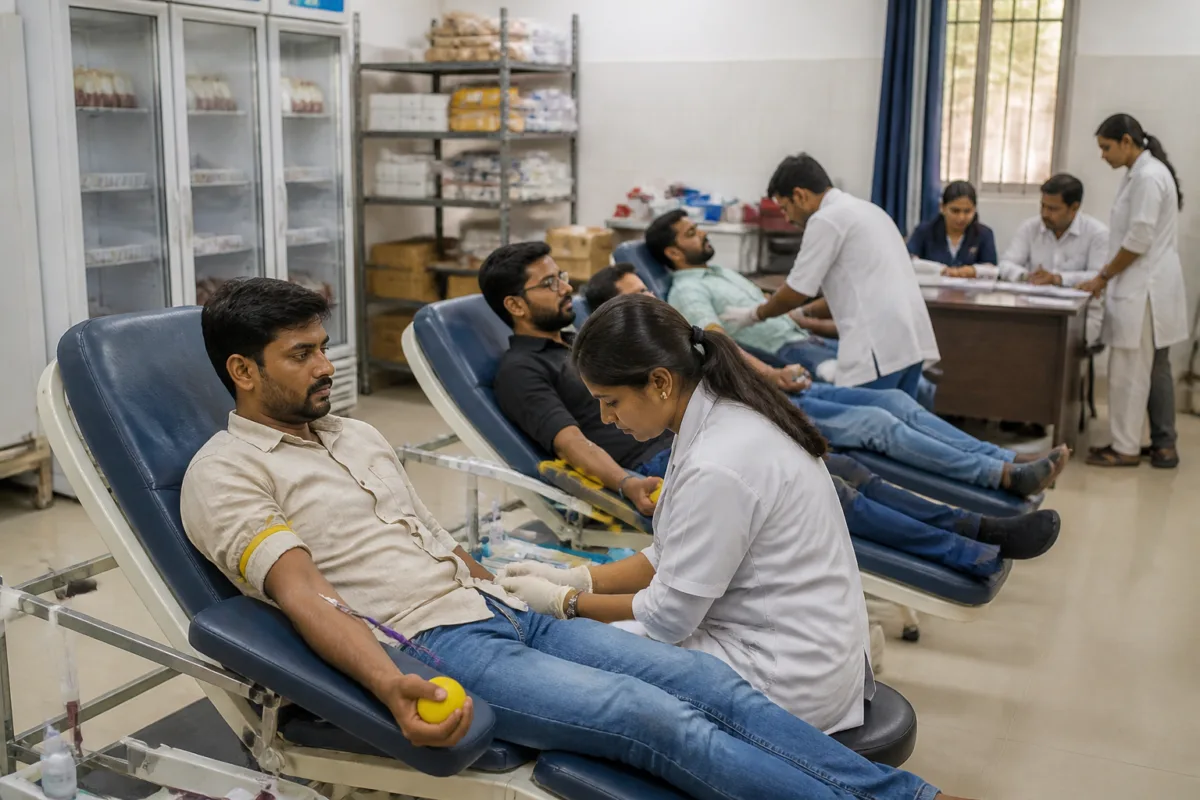
A blood shortage at Shaheed Nirmal Mahto Medical College and Hospital (SNMMCH) in Dhanbad is forcing the facility to rely largely on replacement donations, creating difficulties for patients who need urgent transfusions, according to a Times of India report.
The shortage is particularly affecting people with thalassemia and sickle cell anaemia, who require regular transfusions. The hospital also provides around eight to 10 units of blood free of cost each day to thalassemia and dialysis patients, adding to demand on its blood bank.
SNMMCH supplies an average of 40 to 45 units of blood daily. The largest demand comes from the medicine, gynaecology, orthopaedics and surgery departments, the report said. With stocks depleted, blood is mostly being issued against replacement donors.
The immediate difficulty was illustrated by the case of Lakshmi Devi, a resident of Tundi who was brought to SNMMCH for delivery. Doctors advised a transfusion before an emergency operation because of her low haemoglobin level. Her family reportedly spent several hours searching for a suitable donor before arranging one unit of O-positive blood from the hospital bank.
Dhanbad deputy commissioner Aditya Ranjan donated blood at the sadar hospital and appealed to residents, social organisations and youth groups to participate in voluntary donation drives. He also called on government officials, including police personnel, to donate blood and encourage wider participation.
Ranjan said blood donation camps would be organised at community health centres across the district. The proposed network could take collection closer to residents and reduce dependence on sporadic camps, although the report does not provide a schedule, target number of units or details of how the camps will be coordinated with SNMMCH and other blood banks.
Dr BK Pandey, in-charge of the blood bank, attributed the reduced donor turnout to fewer voluntary donation camps, changing weather conditions and festival holidays. He said the hospital was contacting voluntary organisations and youth groups to organise more camps.
The episode shows how a hospital’s ability to provide timely treatment depends not only on clinical staff and operating capacity but also on the reliability of its blood-collection network. A facility distributing up to 45 units a day needs regular inflows to serve emergency surgery, maternity care and patients requiring continuing transfusion support.
The district administration’s response is centred on mobilisation: a senior official’s donation, appeals to public institutions and planned camps at community health centres. The available account does not state the blood bank’s remaining stock, the number of patients affected, the duration of the shortage or whether supplies from other facilities are being used to support SNMMCH. These details will be important in assessing whether the proposed camps can restore a stable buffer rather than provide only short-term relief.

