


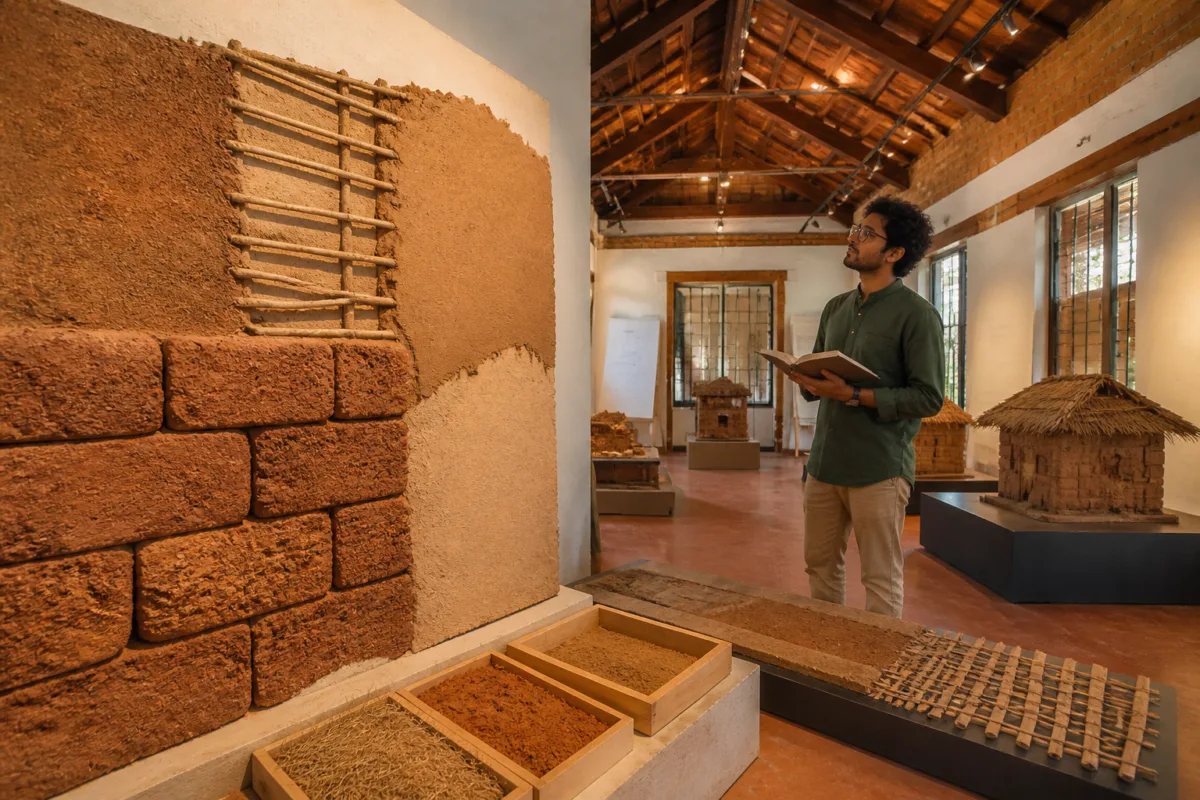
An exhibition in Mangaluru is documenting Tulunadu’s traditional mud-building techniques, drawing attention to locally sourced construction materials and knowledge systems that have been displaced by burnt bricks, concrete blocks and reinforced cement concrete.
The exhibition on ‘Mud-Building Traditions of Tulunadu’ opened at the Kodialguthu Centre for Art and Culture as part of World Heritage Week celebrations. Jointly organised by the Mangaluru chapter of the Indian National Trust for Art and Cultural Heritage (Intach) and Art Kanara Trust, it will remain open until November 21 from 11am to 7pm.
The display is part of a documentation project by Intach Mangaluru chapter convener Subhas Basu and architect Sharvani Bhat. It traces the global history of mud-block construction and presents traditional techniques from Tulunadu, their scientific basis and regional examples.
According to Basu, locally available laterite soil was once used in Tulunadu for walls, roofing, flooring and plastering. He said the material’s local availability made it versatile and environment-friendly, while the project could support sustainable living despite the challenge of high rainfall in coastal Karnataka.
Bhat said traditional construction relied on locally sourced materials and shared community knowledge, with families collectively maintaining their homes. She said maintaining mud structures had become more difficult as much of that knowledge was lost.
An interaction held alongside the exhibition highlighted the loss of ancestral houses to modern development and the need for greater awareness of the sustainability of mud buildings. Intach is also organising a hands-on workshop on different types of mud and mud-block making on Saturday from 9am to 5pm, in association with Bengaluru-based Mrinmayee Consultants.
The exhibition places traditional construction within a contemporary built-environment debate: how local materials, maintenance practices and inherited knowledge can be recorded before they disappear. It does not establish the cost, structural performance or scalability of mud construction, but it creates a platform for examining those questions in the context of coastal Karnataka’s climate and building traditions.

