


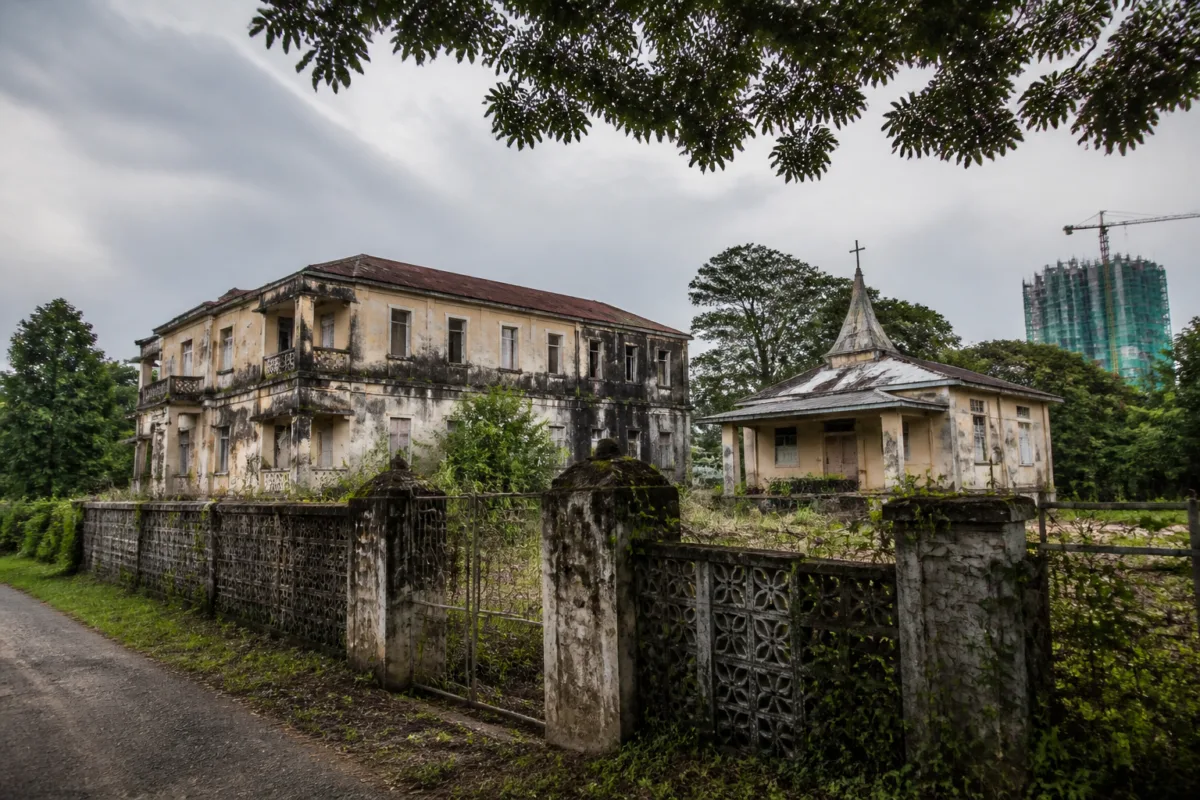
The Deolali sanatorium dispute is no longer only a disagreement over whether an old property should be sold. It has become a test of how charitable land is governed when trustees, community members, residents and regulatory bodies disagree over the property’s purpose, religious status and proposed redevelopment. The property in Deolali, Nashik, includes a defunct sanatorium and a villa owned by the Mumbai-based Hajee Noor Mohammed Hajee Janmohammed Latiff Charities. Its proposed sale to a builder is being contested before several institutions, with the Waqf Tribunal’s decision now awaited.
The controversy has acquired an additional layer because a religious structure on the property is described differently by the two sides. Advocate Yusuf Iqbal Yusuf, who is opposing the sale, has called it a three-decade-old mosque. Ateeq Anwar Agboatwala, chairman of the trust and described in the report as the property’s owner, disputes that characterisation, saying it is a prayer room built around 15 years ago for sanatorium inmates. The distinction is not merely semantic. The legal and administrative treatment of a mosque, a prayer room and a charitable property can carry different consequences for control, use and transfer.
According to Yusuf, Agboatwala wants to sell the property to a builder for Rs 27 crore, which he described as below its market value. Yusuf said he offered Rs 29 crore but was refused, arguing that a sale to an outsider would defeat the trust’s purpose. Agboatwala has rejected the allegations and accused his opponents of trying to turn the dispute into a communal issue. He has said that the sale proceeds would be used to fund scholarships for girls, preferably from the Memon community, pursuing professional courses.
The competing accounts show why the dispute has moved beyond a straightforward property transaction. The question is not only whether a trust can sell an asset, but whether the proposed transaction is consistent with the purpose for which the asset was held, the conditions attached to its administration and the approvals required from the relevant authorities. The supplied report does not establish the final legal position on any of these questions. It records claims by the parties and identifies the proceedings in which those claims are being examined.
The property’s history is central to the disagreement. Before his death in 1921, Latiff made his relative Hajee Agboatwala the executor of his estate. The report says Latiff’s children received two-thirds of the property through his will, while one-third became associated with the Latiff charities. That structure means the property’s ownership and charitable purpose are linked to an arrangement dating back more than a century. The present dispute therefore involves not only current trustees and prospective purchasers, but also the interpretation and administration of an old charitable settlement.
The institutional path followed by the dispute is unusually broad. Challenges and petitions have been taken to the Bombay High Court, the Maharashtra Waqf Board, the Charity Commissioner and the Waqf Tribunal. The report says the property was registered with the Waqf Board in 2018 and de-registered in 2025. Rauf Pathan, a trustee at Byculla-based Khilafat House, said de-registration did not automatically give trustees the authority to sell property that had been purchased for charitable purposes. His statement reflects the wider concern raised by opponents: that a change in regulatory status may not by itself settle the underlying questions of purpose, title or trustee authority.
Agboatwala has presented a different legal account. He said a writ petition filed by Yusuf was dismissed by the Bombay High Court on September 11, 2026, and that the Charity Commissioner permitted the sale. He also said there was no stay from the High Court, while the stay before the Waqf Tribunal was being extended from date to date until the tribunal decides the matter. These claims are attributed to Agboatwala in the report; the supplied material does not include the court order, the Charity Commissioner’s permission or the tribunal’s interim orders.
That limitation matters because the same event can look different depending on which institutional decision is being considered. A High Court dismissal may address the grounds raised in a particular petition without determining every issue concerning a sale. Permission from the Charity Commissioner may concern the administration of the trust without resolving the religious or waqf-related status of the property. Similarly, a tribunal’s interim protection may preserve the position while the substantive dispute remains undecided. The report indicates that these proceedings are connected, but it does not provide their full legal records or explain the precise scope of each order.
The disagreement over the religious structure has also brought local residents and the property’s caretaker into the dispute. Some Deolali residents have reportedly stated in an affidavit that the structure is a mosque. Agboatwala has rejected that claim, saying the room was built for sanatorium inmates and was supposed to remain locked outside prayer times. Zeeshan Khan, the caretaker, told the newspaper that his grandfather and father had also served as caretakers. The report says Khan did not respond to Agboatwala’s other allegations, including an allegation concerning the use of the property for political meetings.
The presence of a caretaker with a family history connected to the site illustrates how institutional records and lived local memory can pull in different directions. A trust may rely on deeds, wills, registrations, permissions and resolutions. Residents and caretakers may rely on how a structure was used, who accessed it and how it was understood by the surrounding community. In a property dispute, both forms of evidence can become important, but neither should be treated as conclusive without the relevant documents and orders.
The proposed value of the transaction is another unresolved issue. Yusuf has described Rs 27 crore as substantially below the property’s market value and said he offered Rs 29 crore. The report does not provide an independent valuation, a tender record, a comparative sale, the terms of the proposed agreement or details of how the trust selected the buyer. It therefore cannot establish whether the proposed price is undervalued. However, the disagreement makes valuation and process central to the public-interest question surrounding the sale.
Charitable property sales require more than a buyer and a price. They also raise questions about who benefits, how the property’s original purpose is interpreted and what safeguards prevent an asset from being transferred without adequate scrutiny. In this case, Agboatwala says the proceeds would support scholarships for girls studying professional courses. That stated objective gives the proposed sale a charitable rationale, but the supplied report does not establish whether a formal scholarship scheme exists, how much money would be allocated, who would administer it or whether the proposed sale has been approved on those terms.
The dispute also reveals the administrative difficulty created when one property is examined through multiple regulatory frameworks. The trust’s charitable administration, the property’s reported Waqf Board history, the Charity Commissioner’s role and the Waqf Tribunal proceedings each form part of the contest. When decisions are taken at different stages and by different bodies, parties may cite one order as support while opponents rely on another unresolved issue. For citizens and community organisations, this can make it difficult to determine which authority has the final say over a property and which questions remain pending.
The Deolali case should therefore be read as a governance problem as much as a land dispute. The immediate decision before the Waqf Tribunal may determine the next legal step for this property, but the evidence supplied in the report leaves several matters open: the legal status of the religious structure, the effect of the 2018 registration and 2025 de-registration, the scope of the Charity Commissioner’s permission, the valuation of the property and the safeguards attached to the proposed use of sale proceeds.
What is established is that a defunct sanatorium and villa connected to a century-old charitable arrangement are at the centre of a contested sale; that the parties disagree over the nature of a religious structure on the site; and that the dispute has travelled through several legal and regulatory forums. What remains to be established will depend on the Waqf Tribunal’s ruling and on the documentary record underlying the competing claims. Until then, the case remains a measure of how India’s charitable and religious properties are protected when historic purpose, local use, regulatory status and redevelopment value collide.

