


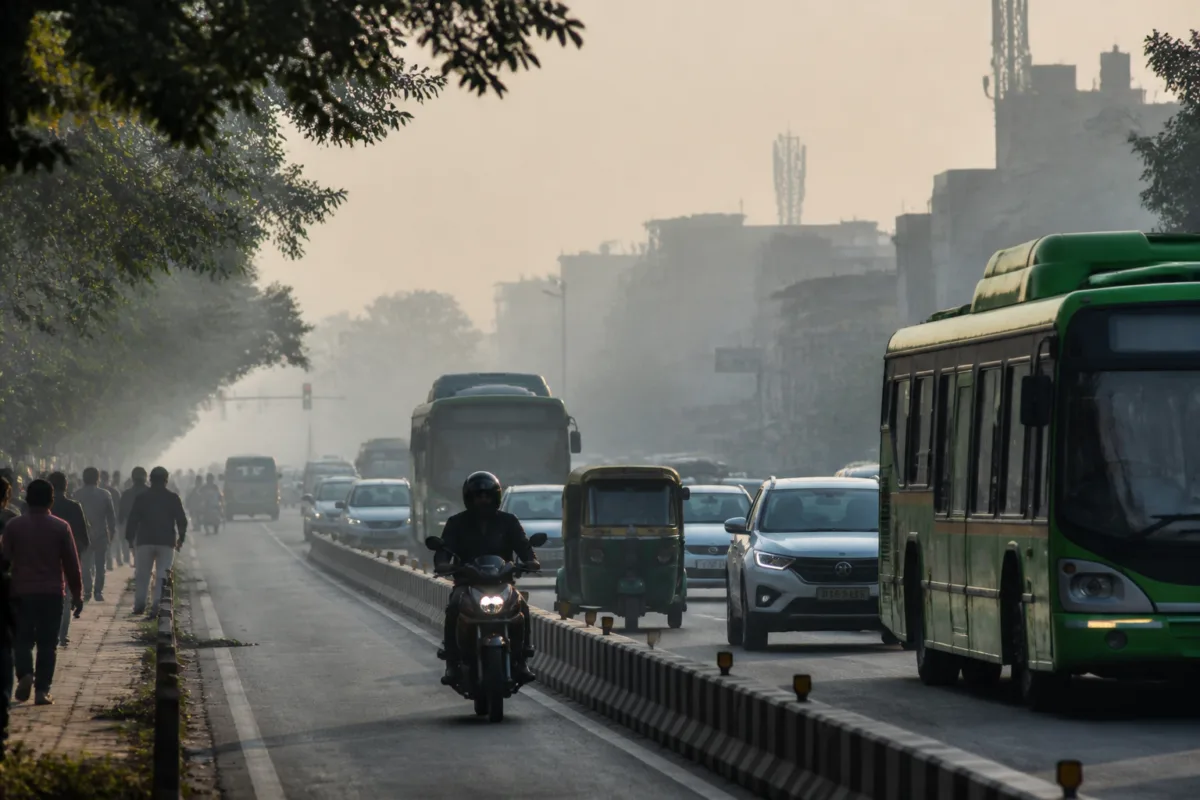
Delhi Chief Minister Rekha Gupta has reiterated a set of winter pollution-control measures that will restrict the entry of non-Delhi vehicles below BS-VI standards, curb construction activity and promote cleaner mobility from November 1. The measures will remain in force through February 28, while the vehicle-entry restriction will continue until January 31.
In a video message and a post on X on October 20, Ms. Gupta said the measures were needed to protect Delhi residents’ “right to breathe”. She said non-Delhi vehicles below BS-VI norms would not be allowed to enter the capital between November 1 and January 31. Vehicles without a valid pollution-under-control certificate, or PUCC, would also not be supplied fuel, according to her post.
The restrictions were notified by the Delhi Government in June as part of its preparations for the winter pollution season. The Winter Action Plan will operate from November 1 to February 28 and includes curbs on construction and demolition activities, the Chief Minister said.
The plan also provides for artificial-intelligence-based monitoring of construction sites. Construction and demolition are among the activities covered by the winter controls, although the statement did not specify the duration or precise operational conditions for each restriction.
Workplace arrangements are another part of the plan. The government has proposed 50% work from home and staggered office timings during the winter period. The measures are intended to reduce travel demand and support efforts to limit pollution during the months when air quality commonly deteriorates across Delhi-NCR.
The mobility component of the plan includes electric buses, the Delhi Metro, improved last-mile connectivity and carpooling. These options are being positioned as alternatives to higher-emission private and commercial travel as the city enters the winter pollution season.
Delhi’s winter pollution is linked to a combination of local and regional factors. Low wind speeds and falling temperatures can trap pollutants close to the ground across Delhi-NCR and large parts of the Indo-Gangetic Plain. Crop-residue burning in October and November, along with emissions from firecrackers, can further worsen air quality during the period.
The government’s approach therefore combines vehicle regulation, construction controls, workplace changes and public transport measures. The vehicle restriction will apply specifically to non-Delhi-registered vehicles below BS-VI standards, while the broader Winter Action Plan covers activities and mobility choices within the capital.
The measures are scheduled to take effect on November 1. The wider plan will remain in force until February 28, and the restriction on the entry of non-Delhi vehicles below BS-VI standards is scheduled to continue until January 31.

