


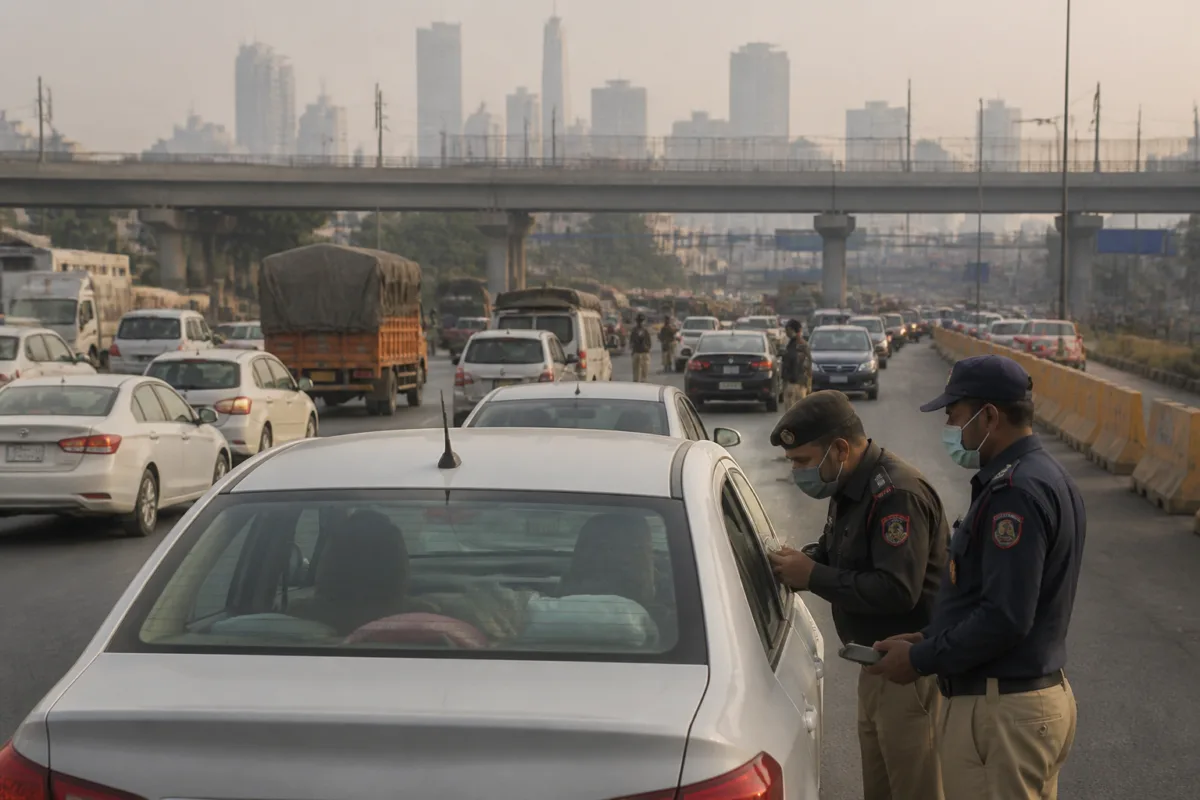
Delhi will bar vehicles registered outside the capital that do not meet BS-VI emission standards from entering the city between November 1 and January 31, a move expected to take more than 10 lakh personal and commercial vehicles off the roads during the pollution-control period.
The restriction will affect vehicles from neighbouring urban regions, including Noida, Greater Noida, Ghaziabad, Gurgaon and Faridabad. According to the report, more than four lakh vehicles from Noida and Greater Noida, another four lakh from Ghaziabad and two lakh from Gurgaon and Faridabad could be affected.
The ban has raised practical concerns for residents of the National Capital Region who travel to Delhi for work or depend on private vehicles for late-night airport journeys, family travel and hospital visits. The reported restrictions have also left commuters seeking clarity on how emergency and essential journeys will be handled.
Compressed natural gas and electric vehicles will be allowed to enter Delhi. The exemptions also cover specified emergency and sovereign-duty vehicles, including ambulances, fire tenders and police vehicles. Sources cited in the report said emergencies would be considered during enforcement, although the report did not provide details of a separate public-facing emergency-pass or exemption process.
The Delhi Metro Rail Corporation has already added 20 weekday trips since October 22, after Stage-I of the Graded Response Action Plan was invoked. A DMRC official said another 20 trips would be added after Stage-II of GRAP comes into effect, taking the total number of additional trips to 40. The stated objective is to encourage people to use public transport instead of personal vehicles.
The metro is expected to absorb additional demand during the restriction period. The report said the system recorded 78.7 lakh passenger boardings on November 18, 2024, when Delhi’s air quality index reached 494. That figure was described as the metro’s then-highest passenger boarding level during a severe pollution episode.
Government and private offices have also been directed to reduce staff strength by 50% from November 1 to January 31, 2027. The measure is intended to reduce daily travel and support the broader restrictions on vehicle movement during the stated period.
Enforcement will involve 300 personnel from the transport department. Automatic number plate recognition cameras already installed at petrol pumps will also be used to scan registration plates and identify vehicles based on their registration and emission category.
The restrictions place a large operational burden on Delhi’s border enforcement system as well as on public transport. Their immediate implementation will depend on how consistently vehicles are identified at entry points, how exemptions are applied and whether commuters receive clear instructions for essential journeys. The transport department’s deployment of enforcement personnel and the DMRC’s planned increase in services are the next stated steps before the November 1 start date.

