


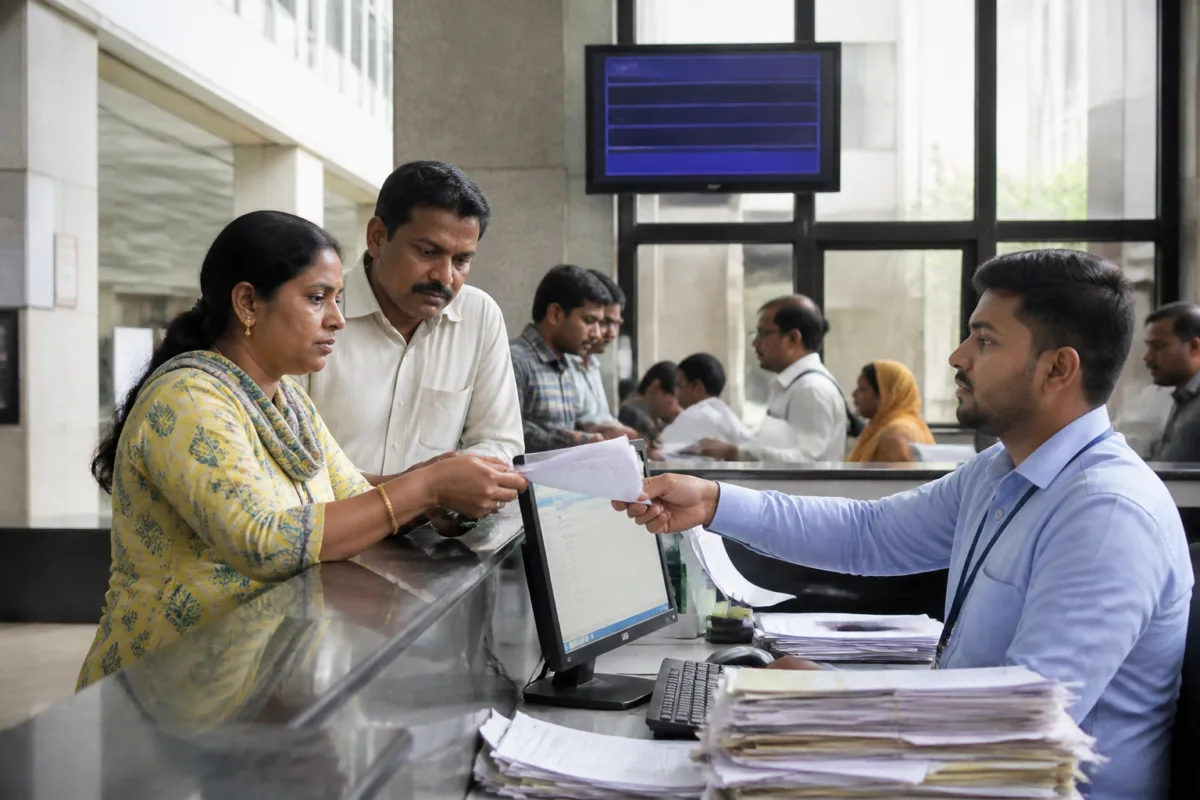
The Delhi government has notified the Delhi (Right of Citizens to Time-Bound and Accessible Service Delivery) Act, 2026, introducing legally defined timelines for notified public services and penalties of up to Rs 5,000 for officials who delay delivery without proper justification.
According to an official government statement cited by Navbharat Times, the new law replaces Delhi’s 2011 time-bound service delivery legislation. It provides citizens with a statutory right to receive specified government services within prescribed time limits. The government will notify which services fall under the law and set the maximum period for delivering each service.
The framework will assign responsibility to a designated officer for every notified service. Departments, local bodies and other institutions brought under government notification may also be covered by the law. This makes the designated officer the administrative point of responsibility when an application is delayed or rejected.
Chief Minister Rekha Gupta said the law includes an automatic appeal mechanism. If a designated officer fails to provide a service within the prescribed period, the original application will be treated as an appeal before the Citizen Grievance Redressal Authority. Applicants will not need to submit a separate appeal solely because the service was delayed.
Each department will appoint an officer senior to the designated officer as the Citizen Grievance Redressal Authority. The authority will hear the matter, direct the delivery of the service where necessary and determine responsibility for the delay, according to the government statement.
Appeals will generally have to be decided within 30 days. If the grievance redressal authority does not dispose of the appeal within the prescribed period, the case will automatically move to the Delhi Services Rights Commission. The law also provides for financial penalties intended to make responsibility enforceable rather than merely administrative.
For an unjustified delay, the concerned officer may face a penalty of Rs 250 for every day of delay, subject to a maximum of Rs 5,000. An officer who rejects an application improperly or without sufficient reason may face a one-time penalty ranging from Rs 250 to Rs 5,000.
The law also provides for online applications and monitoring. Each application will receive a unique number through which the applicant can check its status online. The government said the system is intended to reduce unnecessary delays, improve grievance resolution and make administration more responsive to citizens.
The practical effect of the law will depend on the services brought within its scope, the timelines notified for each service and the functioning of the online tracking and appeal mechanisms. The government statement did not specify in the supplied report the complete list of services that will initially be covered or the date on which each service timeline will take effect.

