


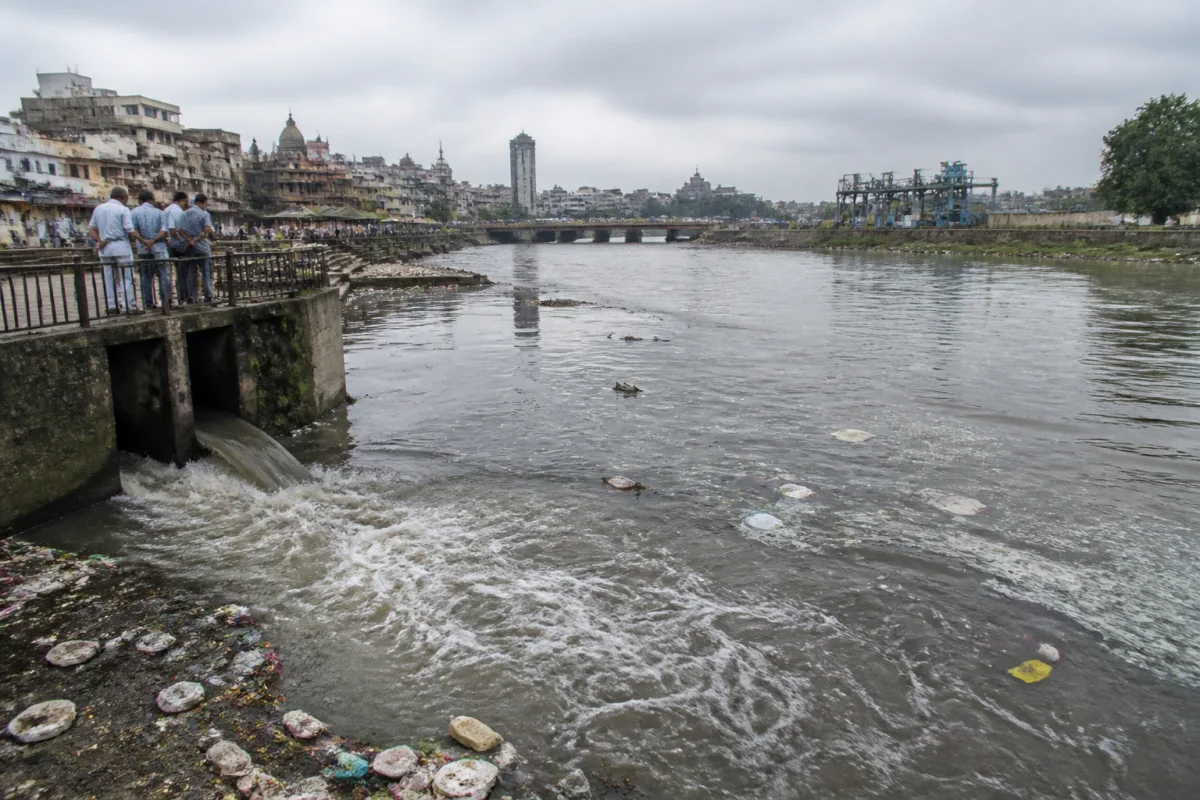
The Bombay High Court has questioned the Nashik Municipal Corporation and other authorities over dangerous pollution in the Godavari river ahead of the Kumbh Mela, when millions of devotees are expected to arrive for ritual bathing. The court has also sought a clear response from Maharashtra’s chief secretary on action against officials who failed to prevent the continuing contamination.
The court expressed concern that pollution from the Nandini river and other channels was entering the Godavari without effective control. It questioned whether contaminated water flowing from the Nandini into the main river would somehow become clean after mixing with it. The observation highlighted the gap between administrative directions issued over the years and their implementation on the ground.
According to the report, the court said chromium levels in Godavari water were nearly 1,000 times higher than the limit prescribed by the Bureau of Indian Standards. It also noted the serious health risks associated with contact with or consumption of contaminated water and said the government and relevant agencies must take immediate steps to prevent the spread of disease.
The matter is linked to a contempt petition concerning pollution in the Godavari and its tributaries. In an order dated October 27, the High Court had raised concerns over chromium detected in water samples and the continued discharge of hazardous industrial waste. The latest proceedings have placed responsibility for enforcement on both civic and regulatory authorities.
Chief Secretary Rajesh Agrawal had earlier directed the Maharashtra Pollution Control Board to take strict action against industrial units allegedly releasing untreated or inadequately treated waste into the Godavari and its tributaries in Nashik. The directions were issued at a meeting held at the state secretariat in Mumbai on November 4 to review pollution and chromium contamination in the river system.
The MPCB has been asked to conduct extensive water-quality monitoring and collect samples from several locations, including the Godavari, the Nandini, local drains and suspected discharge points. The samples are to be analysed to establish the nature and level of contamination and identify its sources.
The pollution board has also been directed to inspect and raid suspected industrial units. Where required under environmental laws, it may impose penalties or order the closure of units. It will also prepare a list of industries and owners considered to be among the largest sources of pollution.
The chief secretary’s directions additionally call for responsibility to be fixed on officials who allowed or assisted violations of zero-liquid-discharge conditions imposed while permitting industries to be established or operated. The High Court has sought a specific response on action against officials who failed to prevent the pollution, while the MPCB’s sampling, inspections and enforcement measures remain the next reported steps.

