


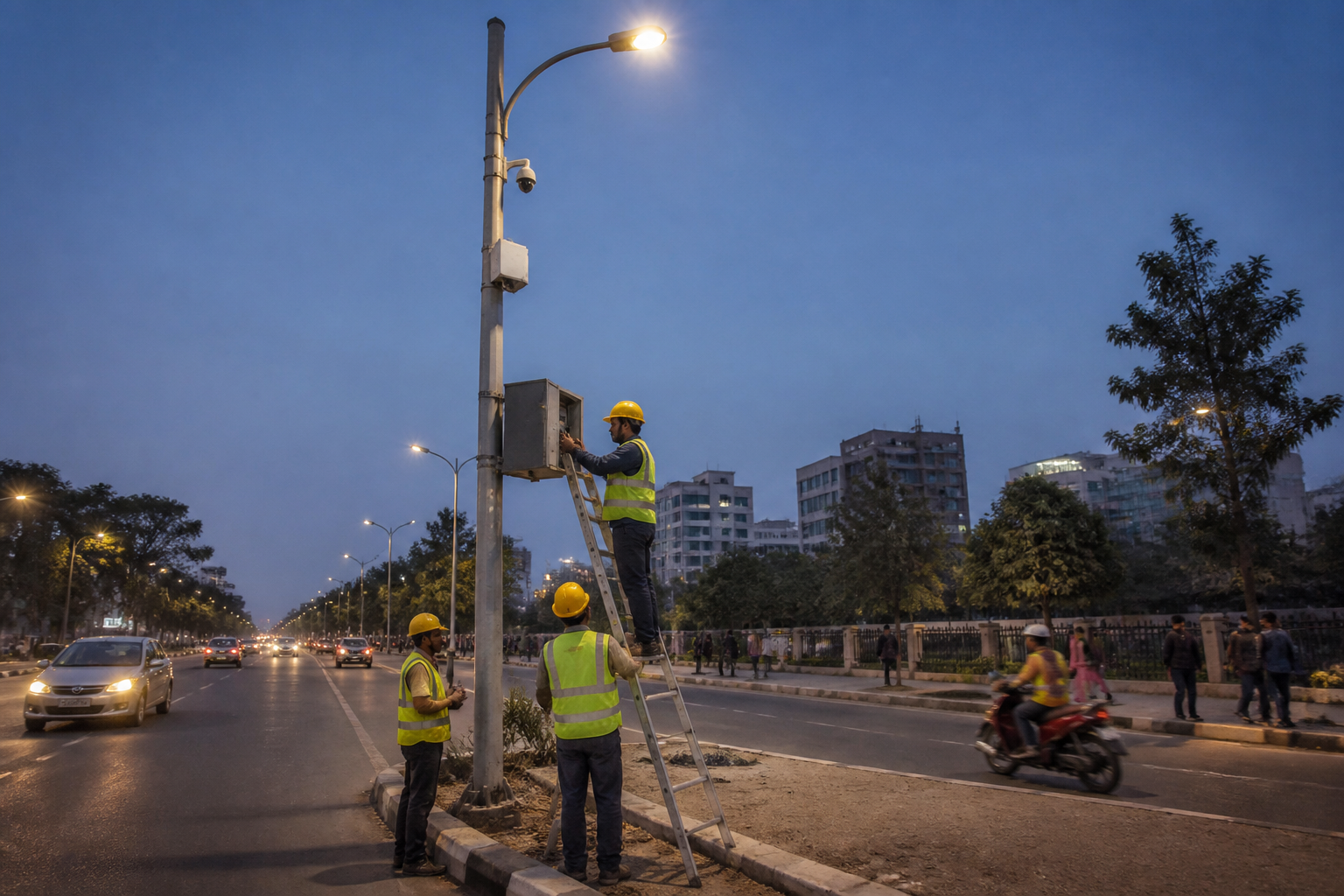
Delhi’s smart street lights project will replace nearly one lakh old street lights across the capital, with work scheduled to begin in October under a ₹473-crore plan aimed at improving road and public safety. The Public Works Department will start installation on 11 October, according to a report by Jagran – New Delhi.
The project will replace existing sodium lamps with energy-efficient smart LED lights. The Delhi government has set a target of installing 20,000 lights by Diwali and completing the replacement of all one lakh lights by January 2027.
The project received approval from the Financial Expenditure Committee in June, the report said. The Public Works Department will oversee implementation, while a centralised command and control centre is being established at the department’s headquarters by 5 October.
According to PWD Minister Parvesh Verma, the technology-based system will allow officials to monitor every street light in real time. Faults are expected to be identified more quickly, and lights may be controlled remotely when required. The stated objective is to reduce the time taken to respond to outages and improve maintenance operations.
The project comes as several roads in Delhi continue to face inadequate lighting and delays in repairing non-functional street lights, according to the report. The government has linked better illumination with road safety and women’s safety, particularly on routes where poor lighting can affect movement after dark.
Officials estimate that replacing the older lights with smart LED systems will save the Delhi government approximately ₹30 crore each year through lower electricity consumption and reduced maintenance costs. The projected cost of ₹473 crore includes five years of operations and maintenance.
The payment structure is tied to performance. The private company responsible for installing and maintaining the lights will receive monthly payments only when the installed lights are fully operational, the report said. This arrangement places continued functioning of the system alongside installation targets as a condition for payment.
The command and control centre is expected to become the operational hub for monitoring the network. Its effectiveness will depend on whether faults are detected promptly, repairs are completed within the required time and the lights remain functional after installation. The first implementation milestone is the planned installation of 20,000 smart lights by Diwali, followed by the January 2027 completion target.
