


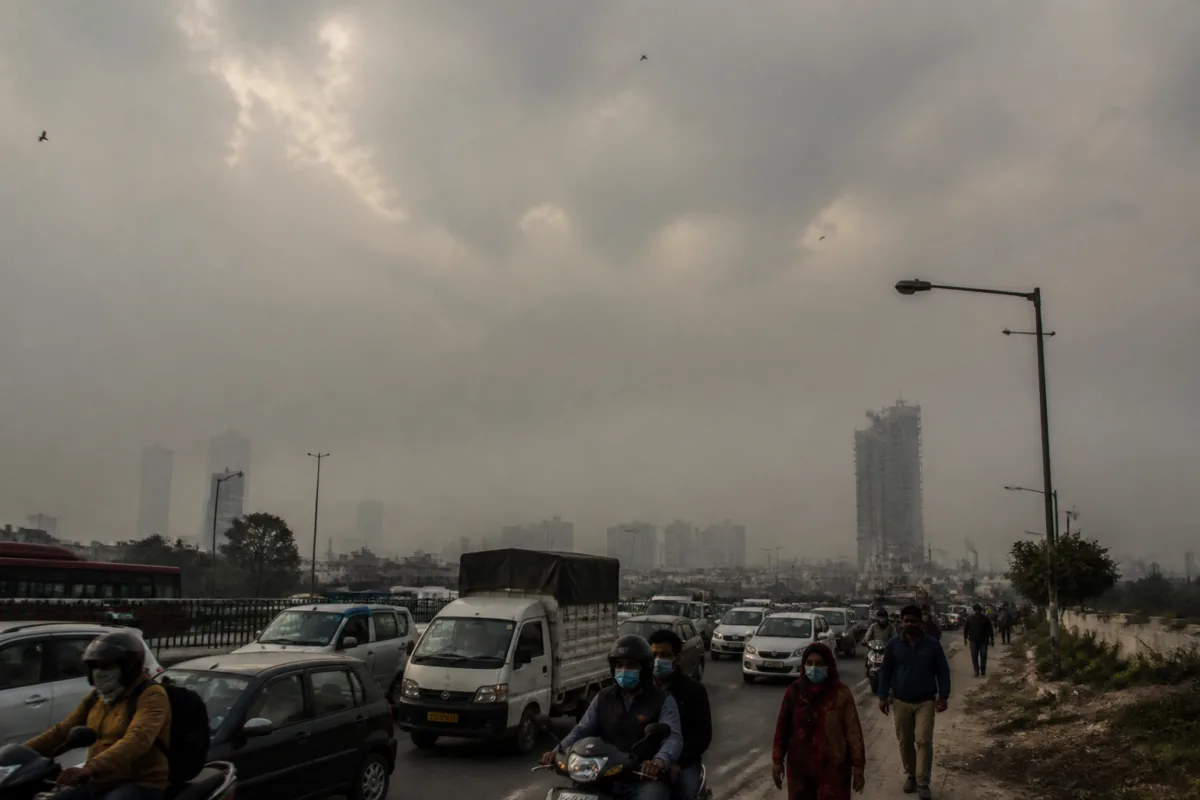
Delhi pollution is unlikely to receive relief from rain in the immediate future, with the India Meteorological Department ruling out rainfall over the capital even as clouds are expected on 12 and 13 November. The forecast has also weakened the prospects of a cloud-seeding operation proposed by the Delhi government and IIT Kanpur.
IMD Director General Mrutyunjay Mohapatra said the western disturbance affecting the region would bring mainly middle- and high-level clouds over Delhi and nearby areas. These clouds are not considered suitable for artificial rain because they are not convective clouds, which are important for the vertical movement of moisture required for cloud seeding.
“The clouds will mainly be middle and high-level clouds. These are not convective clouds. Therefore, the results from artificial rain will be limited,” Mohapatra said, according to the report.
The weather department explained that the presence of clouds alone is not enough to produce artificial rain. Cloud structure, moisture content and wider atmospheric conditions must also be favourable. Under the current conditions, the likelihood of forming suitable convective clouds is low, reducing the chances that cloud seeding would produce the volume of rain required to wash pollutants from the air.
The western disturbance may bring rain and snowfall to Jammu and Kashmir, Himachal Pradesh and Uttarakhand, along with isolated rain in parts of northern Punjab. However, the IMD does not expect significant rainfall in Delhi or other pollution-affected plains of north India. Although moisture levels may rise in the capital on 12 and 13 November, the expected cloud cover is not likely to generate enough rain to clear accumulated pollutants.
The IMD has also warned that clouds and increased humidity without meaningful rainfall can sometimes worsen air-pollution conditions. At present, winds across north India are expected to remain calm or weak, limiting the dispersion of pollutants from the capital’s atmosphere.
The department is monitoring another weather system developing over the Bay of Bengal. A deep depression could form around 15 or 16 November and may later intensify into a cyclonic storm, but its eventual path remains uncertain. The system could move towards Andhra Pradesh or Bangladesh, according to the report.
Mohapatra said that if the system moves towards Bangladesh and produces a stronger northward influence, north-westerly winds over northwest India and the Gangetic plains could become stronger. Such winds may help disperse pollutants, but that possibility depends on the system’s eventual track and development.
For now, Delhi’s immediate weather outlook offers neither significant rainfall nor strong winds, leaving residents dependent on a change in atmospheric conditions for possible relief. The proposed cloud-seeding plan remains constrained by the absence of suitable clouds, while the IMD continues to monitor the Bay of Bengal system and its potential influence on winds over north India.

