


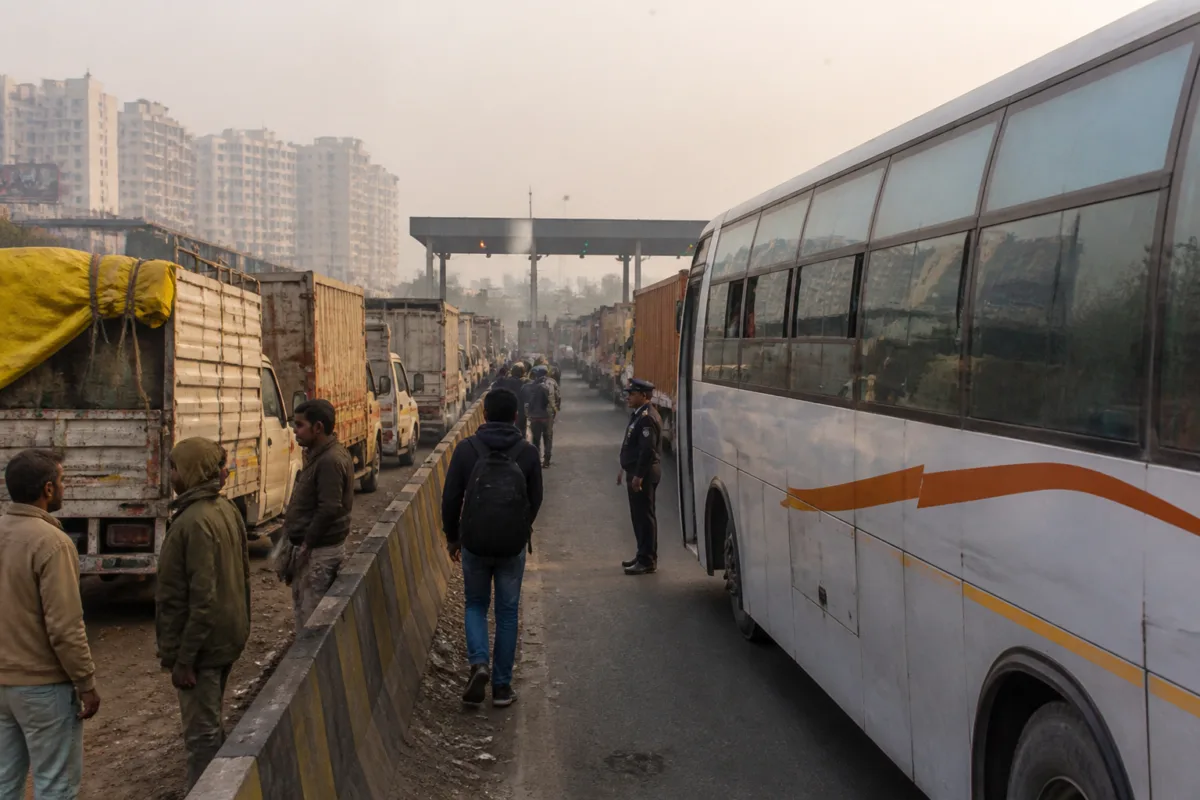
Delhi pollution curbs taking effect from November 1 are set to restrict the entry of non-BS-VI petrol and diesel vehicles registered outside the capital, with transporters warning that bus fares could rise by 15–20% and the movement of essential goods could be disrupted.
The restrictions are being enforced under Delhi’s Winter Action Plan. Bus operators said tourist-permit buses would not be exempt, creating an immediate challenge for private fleets that depend on the festive and winter travel season for a significant share of their earnings.
Gurmeet Singh, owner of Highway Travels, said the restrictions would cause substantial losses because the next three months are a peak period for tourism. His company operates 450 buses, around 50 of which will be unable to enter Delhi. Singh said foreign tourists travelling between cities in North India would also be affected.
Anil Dixit, owner of Noida-based Skyline Motors, said the timing of the restrictions would affect passengers travelling to their hometowns or visiting relatives during the festive season. He said many bus operators had purchased their vehicles through loans and would continue to face loan instalments even when the buses could not operate in Delhi.
Operators said the reduction in the number of buses travelling to and from the capital could push ticket prices up by 15–20%. They also warned of a shortage of seats during a period when buses traditionally run full. Passengers may have to be dropped at Delhi’s borders and use tempo travellers, auto-rickshaws or cabs to reach their final destinations.
The impact is expected to extend beyond passenger travel. The All India Motor Transport Congress said around 2.5 lakh goods carriers could be affected by the restrictions. Smaller fleet owners may face greater financial pressure because they have fewer options to redeploy older vehicles on routes outside Delhi.
Gunjeet Singh, who owns Sangha Freight, said 35 of his 50 trucks were BS-IV vehicles purchased between 2018 and 2020. He said he had been trying to sell the vehicles rather than leave them idle, but their resale value had fallen from Rs 15 lakh to Rs 9 lakh.
The restriction also covers vehicles carrying perishable goods to Delhi’s wholesale markets. Transporters said apples are brought mainly from Himachal Pradesh and Jammu and Kashmir, potatoes from Uttar Pradesh, Punjab and Haryana, and onions from Maharashtra, Madhya Pradesh and Rajasthan. Milk supplies largely come from Haryana, Uttar Pradesh and Rajasthan, while poultry products and eggs are transported from Haryana, Punjab and western Uttar Pradesh.
Any delay in these movements could affect supplies to markets including Azadpur and Ghazipur. Transporters said longer or disrupted journeys could raise freight costs and eventually increase prices paid by consumers. The report does not establish the extent of any actual supply shortfall after the restrictions take effect.
Harish Sabharwal, president of the All India Motor Transport Congress, said transporters were already dealing with rising operating costs, taxes and toll charges. He said a sudden three-month restriction would affect earnings while loan instalments, insurance premiums, other financial obligations and household expenses continued.
The immediate operational challenge for authorities is therefore not limited to enforcing an emissions-related entry restriction. It also involves managing passenger transfers at Delhi’s borders, maintaining the movement of food and other perishables, and limiting disruption for smaller operators whose vehicles cannot be shifted easily to other routes. The next stage of the Winter Action Plan will determine how these transport and supply-chain pressures are handled during the three-month restriction period.

