


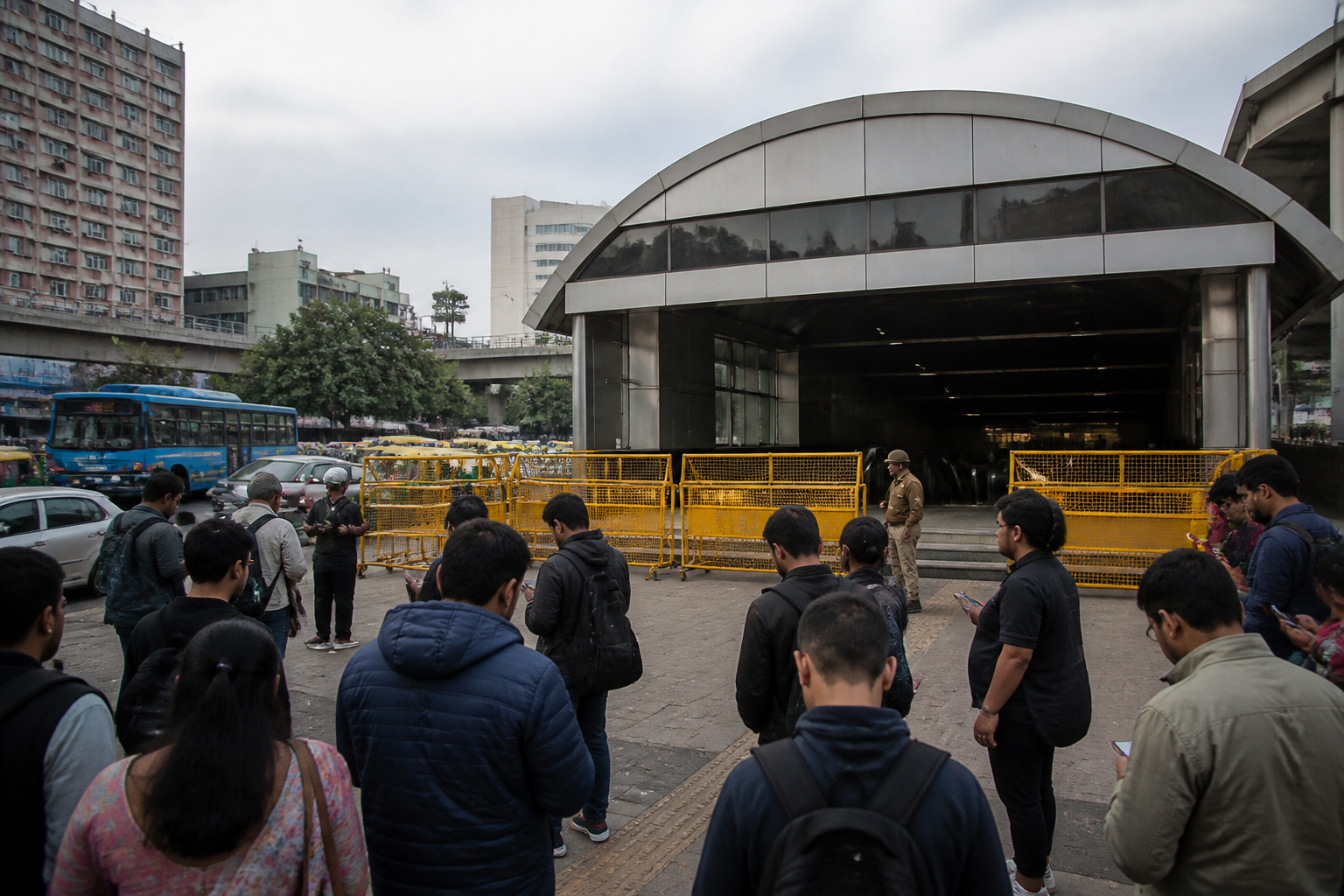
Delhi Metro closures are affecting access to 57 stations on October 9 after the Cockroach Janata Party, identified in the report as CJP, announced another protest at Jantar Mantar demanding the resignation of Chief Election Commissioner Gyanesh Kumar. Several mail and express trains linked to New Delhi and Hazrat Nizamuddin railway stations have also been cancelled amid the expected disruption.
The restrictions followed a request from Delhi Police to the Delhi Metro Rail Corporation (DMRC) to close entry and exit points at 57 stations. DMRC accepted the proposal, according to the report, and said the restrictions would remain in place until the situation returns to normal.
The affected stations are spread across central Delhi, New Delhi, Old Delhi, south Delhi, east Delhi and north-west Delhi. The closure of entry and exit points is expected to inconvenience passengers using the metro for work, education, railway connections and other daily journeys. Commuters have been advised to check the status of their stations before leaving for travel.
The protest has also affected railway operations in the capital. Indian Railways cancelled all mail and express trains arriving at New Delhi and Hazrat Nizamuddin railway stations between 4 am and 2 pm on October 9, the report said. The decision was taken because of the possibility of significant traffic congestion around both railway station areas.
Several trains departing from Delhi were also cancelled. The measures are intended to manage the anticipated movement and congestion associated with the protest, but they have created a wider transport impact across the city by affecting both the metro network and long-distance rail services.
The disruption is significant because New Delhi and Hazrat Nizamuddin are key railway destinations for passengers entering and leaving the capital, while the affected metro stations cover multiple parts of the city. Passengers connecting between rail and metro services may therefore need to verify both services before starting their journey.
The report did not provide a station-by-station list of the 57 metro stations or details of when individual closures would be lifted. DMRC restrictions are expected to continue until authorities assess that the situation has become normal, while train cancellations apply to the period and services identified in the railway-related decision.
