


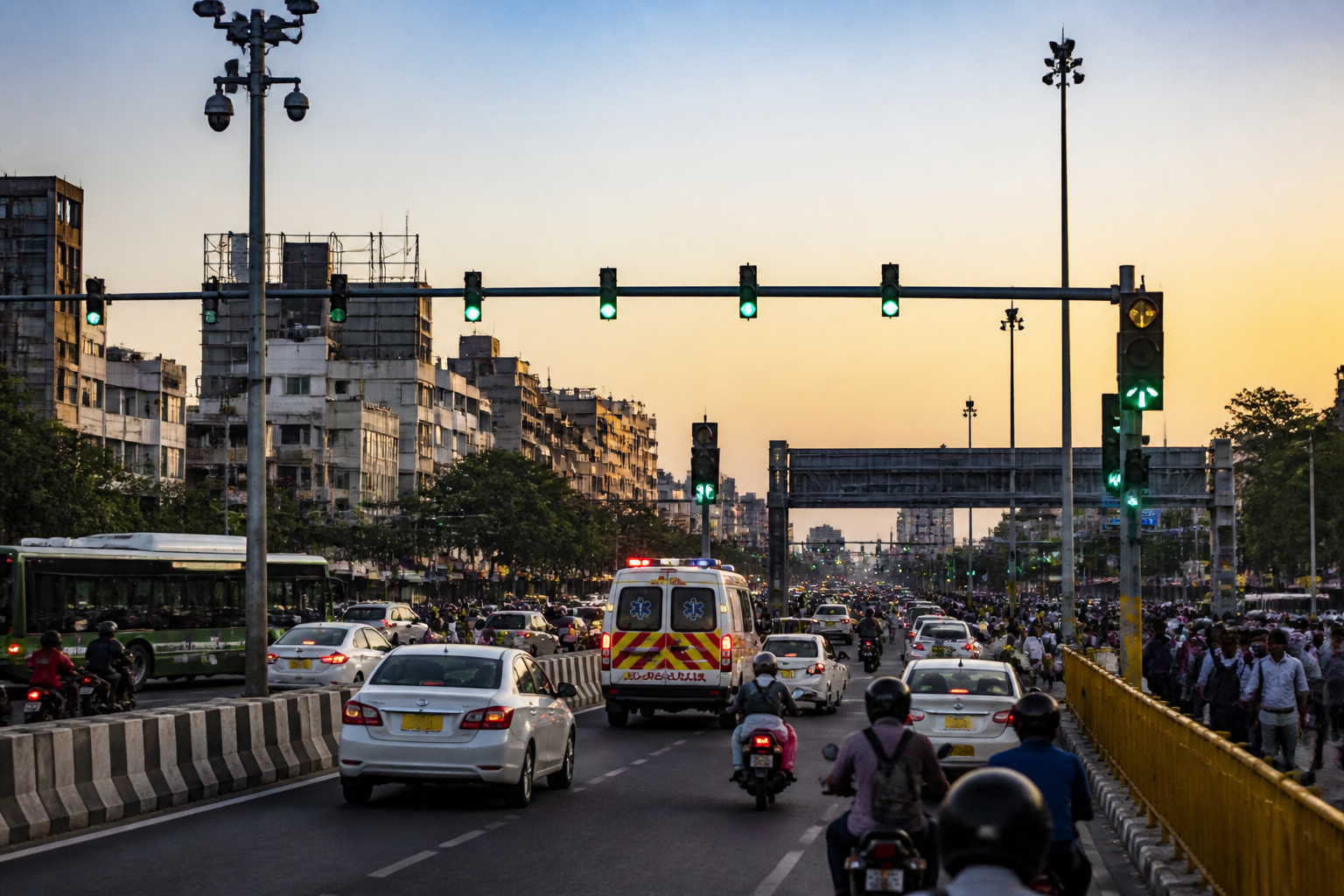
The Delhi ITMS project has received central approval, with ₹1,789.52 crore allocated to modernise traffic management across 42 identified corridors. The system will use real-time data, adaptive traffic signals, automated enforcement and an integrated command-and-control centre to help manage congestion and respond faster to road incidents.
The project, reported by Jagran, will be implemented in three phases over 24 months. It will include 1,092 adaptive traffic control systems and 1,029 enforcement locations across Delhi. Operations and maintenance are planned for five years after implementation.
The proposed system is designed to move Delhi’s traffic management beyond fixed-time or manually operated signals. Sensors, cameras and artificial intelligence-based analytics will be used to assess traffic volumes, vehicle speeds, congestion and incidents such as accidents. Signal timings could then be adjusted according to conditions on the road, including giving additional green time to a direction carrying heavier traffic.
The system will also coordinate signals along the same corridor. This is intended to reduce unnecessary stops between junctions and improve the use of existing road capacity. The project does not involve adding new roads as its central intervention; instead, it seeks to manage the current network through continuous traffic data and faster operational decisions.
Emergency response is a significant component of the plan. The system will support green corridors for ambulances and other emergency vehicles by coordinating signals along their routes. It is also expected to help traffic police identify sudden congestion, accidents and slowing traffic in real time, allowing diversions or other traffic-control measures to be initiated sooner.
For road users, information is expected to be disseminated through variable message signs, digital platforms and potentially navigation service providers. These channels could provide updates on congestion, diversions and parking availability while commuters are travelling or before they begin a journey. The reported system is also intended to strengthen automated detection of red-light and stop-line violations, speeding, driving on the wrong side, riding without a helmet, driving without a seat belt, illegal parking and mobile-phone use while driving.
AI-based camera analytics may further assist in identifying stolen or hot-listed vehicles, repeat offenders and vehicles linked to hit-and-run cases. The technology will support enforcement, but the report does not establish that every violation will automatically result in a penalty; implementation details will depend on the system’s operational and legal framework.
The project will be supervised by three committees led by the Union home secretary and the Delhi Police commissioner, according to the report. Each phase will undergo testing, commissioning and performance evaluation before the next phase proceeds. The plan also includes a secure data centre and disaster-recovery arrangements for restoring data in the event of a disruption.
The approval places Delhi’s traffic network within a larger shift towards data-led urban operations. Its effectiveness will depend on the quality and coverage of traffic data, coordination between agencies, the reliability of field equipment and how quickly traffic police can act on system alerts. The reported implementation schedule provides for completion within 24 months, followed by five years of operations and maintenance.
