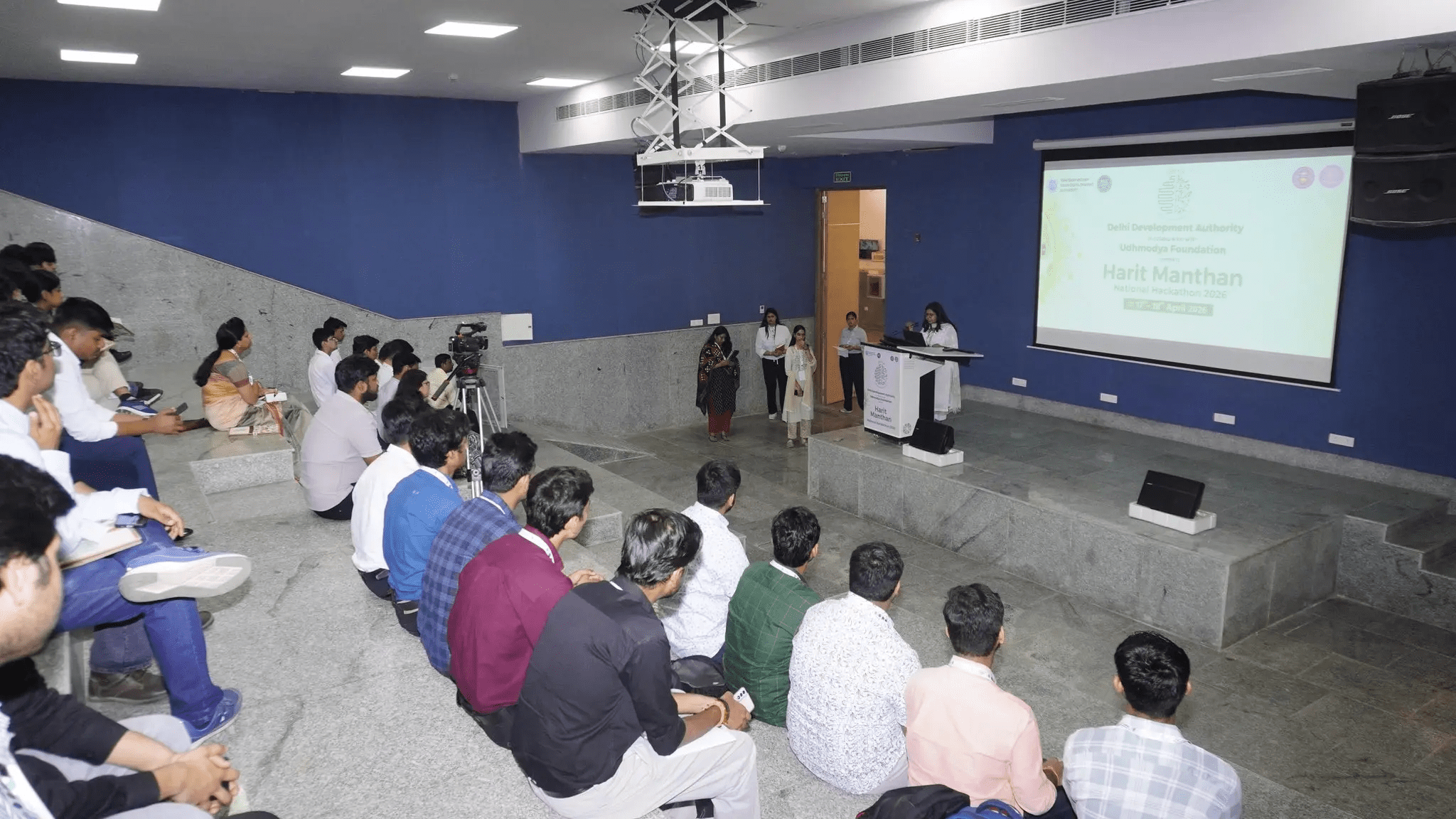
Delhi Harit Manthan 2026 Targets Urban Green Innovation
Delhi’s urban development authority has turned to student-led innovation to address the growing complexity of managing green spaces in a dense and climate-stressed city. Through a two-day initiative titled Harit Manthan 2026, planners are seeking practical, scalable ideas to improve biodiversity, park management, and environmental resilience across the capital’s extensive network of public green areas. The initiative brings together university students from across India to develop solutions that can be tested and potentially deployed within Delhi’s parks and ecological zones. With the city managing thousands of acres of green cover, officials acknowledge that conventional approaches are often insufficient to address challenges such as maintenance efficiency, ecological monitoring, and community engagement.
A central focus of Harit Manthan 2026 is to bridge the gap between innovation and implementation. Selected proposals will not only receive early-stage financial support but also access to incubation and mentorship systems designed to refine ideas into deployable solutions. Urban policy experts note that such programmes are increasingly being used to tap into interdisciplinary thinking, particularly where technology, design, and environmental science intersect. The event has been structured around two key tracks—one focused on technological interventions and the other on governance frameworks. This dual approach reflects a broader understanding that urban environmental challenges are not solely technical in nature but also rooted in planning systems and institutional coordination. Issues such as measuring ecological performance, improving water use in parks, and developing sustainable financing models are among the problem areas being addressed. Experts suggest that one of the most pressing needs in urban green management is reliable data. Digital tools capable of tracking biodiversity health, water consumption, and visitor patterns could enable more informed decision-making. At the same time, stronger policy frameworks are required to ensure that such tools are integrated into everyday governance rather than remaining isolated pilot projects.
The programme also highlights the importance of community participation. Engaging residents in the upkeep and stewardship of green spaces has been identified as a key factor in long-term sustainability. Solutions that encourage public involvement, while maintaining ecological integrity, are likely to be prioritised during evaluation. For a city facing rising temperatures, air pollution, and rapid urban expansion, the role of green infrastructure is becoming increasingly critical. Parks and biodiversity zones not only provide recreational value but also act as buffers against climate impacts, supporting cooling, water retention, and urban biodiversity. By positioning Harit Manthan 2026 as both a competition and a pipeline for implementation, authorities appear to be experimenting with a more collaborative model of urban problem-solving. The effectiveness of this approach will depend on whether ideas generated during the event translate into sustained, on-ground improvements.
As cities across India look for new ways to manage environmental stress, Delhi’s attempt to integrate innovation into public green management could offer a template—provided it moves beyond concept development to measurable outcomes in the years ahead.