


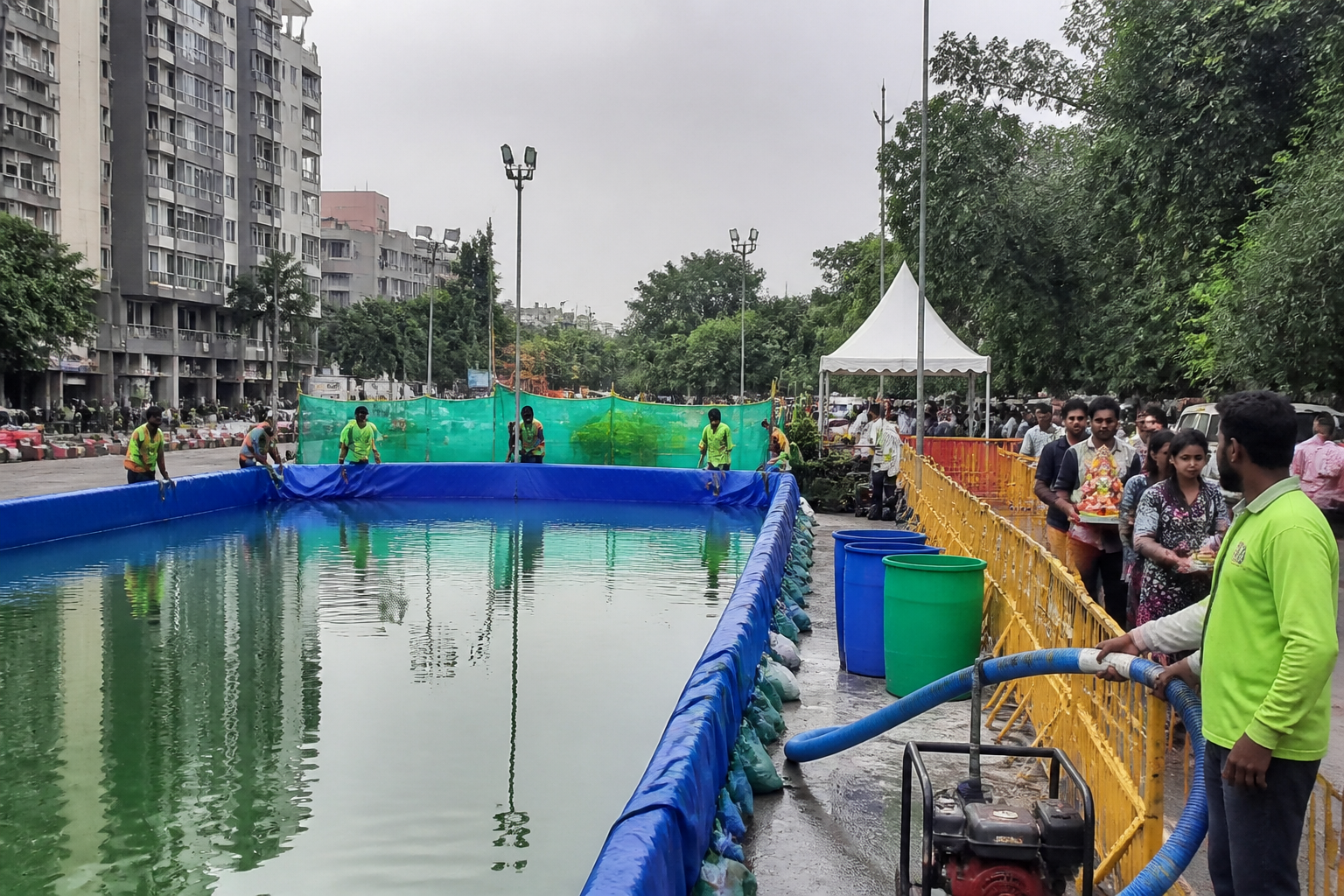
Delhi has prepared 81 artificial immersion ponds for Ganesh idols and set up 110 collection centres for old or damaged idols and religious material, as the city seeks to protect the Yamuna and other water bodies while facilitating religious observances.
The arrangements have been coordinated across all 13 revenue districts, according to the Delhi government. The initiative, led by Chief Minister Rekha Gupta, includes designated locations such as temples where residents can deposit damaged idols and puja material instead of leaving them under trees, in parks or along roadsides.
The government has appealed to devotees to use the artificial ponds for Ganesh idol immersion rather than immersing idols in the Yamuna or other water bodies. It has also urged residents to choose eco-friendly idols and avoid Plaster of Paris, harmful chemical colours and decorative materials that can damage water bodies.
The citywide arrangements include security, sanitation, lighting, medical assistance, emergency response, traffic management and environmental protection measures at the immersion sites. Authorities have also planned for the removal of idol remains and other material after immersion, followed by cleaning of the ponds and surrounding areas.
The 110 collection centres are intended to provide an organised disposal route for old and damaged idols and religious material. The government said the facilities would help prevent such material from being abandoned in public spaces, where it can contribute to litter and create additional cleanliness and management challenges.
Chief Minister Rekha Gupta said the government’s priority was to ensure that religious faith and environmental protection complemented each other. She asked residents to deposit damaged idols and religious material only in designated collection containers and to use the artificial immersion sites for Ganesh idols.
The arrangements place temporary religious infrastructure alongside routine civic responsibilities, including traffic control, sanitation, emergency response and post-event site cleaning. Their operation will depend on devotees using the designated facilities and on agencies maintaining the ponds and collection points during and after the immersion period.
The government said the initiative was intended to balance religious traditions, cleanliness and environmental protection while providing devotees with clean and organised facilities. The next operational step is the use of the 81 artificial ponds and 110 collection centres during the immersion period, followed by the removal of remains and cleaning of the sites.

