


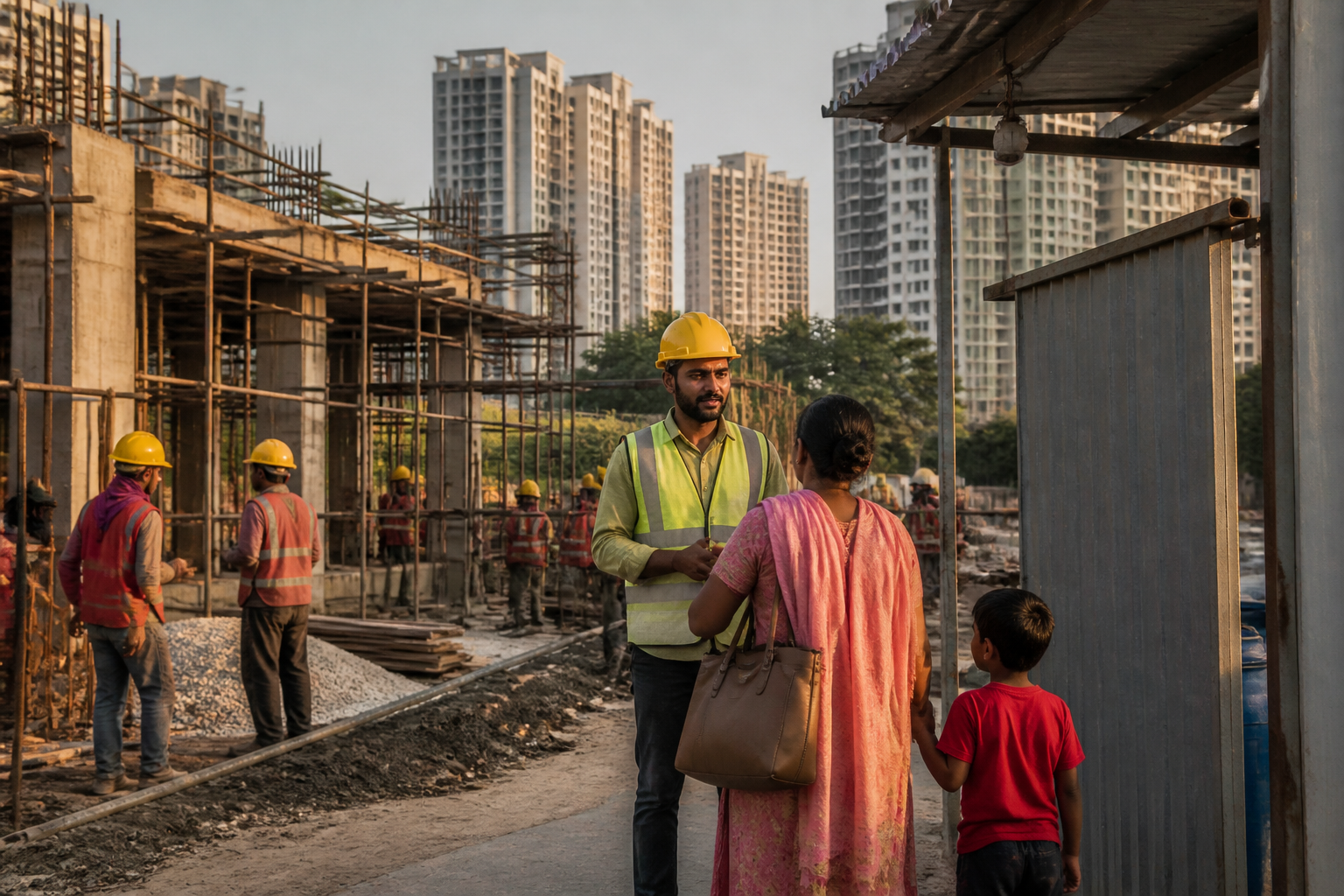
Delhi construction workers and their dependent families will receive cashless healthcare under the Delhi Building Workers Health Scheme approved by Lieutenant Governor T S Sandhu, according to a report by Jagran – New Delhi published on September 12.
The scheme will cover more than 2.7 lakh registered building and other construction workers in the national capital. Under its benefit structure, each beneficiary will be eligible for treatment costing up to Rs 2 lakh a year, while the overall annual limit for a worker’s family will be Rs 10 lakh.
The scheme is intended to provide financial protection against treatment expenses for registered construction workers and their dependants. The cashless arrangement means eligible beneficiaries can access healthcare under the scheme without making upfront payments for covered treatment, according to the report.
The individual and family limits have been defined separately. Each eligible beneficiary will have an annual treatment limit of Rs 2 lakh, while the combined family coverage will be capped at Rs 10 lakh a year. The report does not specify the hospitals included in the network, the process for authorising treatment, or whether all categories of medical procedures will be covered.
Eligibility is restricted to construction workers registered in Delhi under the applicable building and other construction worker framework, along with their dependent family members. The scheme therefore links access to the health benefit with registration status, making the records held by the relevant labour authorities an important part of its implementation.
The Lieutenant Governor’s approval follows clearance from the Delhi Chief Minister and the Delhi government’s council of ministers, the report said. With the final approval in place, the scheme is expected to extend health protection to the registered workforce and their families.
The report did not provide a date for the scheme’s operational rollout, details of the implementing agency, or instructions on how workers will enrol or claim treatment. The next official communication will need to establish these procedures and identify the participating healthcare facilities before beneficiaries can use the cashless facility.
