


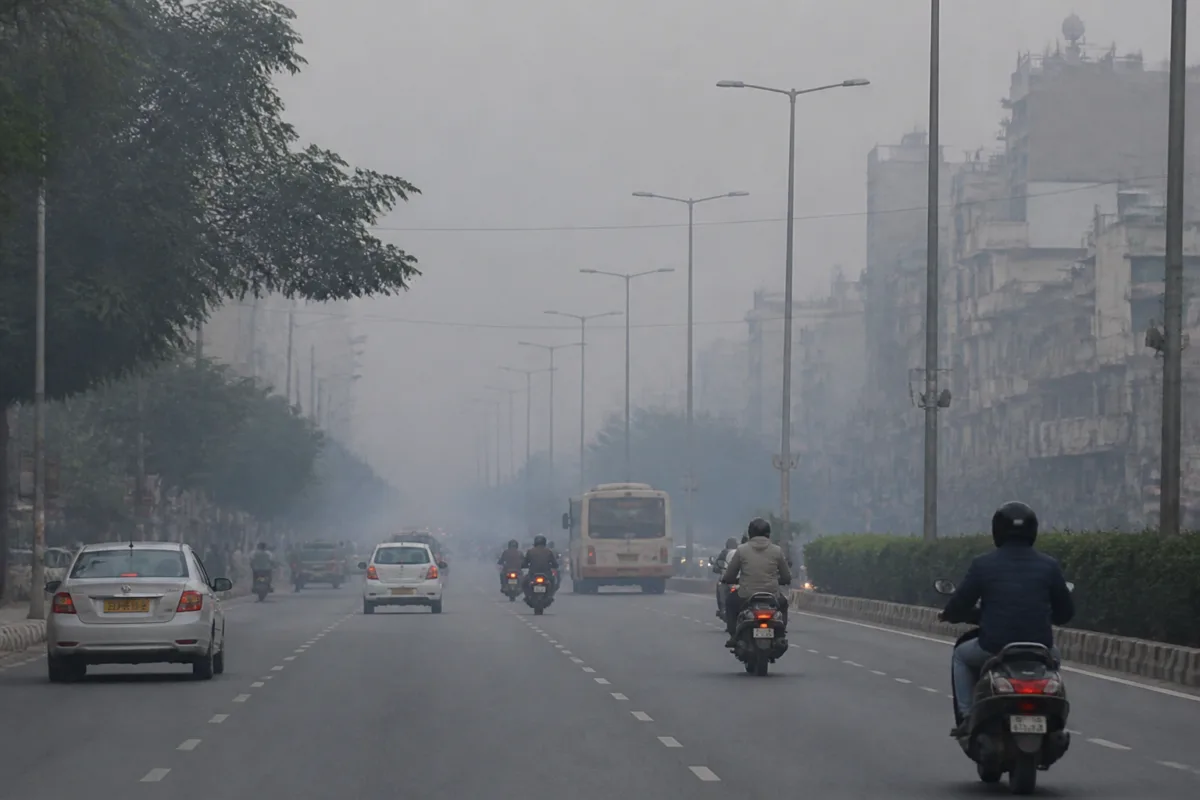
Delhi’s air quality remained in the ‘very poor’ category on Sunday, November 29, with the official 24-hour Air Quality Index (AQI) at 329 as calm winds and an inversion layer kept pollutants close to the ground.
An analysis by Hindustan Times placed the AQI higher at 342 for the 24 hours ending at 7am, based on readings from Delhi’s monitoring stations in Central Pollution Control Board (CPCB) records. The analysis found six stations in the severe category, including Chandni Chowk, where readings crossed 500. The CPCB’s official assessment placed two monitoring stations in the severe category.
The difference reflects separate calculation methods. Hindustan Times averaged pollutant readings over 24 hours before converting them into an AQI score, while the CPCB converts hourly readings into AQI values and then averages the 24 scores. The CPCB’s hourly values are capped at 500, which can affect results during periods of extremely high pollution.
PM2.5 was the primary pollutant at 49 of Delhi’s 58 monitoring stations at 6am, according to CPCB data. PM10 was dominant at the remaining nine stations.
Weather conditions limited pollutant dispersal. Safdarjung recorded calm winds in all 11 observations between 8pm on Saturday and 6.30am on Sunday, while an inversion layer was recorded around 150 metres above ground at 4.30am. The temperature difference between the two layers was 7°C.
Farm fires in Punjab and Haryana also added to the regional pollution burden. NASA satellites detected 5,589 fires between October 1 and November 28, including 4,923 in Punjab and 666 in Haryana. Hindustan Times noted that the actual number could be higher because satellite observations are made around 1.45pm, while some stubble burning is reported later in the day.
Moderate fog further reduced visibility. Safdarjung’s visibility fell to 450 metres at 6.30am, from 800 metres at 7.30am on Saturday. No rainfall was recorded at Delhi’s five weather stations in the 24 hours ending at 8.30am.

