


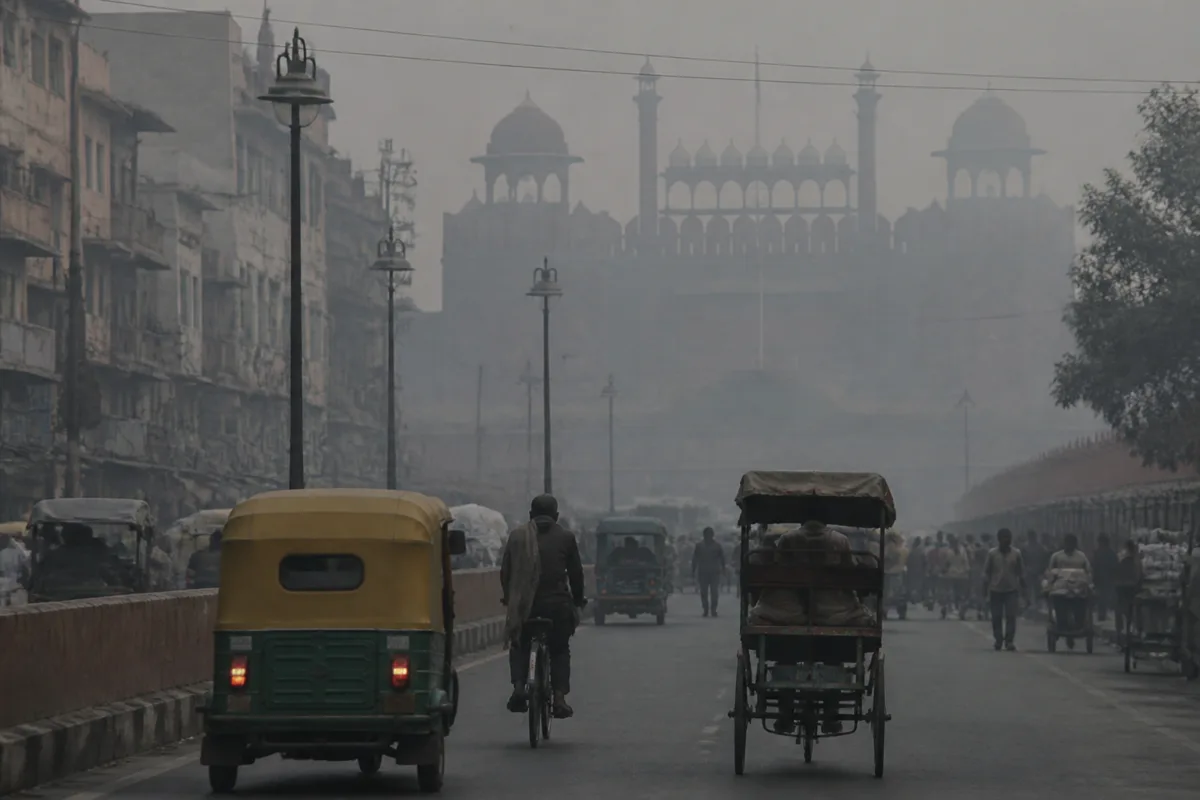
Delhi’s air quality remained in the ‘very poor’ category on Sunday, with the Central Pollution Control Board recording an overall Air Quality Index of 329 as calm winds and an unfavourable weather pattern limited the dispersal of pollutants.
The city’s AQI was 293, in the ‘poor’ category, on Saturday. The CPCB classifies an AQI of 301–400 as ‘very poor’ and 401–500 as ‘severe’.
An analysis by Hindustan Times of readings from Delhi’s monitoring stations in CPCB records produced an AQI of 342 for the 24 hours ending at 7am. The analysis found six stations in the severe category, compared with two in the CPCB’s official assessment. Chandni Chowk recorded readings above 500.
The difference was attributed to the calculation methods. Hindustan Times said it averaged each pollutant’s readings over 24 hours before converting them into an AQI score, while the CPCB first converts hourly readings into scores and then averages the 24 hourly scores. On the worst pollution days, the CPCB’s hourly scores are capped at 500.
Calm winds were recorded in all 11 observations at Safdarjung airfield between 8pm and 6.30am. Winds at the India Meteorological Department observatory were also calm at 5.30am. An inversion layer was recorded around 150 metres above ground at 4.30am, with a 7°C temperature difference between the layers.
PM2.5 was the dominant pollutant at 49 of Delhi’s 58 monitoring stations at 6am, according to CPCB data. PM10 was dominant at the remaining nine stations.
Moderate fog reduced visibility at Safdarjung to 450 metres at 6.30am, while Palam recorded visibility of 1,500 metres with mist. No rainfall was recorded at the city’s five weather stations in the 24 hours ending at 8.30am.
NASA satellite data detected 5,589 farm fires in Punjab and Haryana between October 1 and November 28—4,923 in Punjab and 666 in Haryana. The report said the actual number could be higher because satellite observations take place at around 1.45pm, while some stubble burning occurs later.

