


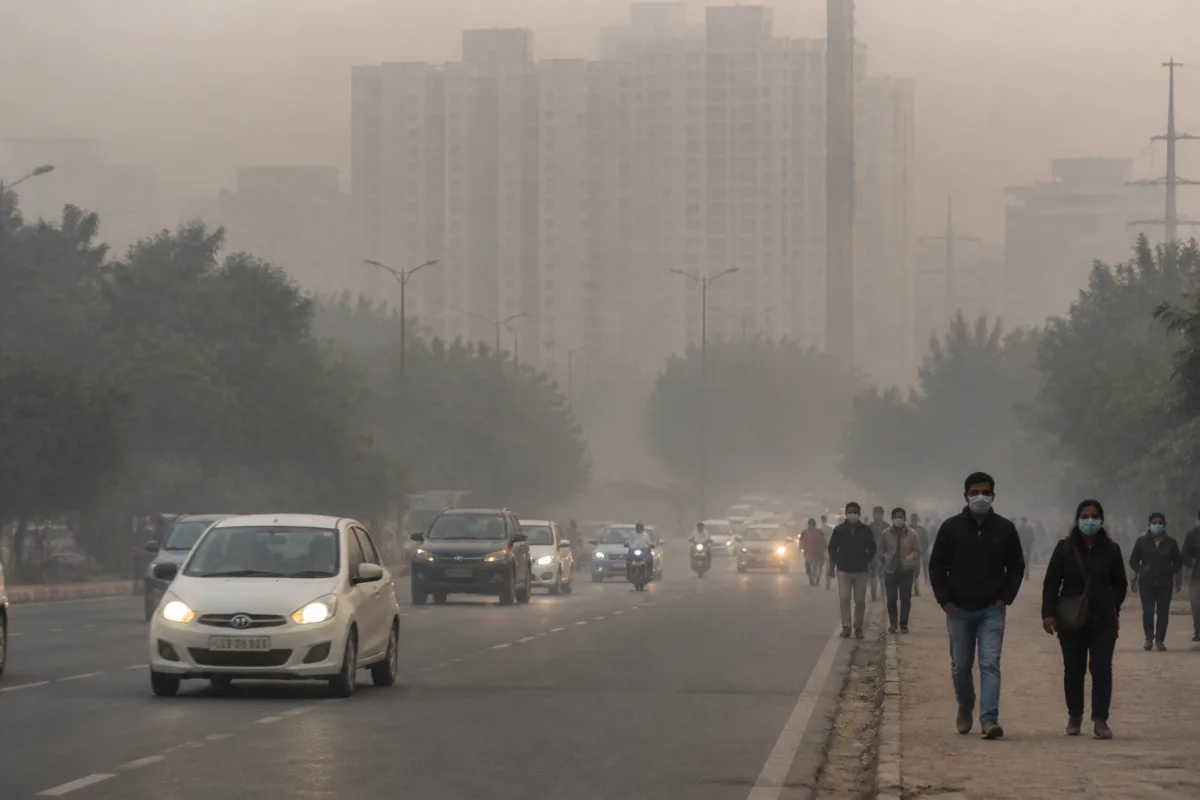
Delhi’s air quality deteriorated sharply after Diwali, with the city’s air quality index reaching about 436 and residents reporting severe difficulty breathing amid a dense layer of smoke. The level was reported in the hazardous category as post-festival pollution pushed the capital into an acute air-quality crisis.
According to a report published by Jagran, Delhi recorded an average AQI of 376 on Diwali, the highest Diwali reading in five years. The report attributed the deterioration mainly to extensive firecracker use across the city, which added to the pollution already present in the capital’s air.
The situation remained severe the following day. The AQI was recorded at 371 by 10am on Monday, while large parts of the city remained covered in smoke. The figures indicate that pollution levels stayed elevated beyond the night of the celebrations rather than falling immediately after the firecrackers stopped.
The report said residents were avoiding leaving their homes as breathing became difficult. That ground-level impact is significant in a city where daily travel depends heavily on walking, two-wheelers, buses and other outdoor movement. Persistent exposure to polluted air can also disrupt routine work, school travel and outdoor activity, although the supplied report does not provide medical data or a sector-wise assessment of those effects.
The latest readings add to Delhi’s recurring post-Diwali pollution pattern, when emissions from firecrackers combine with other sources of urban pollution and unfavourable atmospheric conditions. The supplied report does not quantify the contribution of each source, but it identifies firecracker use as a major factor behind this year’s sharp deterioration.
The episode also places attention on the gap between official pollution-control claims and conditions experienced on the ground. The report said the government has made several claims and promises about cleaning the air, but it did not identify specific measures, enforcement actions or implementation results. No official response, emergency restriction or operational order was cited in the supplied material.
For residents, the immediate concern remains the persistence of dangerous air after the festival. The reported AQI readings of 436, 376 and 371 describe different points in the post-Diwali period, but together show how quickly air quality moved into a severe range and remained there. Further official readings and government action will determine how the city responds as the pollution episode continues.

