


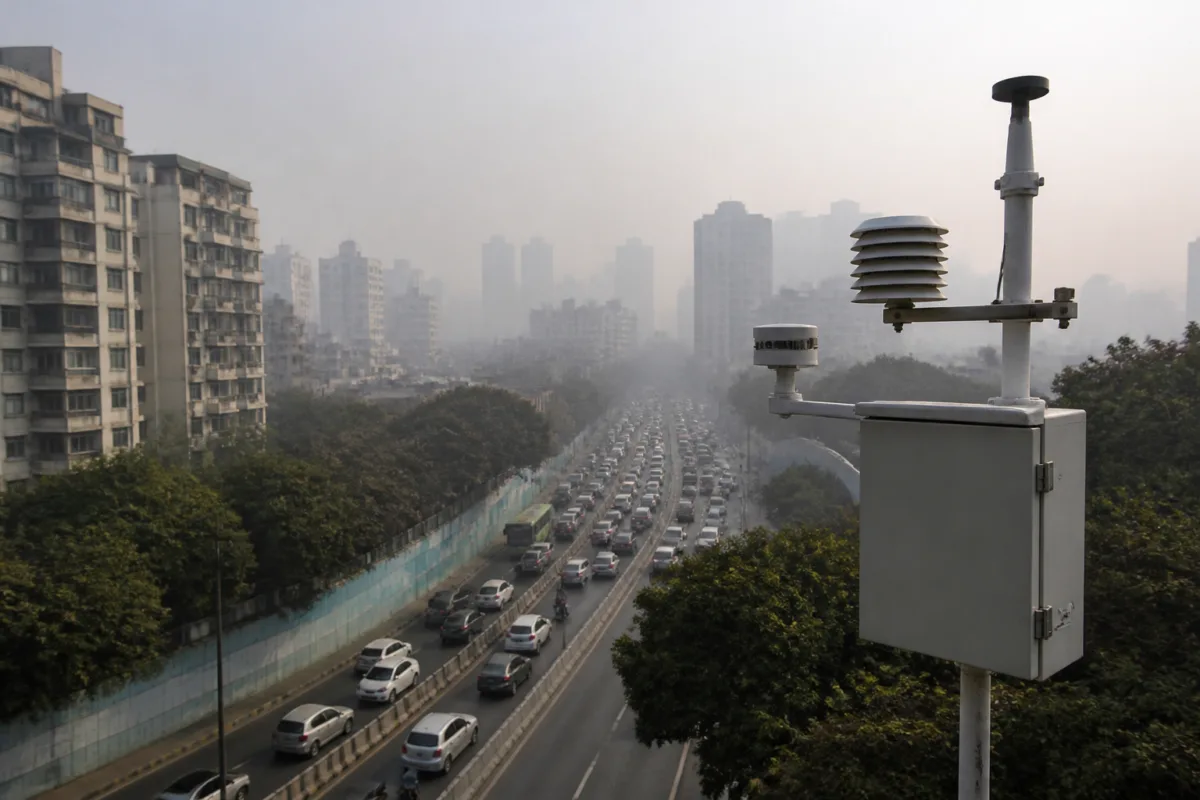
Delhi’s air quality remained in the poor category on Friday, with the 24-hour average Air Quality Index (AQI) at 226, while the India Meteorological Department’s Air Quality Early Warning System forecast a deterioration to the very poor category on November 29.
The forecast said Delhi’s air quality would remain poor on November 28 before moving into the very poor zone on November 29. It is expected to return to the poor category on November 30.
The Central Pollution Control Board’s classification places AQI readings between 201 and 300 in the poor category and readings between 301 and 400 in the very poor category. Of the 57 monitoring stations that recorded data on Friday, 16 reported very poor air, 26 recorded poor air and 15 were in the moderate category.
Delhi’s 24-hour average AQI was 224 on Thursday and 220 on Wednesday, both within the poor category, according to the CPCB data cited in the report.
Separately, Commission for Air Quality Management chairperson Rajesh Verma reviewed progress on the Delhi-NCR Emission Inventory and Source Apportionment study at IIT Delhi on Friday. The review covered updated emission factors and sector-wise inventory work for the 2026 base year.
The sectors included in the work are transport, industries, open burning, households, road dust, construction, diesel generators and agriculture, among other sources. The Automotive Research Association of India, The Energy and Resources Institute and IIT Delhi presented progress on the emission inventory, while IITM Pune presented its integration with the Decision Support System.
The study is intended to examine pollution sources across Delhi-NCR. Its coverage of transport, road dust and construction is directly relevant to urban movement and building activity, while the forecast indicates a near-term deterioration in ambient air quality.
Safdarjung recorded a maximum temperature of 28.6 degrees Celsius, 2.6 degrees above normal, on Friday. The minimum temperature was 9.3 degrees Celsius, one degree below normal.

