


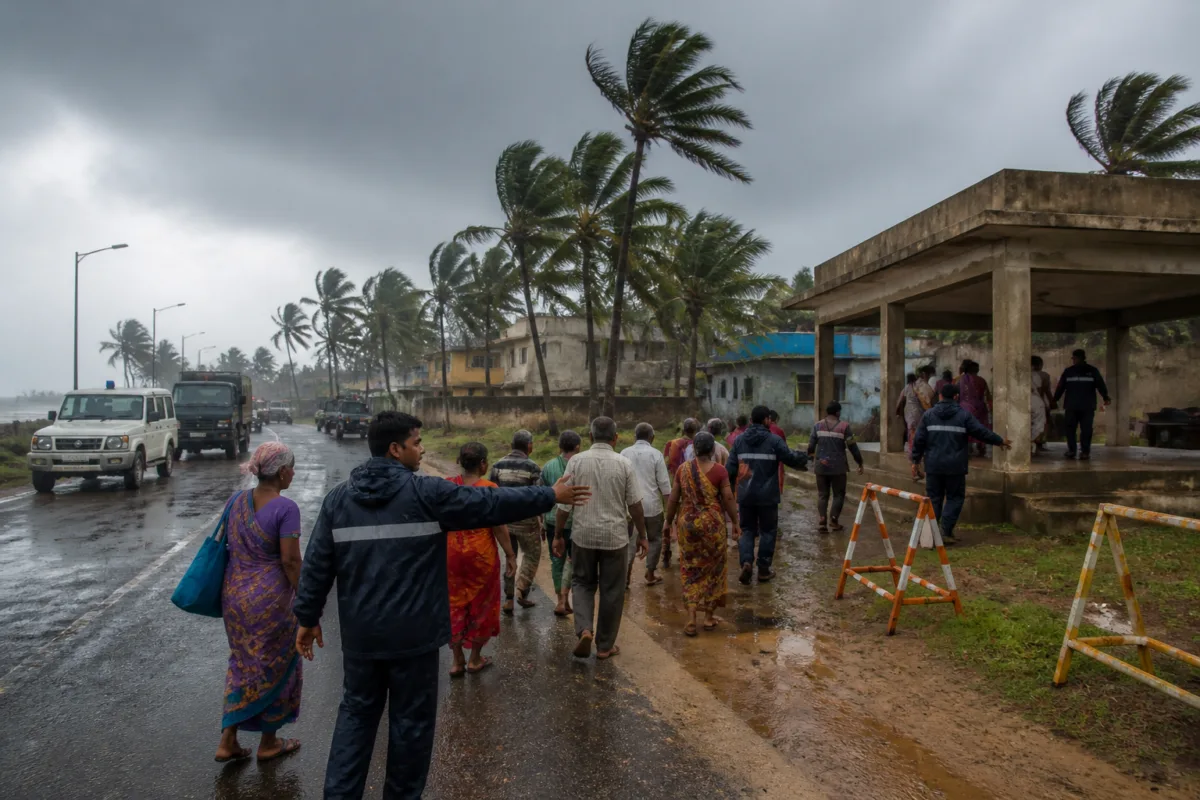
Odisha expanded coastal preparedness and evacuated more than 3.72 lakh people after Cyclone Akvan shifted towards the state from an earlier projected path over Andhra Pradesh and began making landfall near Gopalpur earlier than forecast, according to the India Meteorological Department (IMD) and the Times of India report.
Between November 15 and 17, IMD forecasts had indicated that Akvan would cross the Andhra Pradesh coast between Nellore and Visakhapatnam around noon on November 20 as a very severe cyclonic storm, with maximum sustained winds of 120-130 kmph and gusts up to 145 kmph. Odisha was then largely outside the projected impact area, apart from parts of southern Malkangiri.
The forecast changed on November 18, when the projected track moved towards the Odisha-Andhra Pradesh coast. Akvan was subsequently expected to cross between Narsapur and Puri, before the landfall zone narrowed near Gopalpur on November 19. The cyclone’s landfall process began at about 7.30 am on Friday, instead of the forecast timing of around noon.
IMD director general Mrutyunjay Mohapatra attributed the changes in the cyclone’s track and speed to atmospheric conditions, including two anticyclones on either side of the system. He said the weakening of the anticyclone to the west contributed to the shift towards Odisha, while westerly winds accelerated the system over the Bay of Bengal. Akvan’s speed rose from about 13-18 kmph to more than 20 kmph during the early hours before landfall.
Mohapatra said a variation of about three hours on either side of the forecast landfall time should not be considered a significant deviation because the system had been expected to cross before noon.
The changing track led the state administration to extend preparedness across the coastal belt so that districts were not caught off guard by a change in the eventual landfall location. More than 3.72 lakh people in 20 of Odisha’s 30 districts were moved to safer locations.
The report said the rapidly weakening system spared Odisha major damage. It also linked Akvan’s behaviour to the recent Cyclone Arnab, whose prolonged landfall process and interaction with other weather systems produced record rainfall and extensive damage in Ganjam.

