


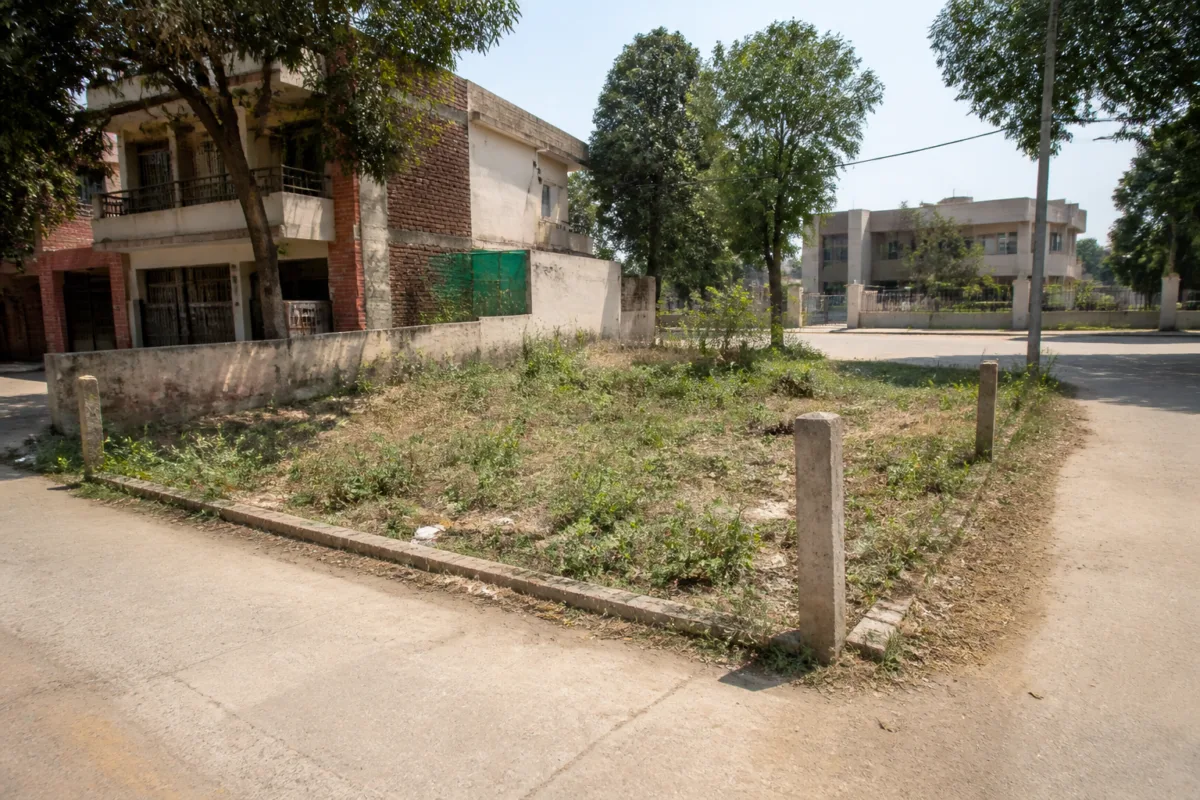
The Punjab and Haryana High Court has ordered the Ludhiana Improvement Trust (LIT) to restore a 40-square-yard plot allotted to a 1984 Delhi riots survivor, ruling that the authorities had dealt with his claim in an arbitrary and insufficiently careful manner.
A division bench of Justice Jasgurpreet Singh Puri and Justice Pravindra Singh Chauhan also imposed costs of Rs 50,000, to be paid equally by the Punjab government and LIT. The court directed LIT to restore the allotment and deliver possession of the plot.
The petitioner, Mohinder Singh, was allotted the plot in the 475-acre Shaheed Bhagat Singh Nagar Scheme in Ludhiana under the Sikh Migrant Quota on August 12, 1987. The allotment price was Rs 3,520. Under the original terms, he was required to pay the amount within 30 days, either in full or by depositing one-fourth and paying the balance in instalments.
According to the report, Singh was unable to make the payment because of extreme poverty following the riots. LIT cancelled the allotment in 1992, and his request for another opportunity was rejected in 2007.
In 2015, the Punjab government introduced a one-time opportunity for defaulting allottees to deposit outstanding charges, including interest, penalty and deemed restoration charges, and have their allotments regularised. Singh’s request under the policy was rejected on November 24, 2015. The rejection cited his failure to deposit 25% of the price within 30 days and the 23-year delay since cancellation.
Singh then approached the High Court. His counsel, S S Salar, argued that the policy covered allottees whose plots had been resumed or cancelled. He also submitted that the plot remained vacant and that Singh was ready to pay the required amount with reasonable interest.
The state argued that the case was not covered by the policy. LIT opposed the petition on the grounds that the cancellation had been communicated and that there had been considerable delay in filing the writ petition.
The bench rejected those objections. It held that payment default could not be used to deny Singh the benefit of a policy framed specifically to address such defaults, noting that the 2015 policy covered allottees who had not paid even after the original deadline. On the delay, the court observed that Singh had been approaching the authorities from the beginning and that the policy did not prescribe a time limit for seeking its benefit.
The court said that riot victims deserved “sympathy and empathy” and that their rights under Article 21 of the Constitution could be severely impaired when authorities failed to exercise caution and prudence. It described the state’s rejection of Singh’s claim as “totally cryptic”, arbitrary and constitutionally violative.
The bench also rejected LIT’s objection that Singh had not specifically mentioned his poor financial condition in his application. It held that, as a riot victim, he was not required to prove his adverse economic circumstances in that manner.
Under the order, Singh must pay the allotment price prevailing in 1987, with simple interest at 10% per annum, within 30 days of LIT’s order regarding resumption. The restoration exercise is to be completed within two months.
The ruling places the immediate responsibility for implementing the court’s directions on LIT and the Punjab government. It also underscores the need for public authorities administering rehabilitation and development schemes to assess delayed claims in their full social and policy context, rather than rejecting them through routine or unexplained decisions.

