


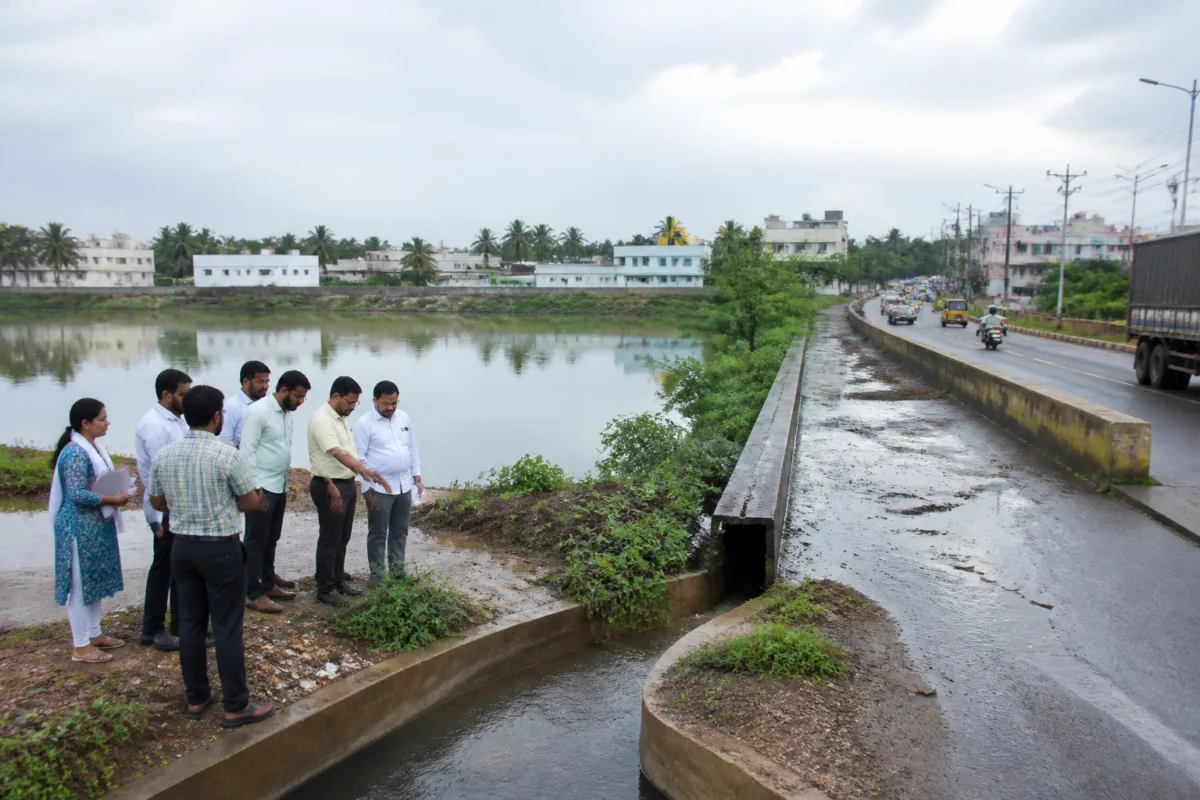
Coimbatore Corporation plans to rejuvenate around 30 waterbodies, including small ponds, as part of a wider rainwater harvesting and water conservation drive, while preparing notices for 50,000 properties that do not have compliant rainwater harvesting systems.
Corporation commissioner Katta Ravi Teja disclosed the plan after the civic body held a two-day consultative meeting with non-governmental organisations and environmental groups. The discussions focused on reviving defunct waterbodies and improving rainwater conservation across the city.
The identified sites include major tanks that are already at full storage, the commissioner told The Times of India. The corporation’s approach combines work on public water assets with an assessment of rainwater harvesting structures on private properties within its limits.
The civic body has inspected nearly 1.58 lakh properties across five zones. Of these, around 88,000 were found to have functional rainwater harvesting systems. Official sources said nearly 55,000 properties had no such systems, while another 15,000 structures required repairs. The remaining properties had systems that were either partially functional or defunct.
Notices will be issued to approximately 50,000 properties that have failed to implement rainwater harvesting structures. The assessment will continue until all properties within the corporation limits have been inspected and documented, according to the report.
The consultative meeting also raised the question of how road runoff can be connected to existing waterbodies instead of being allowed to drain away or create local flooding and traffic problems. Kousika Neerkarangal recommended diverting rainwater flowing along roads into Vannar Kuttai in Saravanampatti.
The organisation’s secretary, S Sivaraja, said the waterbody was reportedly free of encroachments and remained relatively clean. However, its original inflow channel has been converted into a sewage infrastructure network, with the sewage line now running around the tank. During the monsoon, runoff from the northern side of the waterbody and the Saravanampatti–Thudiyalur Road generally flows downhill without being stored, he said.
According to Sivaraja, diverting this runoff into Vannar Kuttai could help store rainwater and support groundwater recharge while reducing traffic disruptions caused by water flowing along the road. The recommendation highlights the operational challenge facing the corporation: rainwater harvesting depends not only on individual structures, but also on whether roads, drains, channels and waterbodies function as a connected system.
Kousika Neerkarangal founder P K Selvaraj suggested that public spaces within the corporation limits be systematically classified and mapped. He said natural rainwater flow paths and locations suitable for collecting and storing runoff should be identified and documented.
Selvaraj also called for rainwater-harvesting structures to be designed according to local conditions, with their safety and durability assessed over the long term. He said an integrated rainwater-drain network was needed and that the number and depth of recharge borewells should be determined by factors including available area, runoff volume and soil infiltration capacity.
The corporation’s next steps are to continue property inspections, document the status of rainwater harvesting systems and issue notices to properties without required structures. The proposed waterbody rejuvenation programme and the recommendations made during the consultation will determine how the city connects property-level conservation with public drainage and storage infrastructure.

