


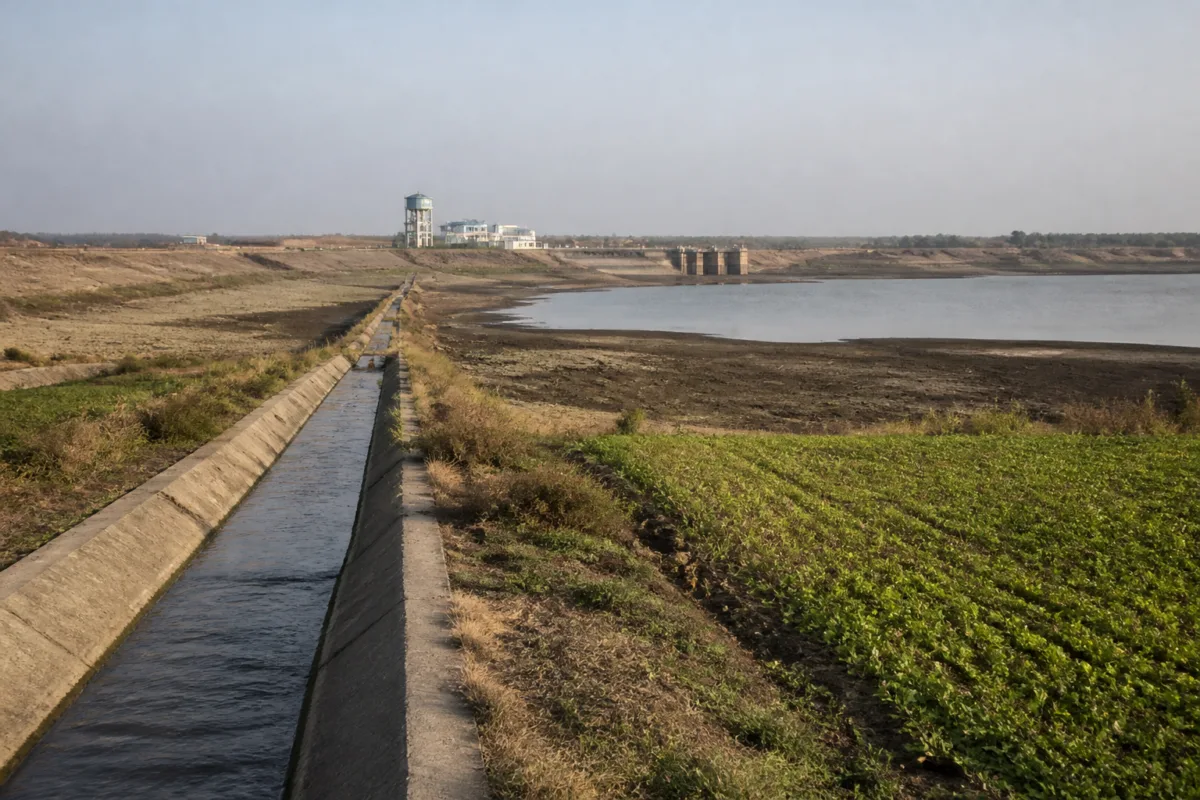
Gujarat has offered electricity generated from water or monetary compensation to neighbouring states in exchange for additional supplies, as the state prepares for a possible water deficit and seeks to protect the upcoming rabi crop season.
Union Jal Shakti minister C R Paatil said chief minister Bhupendra Patel was expected to meet the chief ministers of Madhya Pradesh, Maharashtra and Rajasthan in Delhi on Tuesday to discuss Gujarat’s water requirements. The proposed arrangement comes amid uneven rainfall across Gujarat and concerns over water availability in parts of the state.
Speaking at an event in Surat attended by Patel and state agriculture minister Jitu Vaghani, Paatil said Gujarat was working to secure adequate water before the rabi sowing season. “I can assure you in advance that the necessary water will be secured to address the water deficit in Gujarat,” he said.
According to Paatil, Patel had proposed that Gujarat could provide either electricity generated from the transferred water or monetary compensation in return for supplies from neighbouring states. Paatil said he had spoken to Madhya Pradesh chief minister Mohan Yadav on Saturday and informed him about a letter from the Gujarat government seeking a decision by Tuesday. Yadav had agreed to the proposal, Paatil said.
“If we finalise this by Tuesday, the concerns shared by the chief minister and agriculture minister regarding the provision of water for the rabi crop could potentially be resolved,” Paatil said. The proposed discussions are expected to cover allocations and the terms under which water could be supplied to Gujarat.
The announcement places inter-state water coordination at the centre of Gujarat’s response to uneven monsoon conditions. Data from the State Emergency Operations Centre, cited in the report as of September 3, showed that Gujarat had received 94.8% of its average monsoon rainfall, equivalent to 584.4 mm. However, the state-wide figure concealed sharp regional differences, particularly in Saurashtra, Kutch and parts of north Gujarat.
Devbhumi Dwarka had received only 5.5% of its average rainfall, while Porbandar recorded 18.1% and Jamnagar 28.9%. Kutch recorded 86.3% of its average rainfall. These variations have created different levels of water stress within the state, even though the aggregate rainfall figure was close to normal.
Paatil attributed the prevailing water shortage to El Niño, a global climate phenomenon associated with changes in winds and sea surface temperatures. He said Gujarat was possibly in a better position than some other states but added that the chief minister was pursuing additional allocations from neighbouring states.
The proposed exchange also highlights the administrative and financial mechanisms being considered to manage water shortages. Rather than relying only on local rainfall or existing storage, Gujarat is seeking a negotiated arrangement involving water allocations, energy generated from water and monetary compensation. The final terms, volumes and delivery arrangements had not been announced in the report.
Paatil also credited Prime Minister Narendra Modi’s leadership for the construction of 1.55 crore rainwater harvesting structures across the country. The immediate discussions in Delhi, however, are focused on securing water for Gujarat and addressing requirements linked to the upcoming rabi crop season.
The chief ministers’ meeting, expected on Tuesday, is the next stated step in the process. Its outcome will determine whether Gujarat and the neighbouring states finalise an arrangement for additional water supplies and how the proposed electricity or compensation mechanism will operate.

