


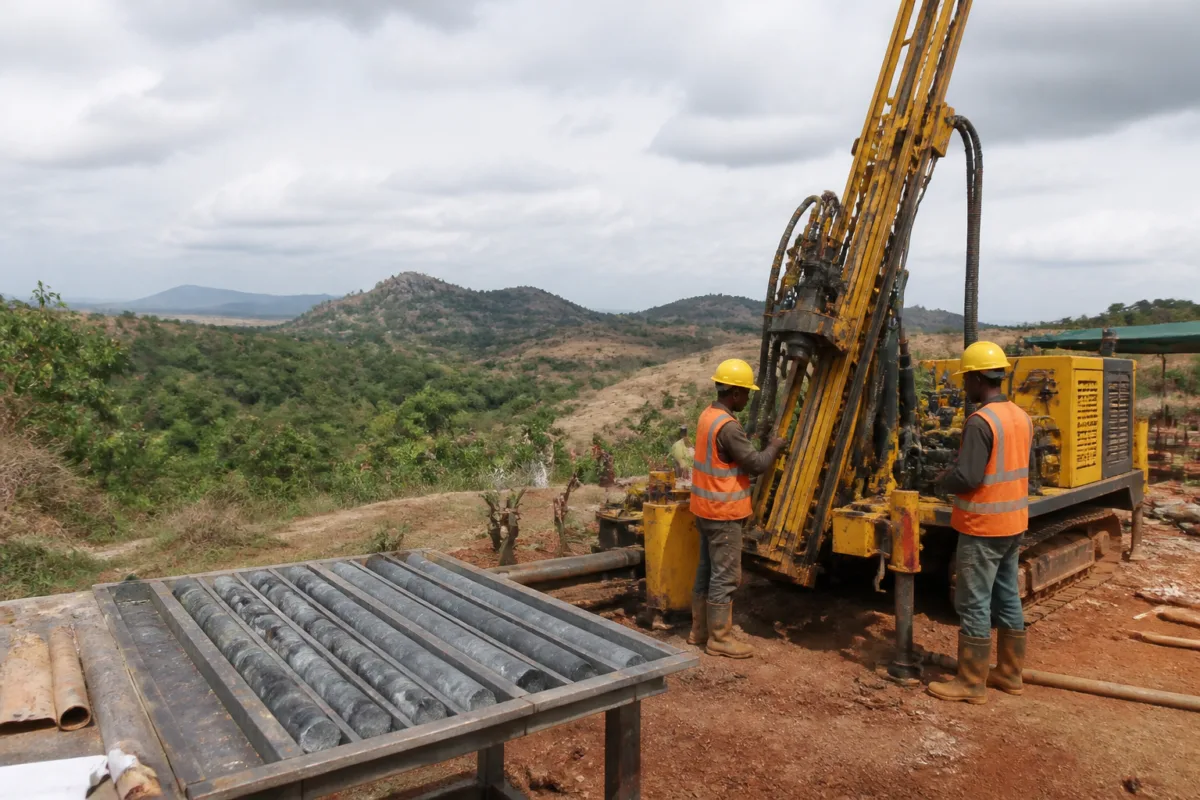
Deccan Gold Mines has identified more than four million tonnes of nickel-bearing ore at its Bhalukona nickel-copper-platinum group elements project in Mahasamund district, Chhattisgarh, in a finding that could add to India’s efforts to develop domestic sources of critical minerals.
The preliminary geological modelling indicates a nickel-equivalent grade of about 0.24%. This measure combines the estimated contribution of nickel, copper, platinum and palladium in the mineralisation. The company said the identified material contains more than 10,000 tonnes of nickel-equivalent metal.
The estimate covers near-surface mineralisation across only 300 to 350 metres of a 1.3-km-long identified mineralised corridor. Deccan Gold Mines said the estimate was conservative and that more mineralisation may extend towards the southeast, based on drone-based magnetic and induced polarisation surveys.
The company has completed 15 diamond core drilling holes at the project since March 2026, covering 2,773 metres. Reported intersections include 54 metres at 0.21% nickel equivalent in drill hole BJD-03, 34.2 metres at 0.31% in BJD-09, 29.8 metres at 0.26% in BJD-01 and 15 metres at 0.31% in BJD-02.
The Bhalukona nickel block covers 30 square kilometres in Mahasamund district. It was granted to Deccan Gold Mines in April 2025, making the company one of the first in India to secure a commercial nickel mining licence, according to the report. The project is being evaluated as part of the country’s wider push to identify and develop critical mineral resources within India.
Nickel, copper and platinum group elements are used across industrial and manufacturing supply chains, although the findings at Bhalukona remain at the exploration stage. The current estimate does not establish a formally recognised mineral resource or reserve, and it does not confirm that the deposit can be mined economically.
Deccan Gold Mines Managing Director Hanuma Prasad Modali described the findings as an encouraging milestone in the company’s effort to assess domestic critical-mineral potential. He said resource security would depend on discovering and responsibly developing strategic mineral resources within the country.
Further drilling and exploration will be required to establish the deposit’s full extent, grade, quality and economic viability. The company’s next steps will determine whether the mineralised corridor and the southeast extension can support a more advanced resource assessment.

