


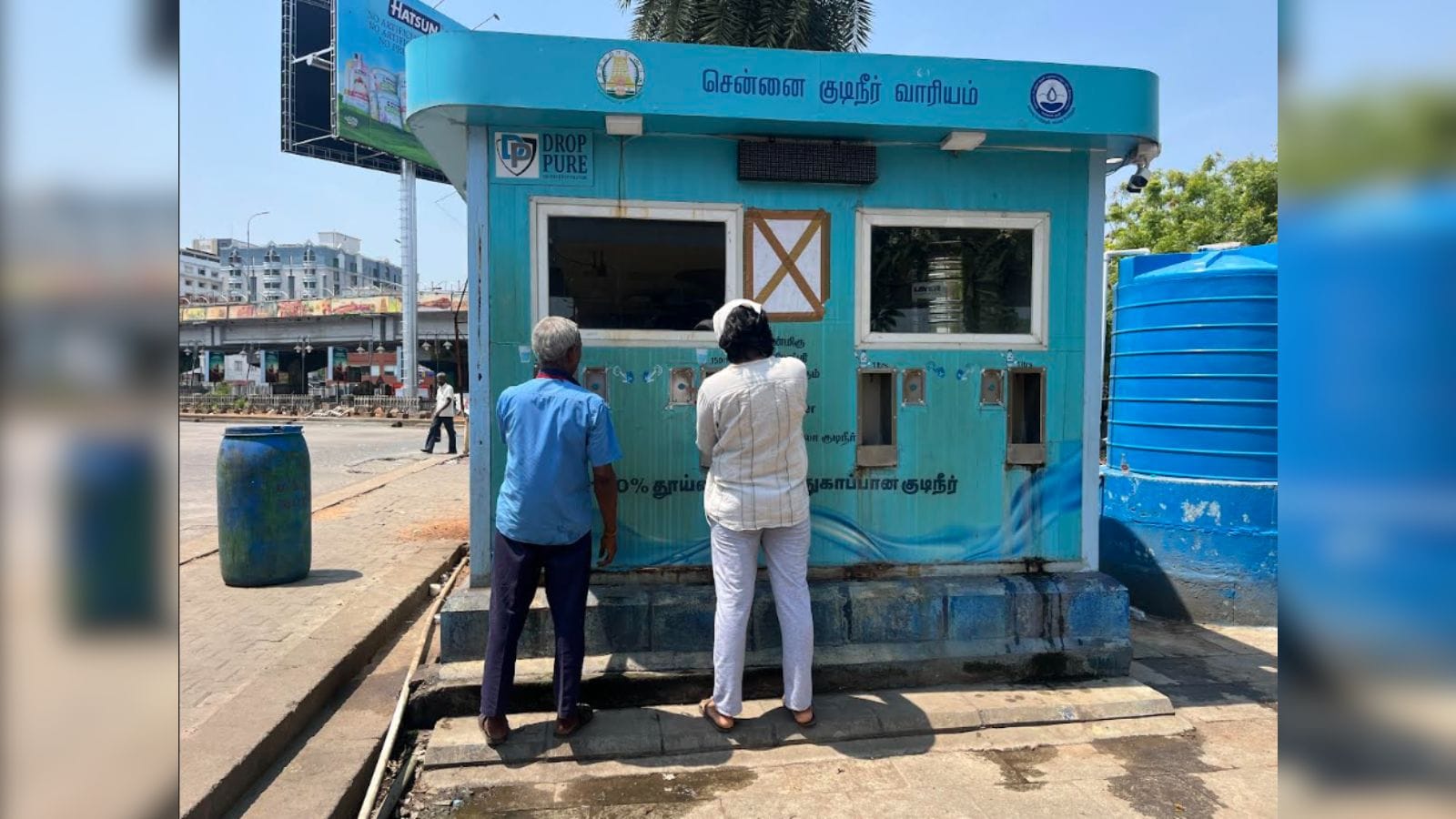
Publicly installed drinking water dispensing units across Chennai are witnessing a decline in usage, as concerns over quality and reliability begin to erode user confidence. The emerging trend around Chennai water ATMs highlights the challenges of sustaining decentralised urban water solutions in the absence of consistent maintenance and trust.
Water ATMs were introduced as an affordable and accessible alternative to bottled water, particularly for residents in areas with limited access to safe drinking water. However, users in several neighbourhoods have reported issues ranging from inconsistent water quality to frequent operational breakdowns. These factors have contributed to reduced footfall, even in locations where demand was initially strong.Urban water experts note that the success of systems like Chennai water ATMs depends heavily on regular monitoring, transparent quality checks, and efficient service management. Without these, even well-intentioned infrastructure can fall into disuse.In cities where water safety is a critical concern, public perception plays a decisive role in determining adoption.The decline in usage has broader implications for urban sustainability. Water ATMs are designed to reduce dependence on single-use plastic bottles by providing a refill-based alternative.Lower utilisation undermines this objective, potentially increasing reliance on packaged water and contributing to plastic waste.There are also equity considerations.For many low-income households, water ATMs offer a cost-effective source of potable water.
When these systems become unreliable, affected communities may be forced to seek more expensive or less safe alternatives, widening existing disparities in access to basic services.The situation underscores the importance of governance and accountability in public utility systems. Ensuring that Chennai water ATMs operate effectively requires coordination between municipal authorities, private operators, and local communities. Regular audits, user feedback mechanisms, and clear maintenance protocols can help restore confidence and improve performance.From a planning perspective, decentralised water solutions remain a critical component of urban resilience, particularly in water-stressed cities like Chennai. However, their effectiveness depends on integration with broader water management strategies, including source sustainability, distribution networks, and conservation efforts.Experts suggest that technological interventions could also play a role. Real-time monitoring systems, digital payment integration, and automated quality checks can enhance transparency and operational efficiency. Such measures can help rebuild trust and encourage wider adoption.The challenges faced by Chennai water ATMs reflect a larger issue in urban infrastructure—ensuring that systems remain functional and reliable over time. Initial deployment is only the first step; sustained performance is what determines long-term success.
As Chennai continues to address its water management challenges, revitalising these decentralised systems could offer both environmental and social benefits. Restoring confidence in water ATMs will require consistent effort, but it remains a viable pathway towards more sustainable and inclusive urban water access.
Also Read:Chennai Reunion Flights Boost International Air Connectivity
