


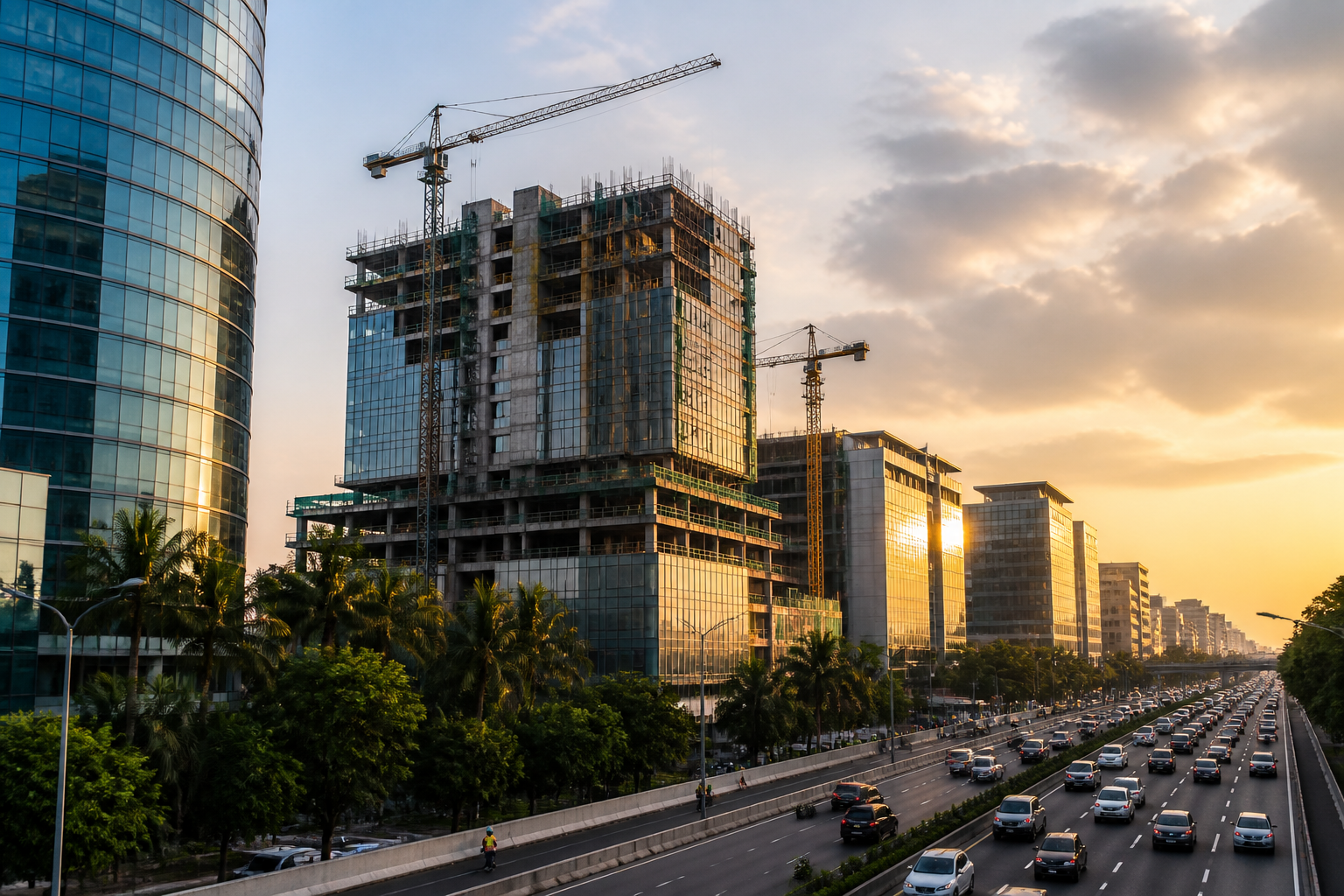
Chennai is set to add 3,000–3,500 branded hotel rooms over the next three to four years, potentially taking the city’s branded inventory from nearly 8,500 rooms to between 11,000 and 13,000 by 2030. The expansion is not being driven by tourism alone. It reflects a broader shift in Chennai’s economic geography, with global capability centres, automobile manufacturing, corporate events, weddings and new commercial districts creating demand beyond the traditional central business district and airport corridor.
The locations identified in the reported pipeline—Old Mahabalipuram Road, East Coast Road, Egmore, the Sriperumbudur-Oragadam industrial belt and Mahindra City—show how hospitality is following employment and investment across a more dispersed metropolitan region. Hotels are no longer being planned only as city-centre assets serving established commercial districts. They are increasingly being positioned close to offices, industrial facilities, residential catchments, event venues and leisure destinations.
That shift matters because a hotel room is not an isolated real estate product. It depends on the transport network, the supply of workers, local approvals, water and power services, event infrastructure and the commercial strength of the surrounding district. The projected increase in rooms therefore offers a useful lens into how Chennai is expanding and how different parts of the city are acquiring specialised economic roles.
OMR is the clearest example of this transition. The corridor already has branded properties including Novotel, Holiday Inn, Four Points and Fairfield, while further supply is expected through projects such as JW Marriott OMR. Sanjay Chugh, director for Chennai at Anarock Group, described OMR as effectively emerging as Chennai’s second central business district because of the growth of global capability centres, information technology and information technology-enabled services, commercial development and residential catchments along the corridor.
The comparison with the established city hotel market is significant. According to the report, Chennai’s branded hospitality supply has historically been concentrated around the central business district and the airport belt, areas that are now described as largely built out. OMR represents a different model: a business corridor where accommodation demand is generated by offices and corporate travel, while the surrounding residential development creates a larger support market.
The scale of the employment base helps explain why the corridor is attracting hotel investment. Chennai has around 250 global capability centres employing more than 1.5 lakh people, while the number of such centres is projected to reach 460 by 2030. The city also has around 120 million square feet of Grade A and A+ office stock, with occupancy above 90%, according to the report. These figures point to sustained commercial activity, although they do not by themselves establish how many hotel rooms the city will ultimately require or whether every planned project will be completed.
The reported pipeline includes Taj Ampa, Grand Hyatt ECR, JW Marriott OMR, Ritz-Carlton MRC Nagar, Hilton Egmore and a Vivanta/Ginger development at Mahindra City. Together, these six projects account for roughly 1,400 rooms. The remaining pipeline would come from other projects expected to enter the market over the next three to four years. The distinction between announced or planned supply and operational supply remains important: the projected total depends on projects materialising broadly as planned.
The geography of the pipeline also shows that Chennai’s hotel market is becoming more segmented. OMR is being shaped around corporate and technology demand. The Sriperumbudur-Oragadam belt is emerging as a location for business hotels serving the automobile and manufacturing ecosystem. Mahindra City connects hospitality to a large employment and industrial node. Egmore remains linked to the established urban fabric, while MRC Nagar adds high-end supply closer to the city’s existing premium hospitality districts.
East Coast Road is being positioned differently. The corridor’s emerging hotels are expected to combine beachfront accommodation with dining, wellness facilities and large event spaces. E Balaji, a sustainable tourism expert, said ECR could develop as a managed coastal experience corridor, allowing weddings, corporate offsites and leisure stays to be packaged around the coast rather than concentrated in traditional city hotels.
That proposition expands the role of the hotel from overnight accommodation to an event and destination platform. It also creates a different set of urban requirements. Coastal hospitality depends on access, land-use management, environmental oversight and the ability to handle peak-period traffic and waste. The report does not establish how these infrastructure and governance questions will be addressed, but the proposed expansion makes them more consequential as the corridor attracts larger venues and visitor flows.
The western parts of Chennai present a contrasting picture. Anna Nagar and areas beyond reportedly have relatively few branded hotels despite their strong residential base, established commercial activity and growing consumption potential. Chugh said these underserved western corridors could receive greater attention as Chennai expands geographically. This suggests that the next phase of hotel development may not be confined to the corridors currently associated with large office or industrial projects.
The western gap also highlights a limitation in reading hotel supply only through headline room numbers. A city can add capacity overall while still experiencing local shortages or mismatches. A business traveller visiting OMR, an industrial supplier travelling to Oragadam, a wedding party using ECR and a resident hosting visitors in western Chennai may require different locations, price points and facilities. The report indicates that the new pipeline includes not only luxury properties but also a stronger mid-market segment, which could broaden the market beyond premium corporate and leisure demand.
The institutional conditions for this expansion are part of the story. B Gopinath, CEO of The Residency Hotels and a committee member of the Confederation of Indian Industry’s Tourism Task Force for the southern region, said Chennai would need incentives, easier approvals, streamlined licensing, improved connectivity and workforce skilling to attract more hotel brands and ensure consistent demand. These demands place municipal and state-level administration alongside private investment in determining whether the proposed pipeline becomes functioning capacity.
Approvals and licensing are particularly important because hotel projects require coordination across multiple regulatory and service systems. The supplied report does not specify which permissions are pending for individual projects, nor does it provide a consolidated implementation schedule. It does, however, identify ease of approvals and connectivity as conditions that industry stakeholders believe will influence future supply. The difference between announcing a hotel and opening one is therefore also an administrative question.
Workforce availability is another city-building issue. Hotels create demand for a range of occupations, from management and food services to housekeeping, maintenance and event operations. Gopinath’s call for workforce skilling indicates that the expansion will require more than buildings and brand agreements. Consistent service capacity will depend on whether training and employment systems can keep pace with the distribution of new properties across the metropolitan region.
The numbers describe a market growing alongside Chennai’s wider economic base. Existing branded inventory of nearly 8,500 rooms could rise by around 40% if 3,000–3,500 rooms are delivered. At the same time, the reported growth in GCCs—from around 250 now to a projected 460 by 2030—would deepen the corporate demand base. Strong occupancy in Grade A and A+ offices and the continuing importance of automobile and manufacturing activity provide additional reasons for hotel companies to look beyond tourism-led demand.
But the evidence also leaves several questions open. The report does not provide project-wise completion dates, financing details, planning approvals, expected room rates or occupancy forecasts. It does not establish whether the projected 40% increase will be evenly distributed across the city or concentrated in a few corridors. Nor does it quantify the impact that new hotel and event infrastructure could have on transport demand, coastal pressure or local employment.
What is clear is that Chennai’s hospitality market is becoming a marker of the city’s polycentric growth. The older model centred on the CBD and airport belt is being supplemented by business accommodation on OMR, industrial hotels in the western employment belt, event-led coastal properties on ECR and potential new demand in underserved residential corridors. The result is not simply more rooms; it is a more geographically distributed set of urban functions.
The next stage will depend on whether the planned properties move from pipeline to construction and operation, and whether public agencies can support them with approvals, connectivity, utilities and skills. For Chennai, the hotel expansion provides an early indication of where commercial activity is concentrating—and where the city’s next infrastructure and governance pressures are likely to appear.
