


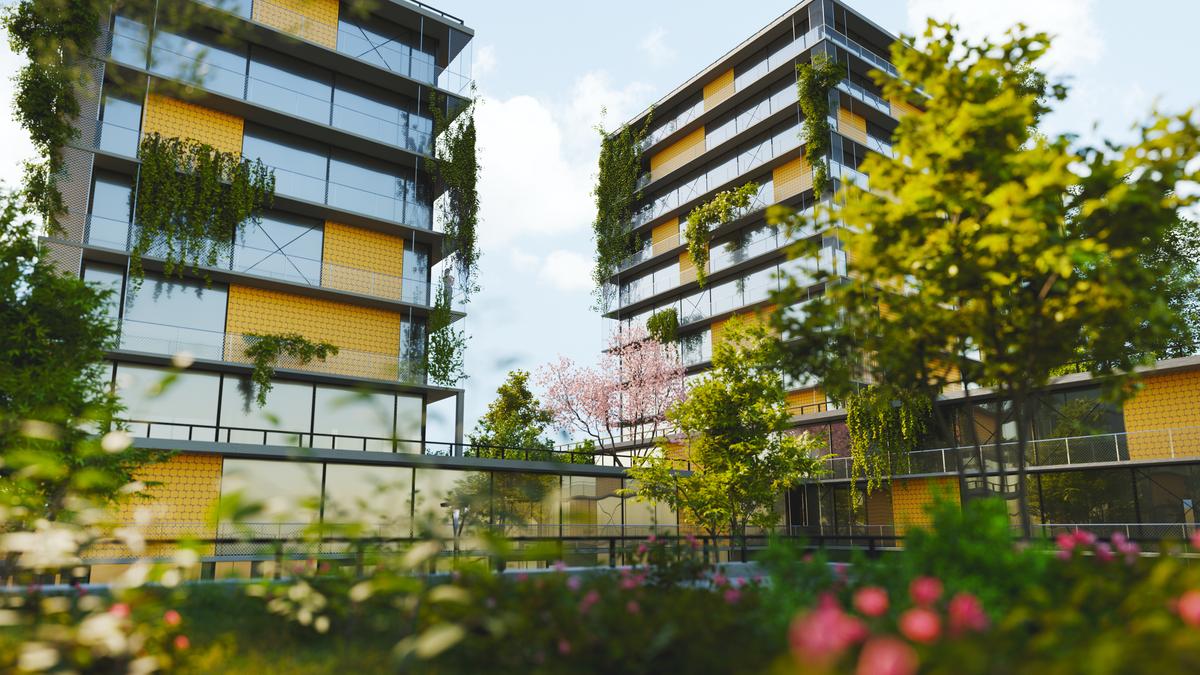
As Chennai grapples with intensifying heatwaves, architects and urban planners are increasingly turning to green roofs as a practical solution to reduce rising temperatures and improve climate resilience.The approach, which involves covering rooftops with vegetation, is gaining attention as cities search for low-impact ways to counter the urban heat island effect.
Green roofs function by absorbing heat, providing insulation, and reducing surface temperatures on buildings. In a dense urban environment like Chennai, where concrete structures dominate the skyline, this method can significantly lower indoor temperatures and reduce reliance on energy-intensive cooling systems.The growing interest in Chennai green roofs climate solution reflects a shift toward integrating nature-based interventions into urban planning. Experts note that such systems not only cool buildings but also contribute to improved air quality, better stormwater management, and enhanced biodiversity within city limits.From a sustainability perspective, green roofs align with long-term goals of reducing carbon emissions. By lowering the need for air conditioning, they can cut energy consumption and associated greenhouse gas output. This is particularly relevant in Chennai, where rising temperatures are driving increased electricity demand.The Chennai green roofs climate solution also has economic implications.
While initial installation costs can be higher than conventional roofing, long-term savings through reduced energy bills and extended roof lifespan can offset these expenses.Additionally, the approach can increase property value by offering functional and aesthetic benefits.Urban planners emphasise that widespread adoption will depend on policy support and awareness. Incentives such as subsidies, building code adjustments, and demonstration projects could encourage developers and homeowners to incorporate green roofs into new and existing structures.There are practical challenges as well.Structural capacity, maintenance requirements, and water availability must be carefully considered before implementation.Selecting appropriate plant species that can withstand local climatic conditions is also crucial for long-term success.The concept also ties into broader urban resilience strategies. By integrating green roofs with other measures such as urban forestry, reflective materials, and improved ventilation, cities can create layered solutions to combat heat stress.Experts highlight that such interventions are particularly valuable in high-density areas where ground-level green space is limited. Rooftops offer an underutilised resource that can be transformed into functional green infrastructure without requiring additional land.
As Chennai faces increasingly frequent and intense heatwaves, the adoption of green roofs represents a shift toward more adaptive and sustainable urban design. Scaling such solutions across the city could play a key role in improving liveability while addressing the long-term challenges posed by climate change.
Also Read:Chennai Election Transport Shortage Raises Civic Concerns
