


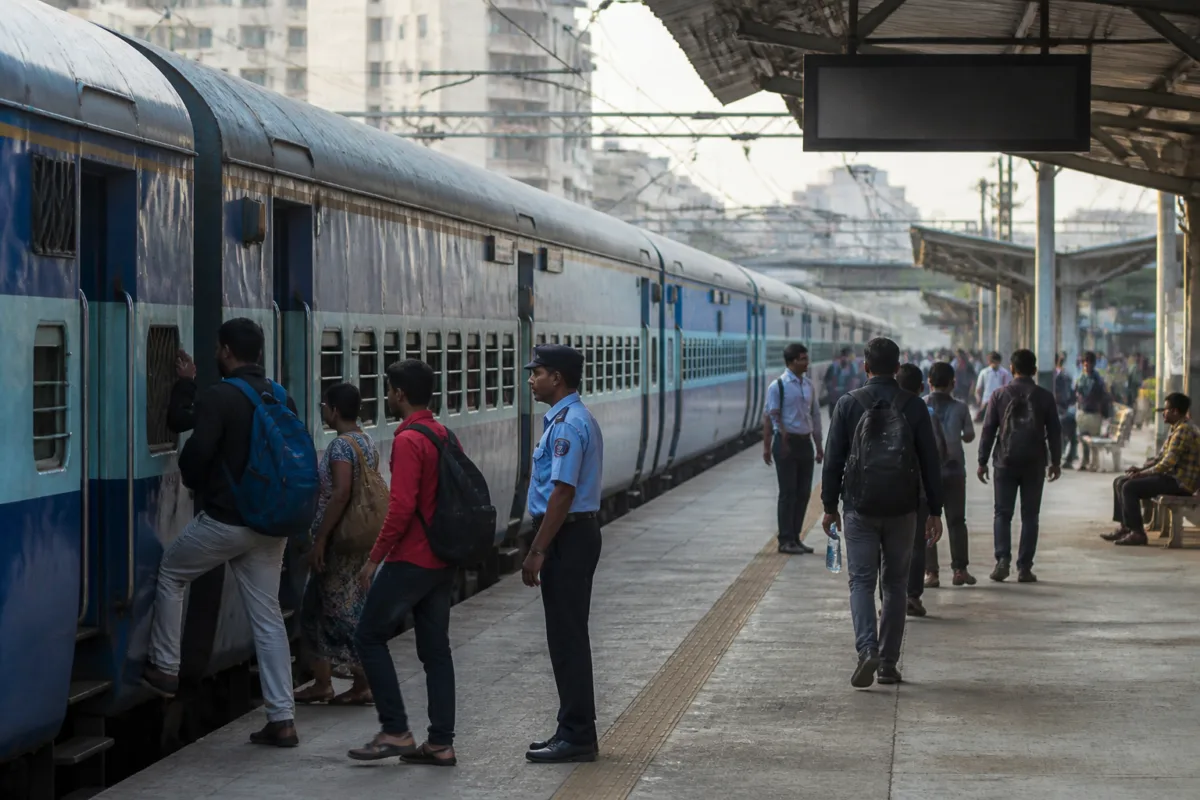
Central Railway will remove the superfast classification from 18 trains, including the Pragati Express and Pune–Kazipet Express, after their average journey speeds were found to be below the Railway Board’s prescribed threshold. The change will take effect from January 1, 2027, reducing fares by eliminating the superfast surcharge on these services.
According to a report by Sakal, the affected trains will be treated as non-superfast services, a category broadly comparable with ordinary express trains. The decision also includes the Jan Shatabdi and other services operated by Central Railway. Train numbers for the affected services will be changed as part of the reclassification.
Railway Board rules require a train to maintain an average speed of at least 55 kmph between its originating and terminating stations, calculated across the complete journey and in both directions, to qualify as superfast. The reported decision follows a review that found the average speeds of the 18 trains did not meet that benchmark.
The change will directly affect the fare structure. Superfast trains carry an additional superfast surcharge, which is collected over and above the ordinary ticket fare. Once the classification is removed, passengers on the affected services will no longer have to pay that component, resulting in a modest reduction in the total fare.
The train numbers are also expected to change. Superfast services generally operate under numbers beginning with 12 or 22, while the reclassified trains will use numbers beginning with 11, according to the report. Passengers will need to check the revised number before booking or boarding after the new arrangement comes into force.
The reclassification may also alter how the trains are handled on the railway network. Superfast services receive operational priority over ordinary express and passenger trains. After the change, the 18 services will no longer receive that priority under their previous classification, which could affect their sequencing when they share busy routes with other trains.
The reported distinction is based on average journey speed rather than the maximum speed a train can achieve on an individual section. Ordinary express trains typically average about 40 to 50 kmph while reaching maximum speeds of 110 to 130 kmph on suitable sections. The report places premium services such as Rajdhani, Shatabdi and Duronto trains in a higher operating category, with average speeds of about 70 to 90 kmph and maximum speeds of up to 130 kmph.
The change is particularly relevant for passengers travelling between Pune and Mumbai on the Pragati Express and for those using the Pune–Kazipet service. The fare benefit will apply from January 1, 2027, while the revised train numbers and operating classification will form part of the same change. Central Railway’s implementation of the revised classification and numbering will determine how the affected services appear in booking and timetable systems.

