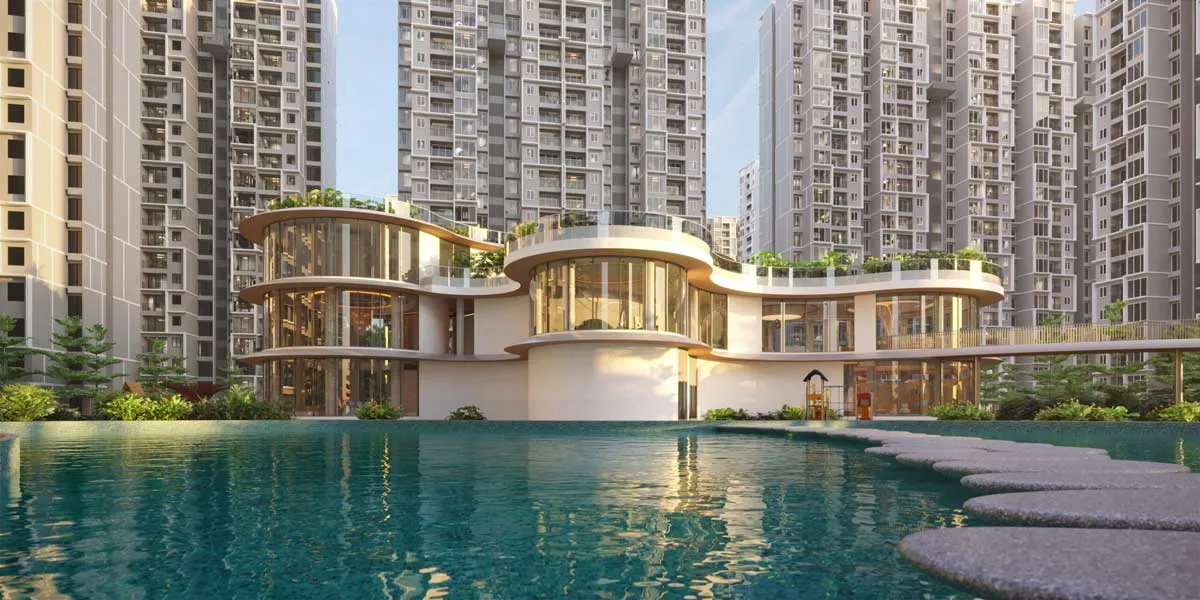
Chennai’s expanding Outer Ring Road corridor is witnessing another major residential push as large-format housing developments continue to move beyond the city’s traditional urban core. A newly announced 41-acre township project along the corridor signals how peripheral infrastructure is increasingly shaping the city’s next phase of housing growth, mobility planning, and land-use transformation.
The project, planned with over 4,000 apartments across multiple high-rise towers, reflects the rapid transition of the Outer Ring Road from a logistics and industrial belt into a mixed-use residential zone. Urban planners say the shift is being driven by rising land prices within central Chennai, improved road connectivity, and growing demand for integrated housing communities offering education, recreation, and work-life amenities within a single precinct. The Chennai ORR corridor has become one of the city’s most closely watched urban expansion zones over the past few years. Improved access to employment clusters, proposed transit upgrades, and widening suburban infrastructure networks have encouraged developers to target younger homebuyers seeking larger homes at comparatively lower prices than inner-city neighbourhoods.
However, urban development experts caution that large-scale housing expansion on the city’s periphery also raises long-term questions around ecological sustainability, groundwater stress, transport dependence, and social infrastructure readiness. Several stretches along the ORR continue to face uneven public transport connectivity and fragmented civic infrastructure despite rapid real estate activity.The newly announced township includes sports and lifestyle-focused infrastructure, including extensive recreational facilities and institutional space for a private school. While integrated residential planning is increasingly marketed as a self-sustained urban model, planners argue that future-ready communities must also prioritise walkability, climate-responsive architecture, rainwater harvesting, waste management systems, and reduced dependence on private vehicles.
Industry analysts note that Chennai’s peripheral housing markets are evolving differently from earlier suburban growth patterns. Developers are now building high-density vertical communities rather than low-rise layouts, mirroring land optimisation trends visible in Bengaluru, Hyderabad, and Pune. This transformation is expected to place greater pressure on mobility infrastructure and local governance systems in the coming decade. The Chennai ORR housing market is also benefiting from the city’s relatively stable real estate pricing compared to other metropolitan regions. Demand from IT professionals, first-time buyers, and upwardly mobile middle-income families has sustained residential absorption despite broader economic uncertainties affecting the property sector nationally.
At the same time, environmental planners have repeatedly emphasised the need for stronger urban resilience frameworks as Chennai expands outward. Peripheral construction activity near water bodies and flood-sensitive zones has become a recurring concern following repeated extreme rainfall events in recent years. Experts say future growth along the Chennai ORR must align more closely with sustainable drainage systems, blue-green infrastructure planning, and climate-adaptive zoning regulations. As Chennai continues to decentralise, projects emerging along the Outer Ring Road may ultimately shape how India’s southern metros balance housing demand with liveability, environmental safeguards, and long-term urban resilience.