


The BMC illegal construction complaints data obtained through the Right to Information Act presents a troubling picture of how Mumbai’s municipal enforcement system converts citizen complaints into action. Between March 2016 and October 26, 2026, the civic body’s RETMS portal recorded 214,917 complaints, but demolition was completed in only 13,211 cases, or about 6.15 per cent of the total, according to figures reported from a BMC summary report.
The number does not mean that every complaint represented a confirmed illegal structure, because the BMC classified 116,228 complaints as duplicates. That left 98,689 complaints described in the report as actual complaints. Even against this reduced number, completed demolitions accounted for roughly 13.4 per cent. The gap between complaints, notices, demolition requirements and completed action is therefore the central story—not simply the total number of complaints received.
The RETMS portal was introduced on March 1, 2016, to allow citizens to report suspected illegal constructions online. The information was sought by RTI activist Shakeel Ahmed Shaikh from the Encroachment and Removal Department, Eastern Suburbs. It was provided by the department’s Public Information Officer and assistant engineer, making the figures attributable to a municipal response rather than an anonymous allegation. The report states that the BMC’s Wardwise Details Summary Count Report was prepared on October 26, 2026.
The figures show a steep narrowing of cases as they move through the enforcement chain. Of the 98,689 complaints remaining after duplicate entries were removed, notices were prepared in 60,332 cases and issued in 57,521. Show-cause orders were issued in 31,486 cases. The report identified 29,916 cases in which demolition was required. However, demolition arrangements were pending in 15,318 cases, arrangements had been made in 1,387, and completed demolitions stood at 13,211.
This sequence matters because it separates administrative activity from physical enforcement. A notice, show-cause order or proposed demolition is not the same as removal of an unauthorised structure. The data shows that a substantial number of complaints entered the system but did not reach the stage of completed action. The report also recorded 3,428 notices closed after demolition, 38,098 complaints closed and 13,734 complaints awaiting closure. The supplied figures do not explain how complaints were closed, whether closure followed a finding that construction was authorised, or whether the complainant was informed.
The classification of duplicates is another important administrative question. More than half of all complaints—116,228 out of 214,917—were marked as duplicates. Removing repeated complaints can make a case-management system more efficient, particularly when several residents report the same structure. But the figures reported from the RTI do not specify the criteria used to identify duplicates, the verification process, or whether duplicate entries were linked to a single active case. Without that information, the duplicate count cannot by itself establish whether the portal reduced administrative clutter or concealed the scale of repeated citizen concern.
The ward-level numbers show that the enforcement gap is not evenly distributed. L Ward recorded 30,935 complaints and 637 demolition actions. K-East Ward recorded 24,064 complaints and 1,325 demolition actions, while M-East Ward recorded 14,510 complaints and 159 demolition actions. P-South Ward recorded 14,424 complaints and 1,932 demolition actions, and K-West Ward recorded 11,433 complaints and 1,683 demolition actions. These figures should not be read as a direct ranking of ward performance without information on the nature, age and legal status of individual cases. They do, however, show that complaint volumes and completed demolitions do not move in parallel.
The figures also expose the limits of using complaint numbers as a measure of municipal responsiveness. A portal can improve access by giving residents a formal channel to report suspected violations, but access is only the first part of enforcement. The system must then establish whether the construction is unauthorised, identify the responsible authority, issue legally valid notices, handle replies and appeals, arrange police protection where required, and execute the final action. The RTI data shows the size of this pipeline but does not establish how long cases remained at each stage or why individual cases stalled.
The institutional responsibilities described in the report are spread across the BMC’s enforcement machinery, including the Encroachment and Removal Department and the Building and Factory Department. This division creates a governance question about accountability: when a complaint remains pending, which department owns the next step, and is there a public deadline for moving it forward? The source material does not provide a service-level timeline or a ward-wise age profile of pending cases. Those omissions make it difficult to distinguish between cases delayed by litigation, cases awaiting police protection, cases under technical review and cases that have simply not progressed.
The reported cost of enforcement adds another layer to the issue. RTI activist Shaikh said the BMC spends approximately Rs 50 crore annually on action against illegal constructions, police protection and related administrative resources. He also claimed that more than 15,000 notices are issued every year. These figures are attributed to the activist and are not independently detailed in the supplied material. If accurate, they raise a basic public-finance question: how much of the expenditure produces completed enforcement, and how much supports preliminary or procedural activity? The source does not provide a case-level cost, an audited outcome measure or a year-wise expenditure statement.
Shaikh also alleged that some cases involved only paperwork or what he described as “bogus action”. That allegation is not established by the RTI figures alone. The data does show a difference between paperwork milestones and completed demolitions, but it does not prove that any particular action was fabricated. Establishing such a claim would require case files, inspection records, demolition photographs, site reports, closure reasons and other primary documents.
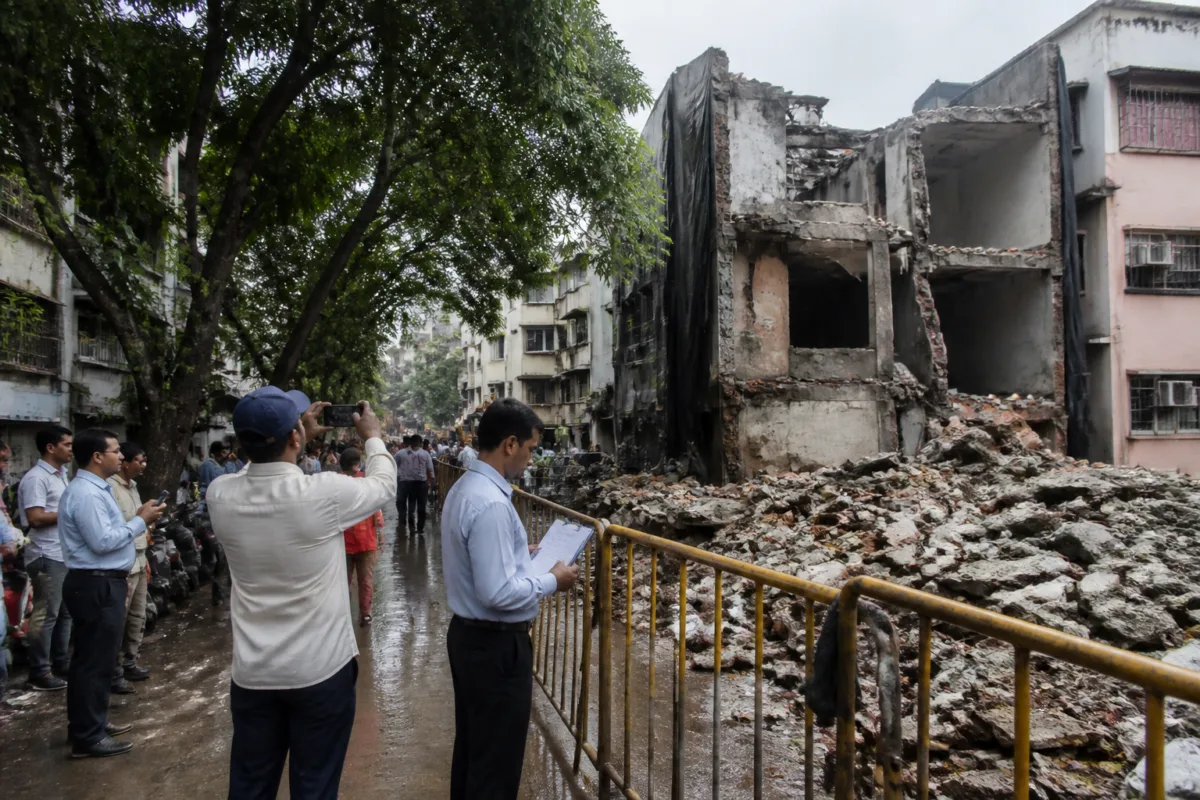
The public-safety implications are nevertheless clear from the enforcement problem identified in the report. The article links the issue to past incidents including the Kamala Mills compound fire, the Bhanu Farsan Mart fire, the Hotel City Kinara fire, the Hussaini building collapse in Bhendi Bazaar and the Sai Siddhi building collapse in Ghatkopar. These incidents are presented as reminders of the risks associated with unauthorised or unsafe structures. The supplied material does not claim that the structures involved in those incidents were part of the RETMS dataset, so the connection should be understood as a broader safety context rather than a finding about the portal’s cases.
The central lesson from the BMC illegal construction complaints data is that digital registration does not automatically produce regulatory capacity. The portal has generated a large administrative record, but the record is difficult for citizens to interpret because it does not, in the reported form, show the status and reason for closure of every case. A complaint system becomes more useful when residents can see whether a complaint was verified, treated as a duplicate, converted into a notice, referred for demolition, stayed by a court or closed for another documented reason.
The reported figures confirm a substantial gap between citizen complaints and completed demolitions, while leaving several important questions unanswered. The BMC’s explanation of duplicate classifications, the status of the 15,318 cases awaiting demolition arrangements, the reasons for the 13,734 complaints awaiting closure and the evidence supporting closed cases will determine how the numbers should ultimately be interpreted. Until that information is made available, the RTI data is best read as a warning about transparency and enforcement tracking—not as a complete explanation of why Mumbai’s illegal construction complaints remain unresolved.

