


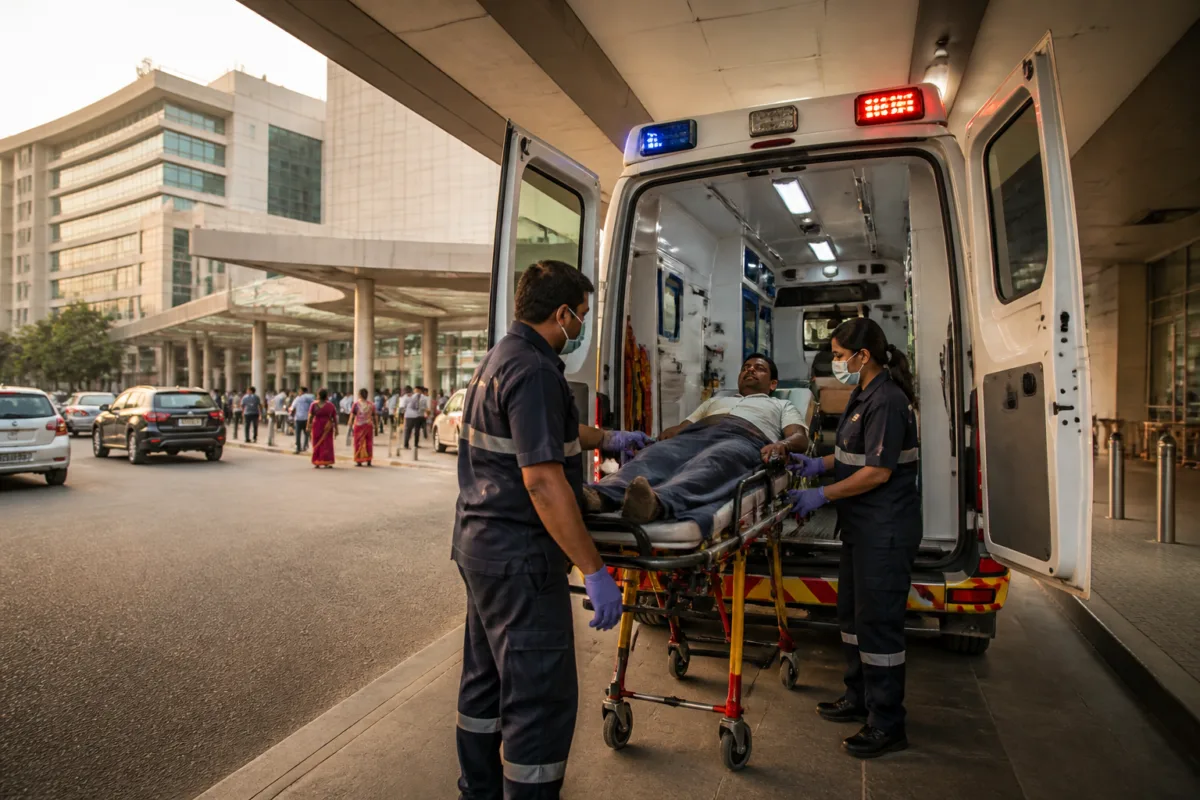
Blinkit Ambulance will charge ₹2,500 for non-emergency trips while continuing to provide emergency transfers free of cost, Eternal founder Deepinder Goyal said on Thursday. The revised structure is intended to stop routine medical visits and hospital transfers from occupying ambulances equipped for life-threatening situations.
Goyal announced the change in a post on X, saying the service had seen a growing share of bookings for routine check-ups, hospital visits and hospital-to-home transfers. According to him, these journeys could have been handled by private transport or regular ambulance services.
Under the new arrangement, users booking a non-emergency transfer will pay ₹2,500 after the trip is completed. Goyal said the amount is broadly in line with charges levied by private ambulance operators. Emergency ambulance trips, however, will continue to be provided without charge.
The company’s stated concern is the availability of emergency vehicles and paramedics when a critical case is reported. Goyal said every booking for a routine journey keeps a fully equipped emergency ambulance and its paramedics occupied, potentially limiting availability for patients who require urgent medical assistance.
The proceeds from the new charge will go to the Eternal Foundation, which operates the ambulance service. The foundation plans to use the funds to support the expansion of the network, according to Goyal. He said the company hoped the charge would substantially reduce the use of the service for non-emergency cases.
Blinkit Ambulance is part of Eternal’s effort to provide rapid emergency medical transportation. Its 10-minute ambulance service was initially launched in 2025, beginning in Gurugram. The company said the service has handled around 20,000 emergency cases and approximately 42,000 cases in total over the past two years, without charging users for any services.
The announcement also points to a staffing constraint in expanding emergency medical transport. Goyal identified the availability of trained and empathetic paramedics as the biggest bottleneck for the service. He said the company’s training academy is scaling up to address the shortage while maintaining its training standards.
The revised fee will therefore serve two stated purposes: discouraging the use of emergency ambulances for routine journeys and generating funds for network expansion. The company has not specified in the announcement when the revised charging structure will take effect across its service locations.

