


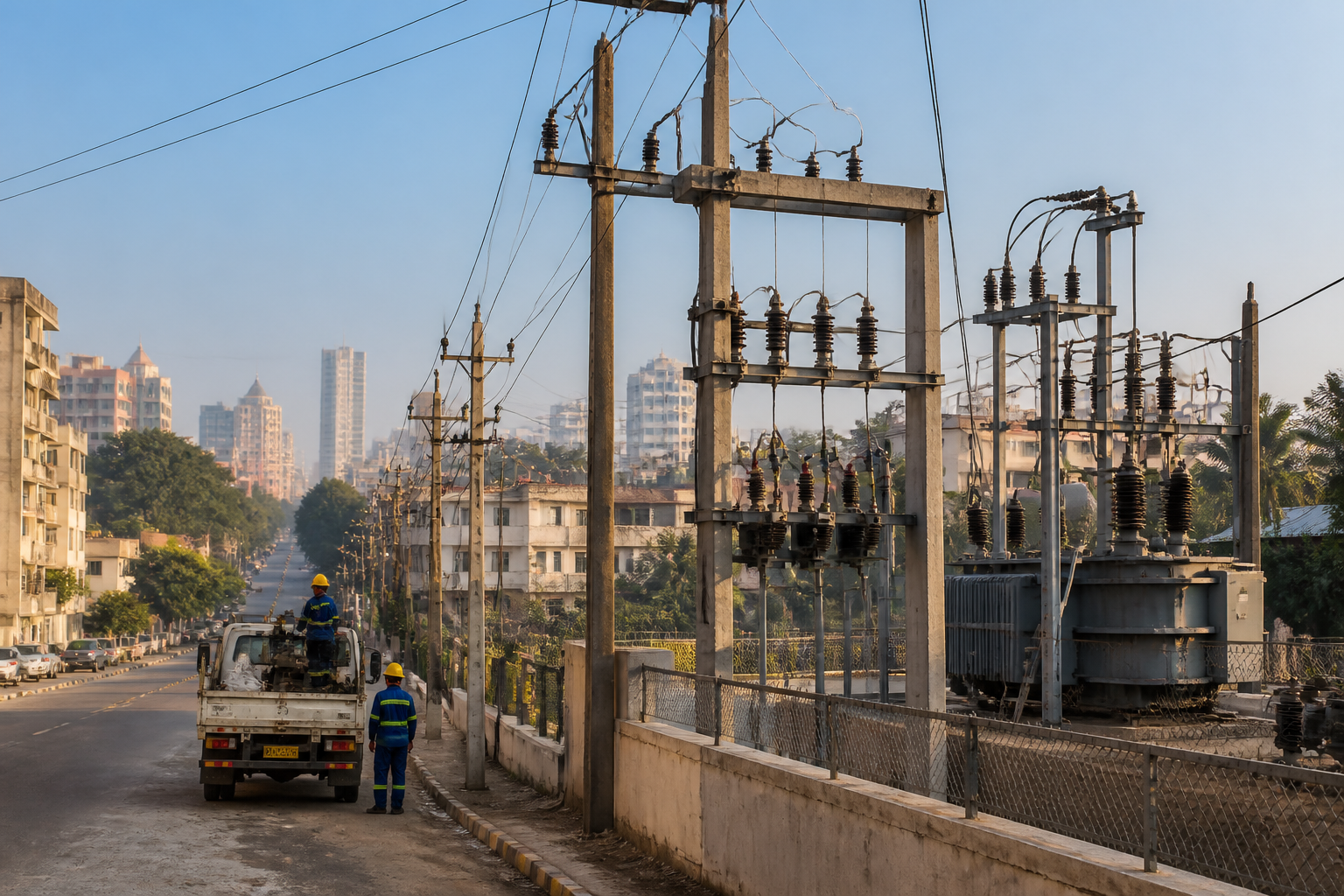
BESCOM’s reported return to profit is a significant change for Karnataka’s largest electricity distribution company, but it is not yet a financial reset. The utility recorded a profit of Rs 293.62 crore in 2025-26 after seven consecutive years of losses, even as it continues to carry a cumulative loss of about Rs 13,000 crore. The gap between the latest annual result and the accumulated deficit explains why the development matters: BESCOM has improved its yearly operating position, but it remains engaged in a long repair of its balance sheet.
The reported turnaround also shows how the finances of a major urban utility are shaped by several linked decisions. Lower power purchase costs, tariff revisions approved by the Karnataka Electricity Regulatory Commission (KERC), regular collection of charges, reduced distribution losses, lower interest costs and faster payments to vendors have all contributed to the reported improvement. Together, these measures indicate that the financial health of a distribution company is not determined by electricity sales alone. It depends on procurement, regulation, billing, network performance, borrowing and cash management working in the same direction.
That distinction is important for Bengaluru and the other districts served by BESCOM. The company supplies electricity across eight districts and serves more than 20 million consumers, according to the report. It accounts for about half of Karnataka’s electricity demand and half of the state’s financial transactions in the electricity distribution sector. Its performance therefore has consequences beyond the company’s accounts. A stronger distributor may have greater capacity to maintain networks, pay suppliers and manage demand, while continuing losses can place pressure on tariffs, borrowing and public finances.
BESCOM’s financial deterioration followed a period in which the company had previously recorded a profit of Rs 568.29 crore in 2017-18. The report says losses continued for the next seven years. During that period, BESCOM was ranked 51st among 54 electricity distribution companies in the 14th annual integrated rating of distribution companies released by the Union Ministry of Power and received a C- grade. The ranking reflected the severity of the problems facing the utility, including financial losses, debt and operational inefficiency.
The reported profit in 2025-26 is therefore best understood as a reversal in annual performance rather than the elimination of those structural weaknesses. A single profitable year can demonstrate that costs and revenues have moved in a favourable direction, but it cannot by itself erase losses accumulated over several years. The report cites unnamed experts as saying that even if BESCOM earns Rs 1,000 crore annually, it could take more than a decade to recover from the cumulative deficit of about Rs 13,000 crore.
The largest influence on the latest result appears to have been the cost of purchasing electricity. Power procurement accounts for about 80% of BESCOM’s total expenditure, making even relatively small changes in the cost and composition of purchased power financially consequential. The company reportedly reduced its dependence on more expensive thermal power and increased its allocation of hydropower, described in the report as both cheaper and environmentally friendlier. It also used lower-cost renewable energy and long-term agreements to reduce procurement costs.
This part of the turnaround highlights a central feature of electricity distribution. A distributor may have millions of consumers and high demand, but its financial position can remain weak if the cost of buying power rises faster than revenue collection. Procurement contracts and the mix of generation sources can therefore affect the price at which electricity reaches the distribution network before billing and collection are considered. BESCOM’s reported experience suggests that managing the upstream cost of supply was as important as improving downstream revenue.
Tariff regulation was another part of the reported recovery. KERC’s tariff revision orders helped increase BESCOM’s revenue and provided an opportunity to balance income and expenditure. The report also credits the Fuel and Power Purchase Cost Adjustment Charge, approved by KERC, and regular collection of tariffs with supporting revenue growth. These mechanisms connect the utility’s financial condition to regulatory decisions that affect what consumers pay and how changes in procurement costs are reflected in bills.
That connection also creates a public-interest tension. A distribution company needs adequate revenue to buy power, operate its network and service debt. Consumers, however, experience the financial recovery through tariffs, fuel adjustments, billing and the reliability of supply. The supplied report does not establish how the reported changes affected individual consumer categories or household bills. It does show that tariff regulation and collection were among the mechanisms behind the improved financial result, making the regulatory framework central to understanding the turnaround.
The second major operational change was a reduction in distribution losses. BESCOM’s losses had previously exceeded 11%, but technical improvements over two consecutive years brought them down to 9.13%, according to the report. The difference may appear modest in percentage terms, but for a utility serving more than 20 million consumers and handling half of Karnataka’s electricity demand, the electricity and revenue associated with that gap can be material.
The reported use of probe devices to transfer data from spot-billing devices also helped address leakage in revenue collection. This is an administrative intervention rather than a new generation project, but it illustrates how technology at the billing stage can influence the financial performance of a utility. More reliable data transfer can reduce gaps between electricity supplied, bills issued and payments collected. The report does not provide the monetary value of the improvement from the probe devices, but identifies them as part of BESCOM’s effort to reduce collection leakage.
BESCOM’s debt management also contributed to the result. The company transferred older loans to lower interest rates, reducing its interest burden by 1.5% to 2% and generating savings described in the report as running into hundreds of crores. It also used a discount offered by suppliers: vendors providing a 4% reduction when payments were made on the day invoices were submitted. By making faster payments, BESCOM reportedly saved about Rs 100 crore.
These measures point to a broader institutional lesson. Financial repair does not always come from one large intervention. It can result from several changes across procurement, tariff design, billing, loss reduction, borrowing and payment schedules. Each measure addresses a different point at which money can be lost or costs can rise. For BESCOM, the reported annual profit appears to reflect the combined effect of these changes rather than a single source of new income.
The scale of the utility makes the recovery particularly relevant to urban governance. BESCOM’s consumer base includes about 9.83 lakh agricultural pump-set connections, 1.78 lakh industrial connections and 91.47 lakh domestic connections. These categories have different consumption patterns and financial relationships with the distribution system. The company’s responsibility across eight districts also means that the financial and operational decisions taken at BESCOM affect agricultural users, industries, households and public institutions across a large service area.
The numbers also reveal why the cumulative loss remains the central measure of the challenge. The reported annual profit of Rs 293.62 crore is only a small fraction of the approximately Rs 13,000 crore accumulated deficit. This does not make the profit insignificant; it establishes that the direction has changed. But the distance still to be covered is much larger than one year’s result. The institution must sustain annual surpluses while continuing to manage the costs and risks that previously produced losses.
The policy landscape is consequently shaped by three institutions and processes described in the report: BESCOM’s internal management, KERC’s regulatory decisions and broader electricity-sector financing. BESCOM controls procurement practices, loss-reduction work, billing systems, debt restructuring and payment processes. KERC determines or approves tariff-related measures, including revisions and the Fuel and Power Purchase Cost Adjustment Charge. The electricity market and available generation sources influence the cost of power that BESCOM must purchase.
This arrangement means that the company’s future financial performance will depend on the interaction of operational efficiency and regulatory treatment. Lower losses can improve the gap between purchased and billed electricity. Better procurement can reduce expenditure. Timely collection can strengthen cash flow. Tariff orders can help align income with costs. Debt restructuring can reduce interest payments. None of these measures, viewed separately, resolves the cumulative deficit, but together they can determine whether the company remains in recovery or returns to losses.
BESCOM’s reported use of more hydropower and renewable energy also places its financial turnaround within the wider challenge of managing electricity demand and supply. The report presents these sources as lower-cost options that helped reduce procurement expenditure. It does not provide a detailed generation mix, contract portfolio or long-term cost comparison, so the precise contribution of each source cannot be established from the supplied material. What is clear is that energy procurement decisions have become a direct part of the distributor’s financial strategy.
The central urban question is whether a large electricity utility can sustain improved finances while continuing to serve a rapidly expanding and diverse consumer base. BESCOM’s reach makes the issue larger than corporate performance. Its accounts influence the resilience of the power system, the capacity to maintain distribution infrastructure and the financial relationship between consumers, the regulator and the state’s electricity sector.
The evidence supplied confirms a meaningful improvement: BESCOM moved from seven years of losses to a reported profit of Rs 293.62 crore in 2025-26, supported by lower power purchase costs, tariff-related revenue, reduced distribution losses, debt savings and collection improvements. It also confirms that the turnaround remains incomplete. With a cumulative loss of about Rs 13,000 crore, the next test is not whether BESCOM can post one profitable year, but whether the reported operational and financial changes can be sustained long enough to repair the balance sheet.
