


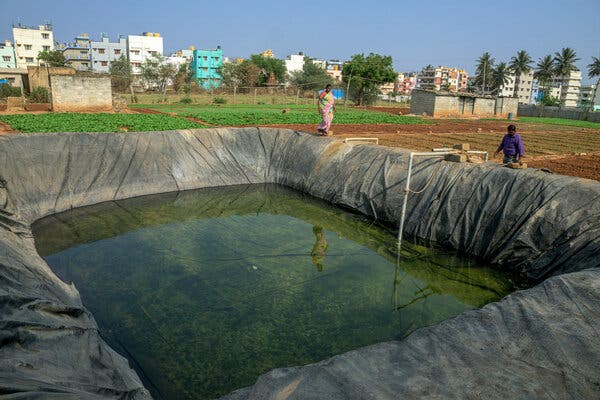
Karnataka’s reservoir levels, currently holding a moderate share of storage capacity, are offering limited reassurance as Bengaluru and surrounding regions brace for intensifying summer conditions.
Despite reservoirs being partially filled, concerns are mounting over Bengaluru water supply stability as rising temperatures, uneven rainfall patterns, and increasing demand place pressure on available resources.The current storage levels highlight a structural challenge in urban water management—adequate reserves do not necessarily translate into secure supply throughout peak demand periods. In Bengaluru, where consumption has steadily increased due to population growth and urban expansion, even moderate deficits in rainfall or delayed monsoon cycles can quickly strain distribution systems.Experts note that Bengaluru water supply depends on a combination of surface water from reservoirs and groundwater extraction.While reservoirs provide a buffer, reliance on distant water sources and energy-intensive pumping systems makes the supply chain vulnerable to fluctuations. At the same time, declining groundwater levels in several parts of the city further limit the capacity to compensate for shortfalls.The emerging summer stress underscores the need for more resilient water management strategies. Urban planners emphasise that supply-side solutions alone are insufficient; demand management, efficiency improvements, and conservation measures must also play a central role.Reducing leakages in distribution networks, promoting water-efficient appliances, and encouraging behavioural change are seen as critical interventions.The situation also has economic implications.
Water scarcity can disrupt industrial operations, increase operational costs for businesses, and impact sectors such as construction and hospitality. For households, particularly in areas with limited piped supply, increased dependence on tanker water can significantly raise living expenses.Sustainability considerations are central to addressing these challenges. Enhancing rainwater harvesting systems, restoring lakes and wetlands, and improving wastewater recycling can help augment supply while reducing pressure on reservoirs. Bengaluru’s network of lakes, if effectively managed, can serve as a crucial component of the city’s water resilience strategy.Infrastructure experts highlight that long-term solutions will require coordinated investments in both storage and distribution systems.Expanding reservoir capacity, modernising pipelines, and integrating smart water management technologies can improve efficiency and reliability. However, such measures must be complemented by policies that regulate usage and incentivise conservation.The current scenario also reflects broader climate uncertainties. Changing precipitation patterns and rising temperatures are making water resource planning more complex, requiring adaptive strategies that can respond to variability. Cities like Bengaluru must increasingly plan for extremes rather than averages, ensuring that systems are robust enough to handle both surplus and scarcity.
As the summer season progresses, the focus will remain on managing Bengaluru water supply to meet rising demand while preventing acute shortages. The situation serves as a reminder that water security in rapidly growing urban centres depends not only on resource availability but also on governance, infrastructure, and sustainable consumption practices.
Also Read:Bengaluru Campus Infrastructure Drives Student Centric Education

