


Subheadline: BWSSB’s summer plan combines new Cauvery capacity, rainwater harvesting, treated wastewater and leak reduction, but its success will depend on implementation across the city’s fragmented water network.
Standfirst: Bengaluru’s water security strategy is shifting from dependence on a single supply source towards a broader system of augmentation, conservation, reuse and loss reduction. In an interview with Deccan Herald, BWSSB Chairperson Manjula N outlined a package that includes Cauvery Stage V and VI, future supply from Yettinahole, expanded rainwater harvesting, industrial use of treated wastewater and technology-led leakage detection. The plan responds to the city’s severe 2024 water crisis, when weak monsoon rainfall had depleted groundwater even as Cauvery supplies continued. The measures point to a central challenge: Bengaluru’s water stress is not only a question of how much water enters the city, but also how efficiently it is distributed, treated, reused and governed.
Bengaluru’s water security challenge became visible during the summer of 2024, when the city faced severe scarcity after poor monsoon rainfall in 2023 reduced groundwater levels. The crisis exposed the limits of treating the Cauvery system as the primary answer to the city’s growing demand. Even with continued Cauvery water supply, parts of Bengaluru experienced pressure on local sources, particularly where groundwater had become an important supplement.
The response outlined by the Bangalore Water Supply and Sewerage Board is therefore not a single project. It is a portfolio of interventions aimed at different points in the urban water cycle. The board’s priorities include increasing available supply, expanding wastewater treatment and reuse, capturing rain where it falls, reducing distribution losses and improving coordination between agencies responsible for roads and utilities.
That approach matters because each measure addresses a different weakness. New bulk supply can help meet demand, but it does not by itself resolve leakages or reduce pressure on groundwater. Rainwater harvesting can improve local conservation, but its impact depends on the quality, scale and maintenance of installations. Treated wastewater can substitute for freshwater in industrial and other non-potable uses, but only if users trust the quality and the delivery system is financially and operationally viable.
### Supply augmentation is only one part of the response
BWSSB Chairperson Manjula said Cauvery Stage V has been rolled out to help meet the needs of people on Bengaluru’s periphery and reduce dependence on groundwater. The board is also working on Cauvery Stage VI. According to the interview, the project has received Cabinet approval and clearance from the Central Government. It is expected to cost around Rs 7,000 crore, with a Rs 5,000-crore loan expected from the Japan International Cooperation Agency.
The details establish the scale of the proposed expansion, but the interview does not specify the project’s completion timeline, additional daily capacity or the areas that will receive the new supply. Those details will be important for assessing how far Stage VI can address demand, particularly in areas that have historically relied on borewells or private water tankers.
The longer-term supply plan also includes water from Yettinahole. The interview presents this as a future source of augmentation, but does not provide a delivery date or quantify the volume that Bengaluru may receive. This leaves the city’s immediate resilience dependent on measures that can operate within the existing system, including conservation, reuse and loss reduction.
### Treated wastewater remains an institutional and confidence problem
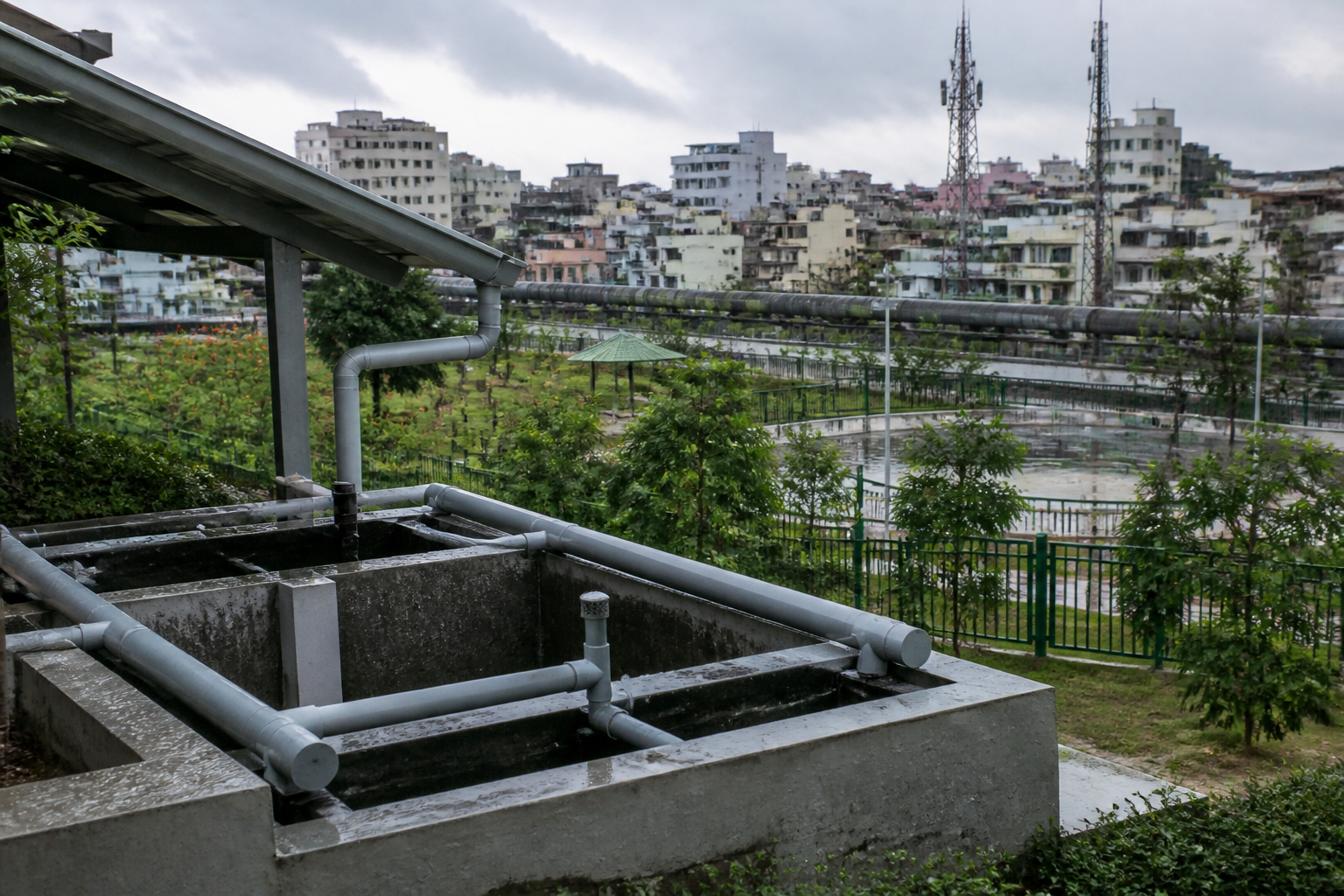
BWSSB is also trying to increase the use of treated wastewater, particularly among industries. The board is speaking with industrial users and identifying clusters where treated water could be supplied through new arrangements. Existing sewage treatment plants are being mapped against industrial clusters, while some plants may be upgraded to increase treatment capacity.
The main obstacle described by the chairperson is apprehension about using secondary-treated water. BWSSB is considering models in which industries carry out additional treatment themselves, or where water is treated further by the board and supplied through dedicated pipelines. The options under discussion include co-investment and other arrangements involving the board and industrial users.
This is more than a technical question. Reuse requires alignment between treatment standards, industrial processes, pricing, pipeline access and responsibility for quality. A treated-water network also needs predictable supply. If users must maintain separate systems or worry about inconsistent quality, uptake can remain limited even when treatment capacity exists.
The interview does not establish how much treated wastewater is currently being reused, how much additional capacity is planned or which industrial clusters will be prioritised. It does, however, identify a key gap in Bengaluru’s water strategy: increasing treatment capacity is not enough unless the treated output is connected to reliable demand.
### Rainwater harvesting shifts attention to distributed measures
For the next summer, BWSSB is focusing on measures that can be implemented across public and private spaces. Around 1,000 rainwater harvesting structures have been installed, and the board plans to expand them in government properties and community spaces, including parks, schools and hospitals.
At the household level, the board is promoting water conservation and the use of aerators. The chairperson said a large number of aerators have already been installed. BWSSB has also penalised people found using water irresponsibly for cleaning and other purposes.
These actions place part of the city’s water response at the level of buildings and neighbourhoods. Their effectiveness will depend on whether installations are maintained and whether conservation efforts are sustained beyond periods of acute shortage. The source material does not provide a target for the number of additional structures, a monitoring mechanism or an estimate of the water that the programme is expected to conserve.
The emphasis on public properties is significant because schools, hospitals and parks offer identifiable sites where installations can be tracked. It also allows the board to connect rainwater harvesting with public demonstration and community-level conservation. But the programme’s contribution to citywide water security will depend on scale relative to Bengaluru’s total demand and on the performance of individual systems during and after the monsoon.
### Distribution losses are a major test of governance
BWSSB estimates that unaccounted-for water remains close to 30 percent. The chairperson said leakages are the main contributor and that most losses occur in the distribution network rather than at the transmission level. The board is evaluating ground-level reservoirs and pipelines, prioritising areas based on complaints and reported leakages.
Technology is being used to identify leaks, while the District Metered Area network is being expanded to locate zones with higher losses and support corrective action. BWSSB is also acting against illegal connections, both to reduce unaccounted-for water and to bring more households into the billing system.
The focus on distribution is important because it frames water security as an efficiency issue as well as a supply issue. Every additional source, including a new Cauvery stage, enters a network where a substantial share of water may not be accounted for. Without better measurement and repair, augmentation can increase the volume entering the system without producing a proportional improvement for consumers.
At the same time, the interview does not provide a deadline for reducing the 30 percent figure or a quantified target for the DMA expansion. The board’s ability to demonstrate progress will therefore depend on whether it publishes area-level information about losses, repairs and billing coverage.
### Coordination will determine whether infrastructure works together
Water infrastructure is also tied to the condition of Bengaluru’s roads. BWSSB and city corporations have faced criticism over road restoration after utility works. Under the arrangement described by Manjula, BWSSB will reconstruct roads up to the wet-mix level so they are motorable, while the Greater Bengaluru Authority will subsequently undertake complete restoration as part of its action plan.
The agencies are also expected to join a common portal being developed to map work across the city. The stated purpose is to coordinate projects, prevent duplication and avoid unnecessary excavation. This connects water security to a broader urban governance problem: infrastructure agencies often operate on separate schedules even when they work in the same streets.
A common map could improve coordination, but its value will depend on whether all agencies update it consistently and use it before approving work. The source material does not specify the portal’s launch date, the agencies covered or the rules that will govern data sharing. Those implementation details will determine whether it becomes an operational tool or simply another administrative platform.
Bengaluru’s water strategy is consequently being tested on several fronts at once. Cauvery Stage VI and other augmentation projects address supply. Rainwater harvesting and aerators address conservation. Wastewater reuse addresses demand substitution. Leak detection, metering and action against illegal connections address efficiency and revenue. Road-restoration agreements and a common work portal address the institutional coordination needed to build and maintain the network.
The evidence supplied by BWSSB confirms the direction of policy, but not yet its outcomes. The city has project approvals, planned programmes and administrative measures. It does not yet have, in the supplied material, a published timeline for every intervention, quantified targets for reuse or leakage reduction, or a clear account of how much each measure will contribute to future demand.
That distinction will matter as Bengaluru moves beyond emergency responses to recurring water stress. The city’s water security will depend not only on bringing in more water, but on whether institutions can reduce losses, build confidence in reuse, maintain decentralised conservation systems and coordinate construction across the urban network. The next milestones to watch are the implementation of Cauvery Stage VI, the design of industrial treated-water arrangements, expansion of rainwater harvesting and the publication of measurable progress on unaccounted-for water.

